
Noa Bonzel is very proud of her three children, Nadav, Amit, and Adi. “Nadav is now on reserve duty in Lebanon, Amit is on Mount Herzl, and Adi is a casualty assistance officer in the Engineering Corps.”
Her matter-of-fact description of Amit’s location, where he is interred in the military cemetery in Jerusalem, sounds jarring at first. But as our discussion continues, it becomes clear that, though Amit is no longer alive, the lessons he exemplified during his life continue to inspire his family, compatriots, and Israeli society at large.
Amit, 22, a member of the Paratroopers Brigade, fell on December 6, 2023, in Gaza. Since his death, Noa and her husband, Yitzhak (Itzik), have kept his memory alive by sharing the legacy of his accomplishments in his all-too-brief life.
On a recent late-summer morning, I visited Noa and her husband at their home in Shoham to discuss Amit’s legacy and why it matters. Outside their home stands a large banner emblazoned with the verse from the Book of Samuel – “How the mighty have fallen in the midst of the battle” – next to a photo of their smiling son.
“Amit Street” in Shoham is named in his memory, and Noa admits that she sometimes finds it difficult to drive down that road. “It’s crazy. I never dreamed that there would be a street named after my son in Shoham,” says Noa, who grew up in Petah Tikva.
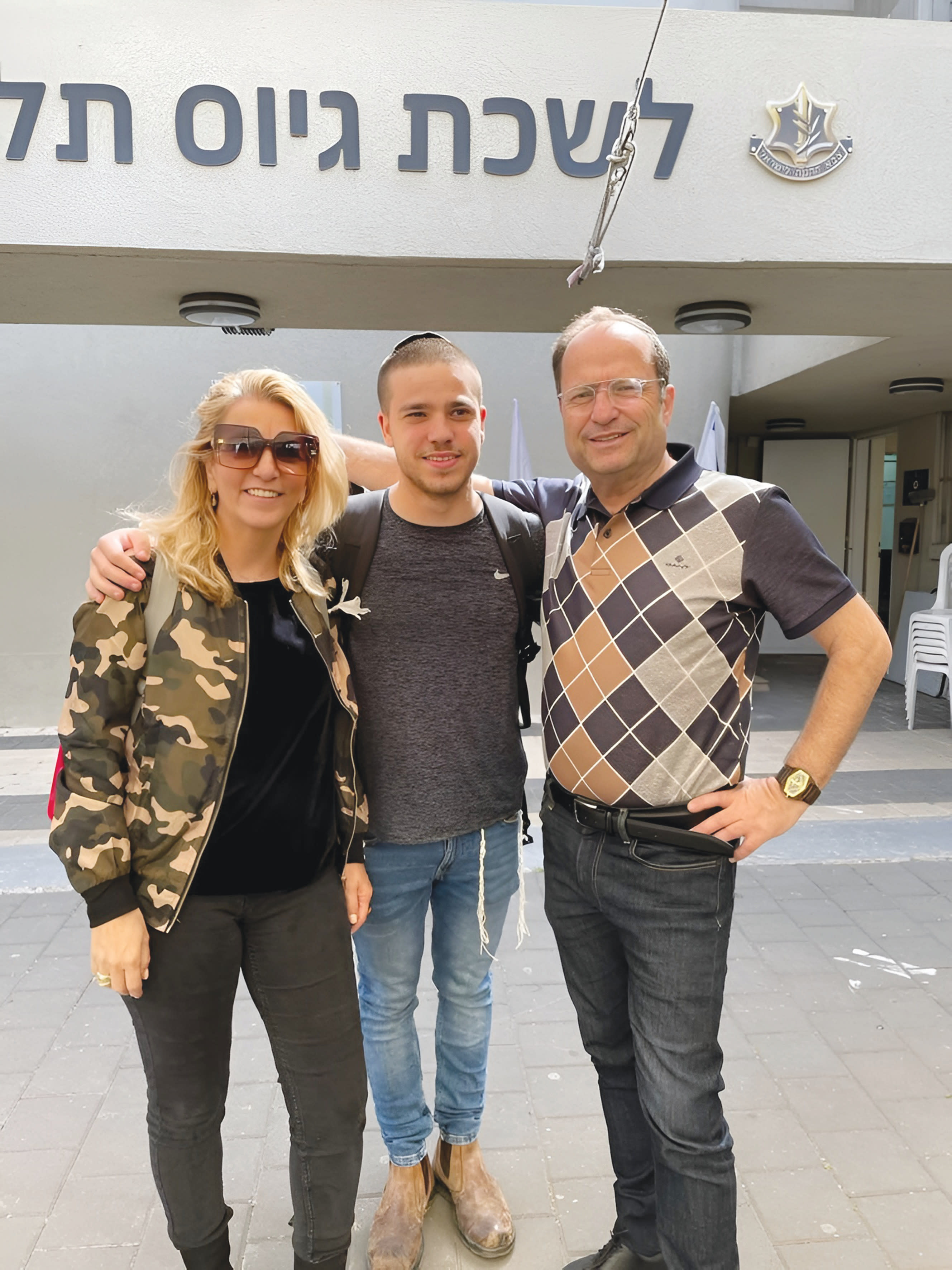
The synagogue in Shoham that they attend has a cabinet where holy books are kept, with a prominent sign displayed in Amit’s memory, and a synagogue – B’Darkei Amit (In the ways of Amit)– was established in his memory in Kiryat Gat.
“Amit was a very special son,” says Noa. “He was the middle child, and whenever Nadav and Adi would argue, he would say, ‘Stop. I’m begging you not to argue. We are a family.’”
Noa recalls that Amit’s sensitivity manifested at a very young age. “When he was six, I had just finished our Shabbat preparations one Friday afternoon, and for some reason, I was a bit sad. Amit smiled at me and didn’t say a word. Before he left for the synagogue with his father, he said, ‘Ima, listen. I have a surprise for you.’”
Shortly after Amit and his siblings had left for the synagogue with their father, there was a knock at the door. “It was my best friend,” says Noa. “She said that Amit had called her a few minutes before Shabbat and said, ‘My mother is a little sad. Could you please come over to visit, to make her feel better?’ That was Amit.”
Amit valued service in the IDF above all else
GROWING UP, Amit valued service in the IDF above all else, Noa says. He was not an outstanding student, but he always wanted to learn more about military life. As a student at the yeshiva high school in Petah Tikva, the city where Noa grew up, he refused to attend classes taught by a teacher who had not served in the IDF, and spent most of his time with teachers who had served as company commanders in their units.
“Amit did not have the best grades in school, and he was not the fastest runner, but he always aimed high when it came to his army service,” Noa shares.
Performing meaningful service in the IDF is a family tradition. Itzik, who grew up in Jerusalem, served in the paratroopers, as did Amit’s uncle and his brother, Nadav.
In Amit’s room in Shoham, a large flag of Israel hangs. Underneath, Amit had written: “Many people say they want to succeed, but not everyone is willing to pay the price required to achieve success.”
When Amit turned 16, he asked his mother to register him for a course in Shoham that prepared teens for tryout days for military and commando units. “I asked him what unit he wanted to try to prepare for,” recalls Noa. “He said that he wanted to join the General Staff Reconnaissance Unit, considered the most elite special unit.” In response, Noa quipped, “And I want to become prime minister.”
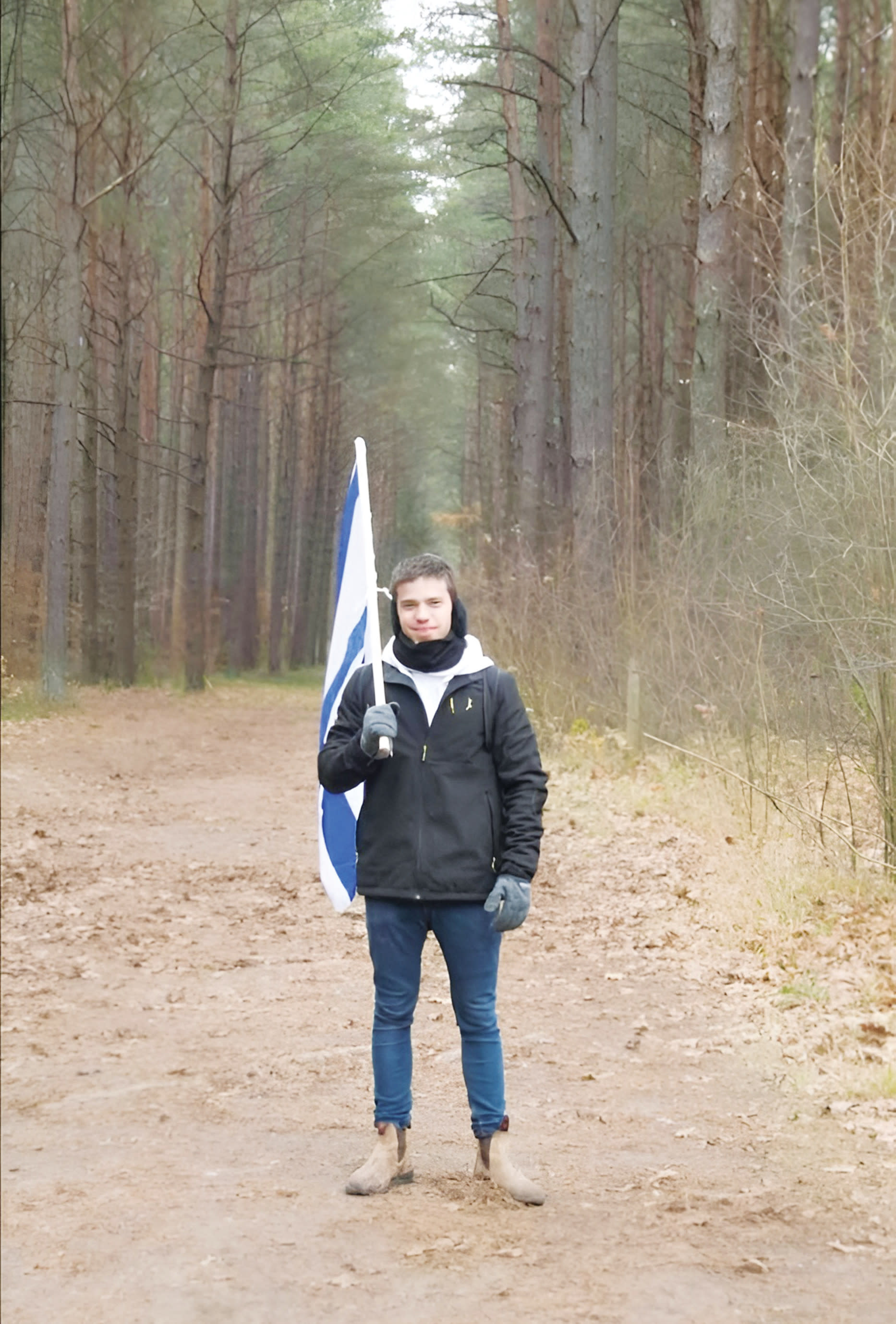
Amit was just 1.68 m. tall (five feet, six inches), not the ideal height for the unit, but he begged his mother to register him for the unit’s tryout day. He said, “If I do not protect the country, who will do it?” Not paying much attention to his comment, she signed him up for the course.
After being turned down twice, Amit wrote a letter to the army requesting a final chance to try out for the Reconnaissance Unit. This time, they accepted him for the screening. Despite his best efforts, Amit was not accepted. Other military units contacted him and expressed interest in recruiting him, and he decided to join the IDF Paratroopers Brigade’s elite reconnaissance unit.
Amit was accepted into the unit, and after he completed his post-high school army preparatory program at Keshet Yehuda in the Golan Heights, he joined the paratroopers and spent a year and two months training.
“There are some soldiers who give up because the training is very difficult, both physically and mentally,” says Noa. “But whenever Amit came home for Shabbat, he was so happy. He had a great deal of motivation.” The training was not easy for him because of his diminutive size, but he succeeded.
Noa also discusses the great respect that he had for his parents. When Amit finished his paratrooper training, he prepared a photo of himself standing next to his parents and left it in their room, with the inscription, “Thank you very much for your support.”
'Amit was the only one who stayed behind'
NOA RECOUNTS a story from Amit’s training, which illustrates these qualities. “There was an incident when they were training at the Wingate Institute. Their commander told them that they had to scale a wall, and that anyone who completed the exercise could go home for Shabbat.
“Itzik and I drove to Wingate and waited for Amit to finish training. We waited and waited, but he didn’t come out. We began to worry. What had happened?
“One of the soldiers on his team couldn’t scale the wall. Amit was the only one who stayed behind. He set up a portable speaker and played music, climbed to the top of the wall, and kept encouraging the soldier. He refused to give up on him, and went home only after the soldier had succeeded in scaling the wall.”
At the ceremony in Beit Lid marking the end of paratrooper training in May 2023, Amit’s commander appointed him staff sergeant over a younger group of paratroopers because of his leadership qualities and willingness to help others.
After the ceremony, Amit and his family were inching toward the exit in their car; Amit and his two siblings sat in the back seat. Shortly before they reached the main exit, Amit told his parents to stop the car. Looking through the window, he noticed someone pushing a visitor in a wheelchair. He jumped out of the car, helped push the wheelchair, and assisted the disabled person into their car.
“All the time, Amit would say, ‘How can I help another person? How can I volunteer? Who needs my help?’ When I speak to the army now, I tell everyone that I follow in Amit’s path.
“When I went to work, I was always in a hurry,” notes Noa. “But now, when I go, I look ahead and say to myself, ‘Perhaps someone needs me, as Amit would think.’ Whenever I see the street cleaner, I go back into the house, bring him a piece of cake and a cup of coffee.”
'He never came back home'
THE SOLDIERS under Amit finished their training on Thursday, October 5, 2023, during Hol Hamoed Sukkot. Amit’s soldiers came to Shoham, and Amit prepared a barbecue for them. On Friday, Amit’s parents returned from a vacation abroad, and Amit, together with friends from Shoham, went to a villa in the North near the Kinneret for Simchat Torah.
On the morning of Oct. 7, Amit returned home and told his parents that the war had started, which surprised Noa, since they had not heard any sirens in Shoham. He organized his gear and, after 20 minutes, left the house. “He never came back home,” says Noa wistfully.
Amit fought with his soldiers in the kibbutzim being attacked by Hamas terrorists. On November 19, his 22nd birthday, his unit was in the Rimal neighborhood in Gaza City, and his soldiers threw him a surprise party. He said it was his happiest birthday, because they appreciated and respected him.
He then returned to the army base at Lachish. Noa and Itzik visited Amit there at the end of November. The last time they spoke to him was at the end of November; afterward, Amit reentered Gaza with his unit, commanded by Ariel Malka.
On December 5, 2023, Ariel’s brother, Yehonatan Malka, fell in combat against Hamas in the Gaza Strip. Ariel Malka was granted temporary leave and returned to Israel to attend his brother’s funeral, held the next day, on December 6.
Amit was appointed to command the unit in his absence, though he had not completed his officer’s training course. His commanders trusted his ability to lead the soldiers effectively in combat.
Noa and Itzik had not heard from Amit in some time, and Itzik decided to attend Yehonatan Malka’s funeral, where he would see Ariel and find out how Amit was doing.
While Itzik was attending the funeral of the brother of Amit’s commander, Amit fell in Saja’iya, a large neighborhood in Gaza City. Noa recounts that when the IDF representative arrived at their home in Shoham to break the tragic news, only Adi was home. Noa was at work in Modi’in, and Itzik was on his way home from the funeral.
When he returned home from Yehonatan Malka’s funeral and saw the officers, he realized that they had come to inform him about the death of his son. He asked, “Which one? Nadav or Amit?”
Over 1,000 people attended Amit’s funeral, says Noa, and each day of the shiva saw visits from hundreds of people from all walks of life – religious, secular, haredi. Noa and Itzik were astounded to hear the stories that people told about Amit’s kindness and consideration for others.
At the conclusion of the shiva, Noa and Itzik went to Amit’s grave and saw the nearby grave of Eyal Meir Berkowitz, a 28-year-old IDF soldier from Susya, who was killed in action in the Gaza Strip on December 7, 2023.
They decided to pay a shiva visit to the family in Susya that evening. While they were there, they learned of another family who had lost a son from the nearby community of Asa’el. Soon, they went there and comforted them. Noa and Itzik continued to visit many bereaved parents and wounded soldiers in hospitals.
NOA OPENED a WhatsApp group for bereaved mothers, where they communicate and speak about their needs, both emotional and otherwise. When the Jewish community in Bondi Beach, Australia, was reeling after the terror attack during Hanukkah in December 2025, Noa and Itzik traveled privately to comfort the bereaved families.
“They thanked us for coming from so far away to visit them. We visited each family and gave them practical tips on how to get back on their feet after what happened,” Noa recounts.
The couple traveled to the US, France, Italy, and Australia, where they delivered talks about their son. They frequently speak at Bahad 1, the IDF’s officer training center, and at schools and workplaces, focusing on the values Amit lived by, and how others can put them into practice.
“What really stands out is what the children say afterward: One said, ‘I didn’t believe in myself, and now I realize I can achieve great things,’” recalls Itzik. “Another girl wrote, ‘I live in the periphery, and my dream was to become a paramedic. I gave up on that dream, but after the lecture, I won’t take ‘no’ for an answer.’”
How do Itzik and Noa cope with their loss? Noa explains that they keep busy with work – she is an import manager and he is a lawyer – and by talking to others about what Amit did during his life. “We cry several times a day,” says Itzik, who grew up in Jerusalem. “It can be for a second or two, or it can be longer. It catches you in the throat or the heart, but it shows that you are normal.”
They are certain that Amit’s death was not in vain. “When we walk down the street and see people sitting in cafés, you think, ‘They must be on vacation, or they’re just idle,’ or whatever.
“We go to shows and weddings – which are the hardest things. But then we realize, when we see people out on the streets, at celebrations and at shows, that we’re seeing victory.
“Everyone asks, ‘What is victory?’ We see victory in the fact that our people keep going to the beach, keep celebrating their children’s weddings with great joy, and keep sitting in cafés, instead of sheltering in safe rooms. That really is our victory. What seems normal to you is a victory for us. It’s thanks to Amit and all the soldiers that we’re here.” ■
Heshbon nefesh
These are the words of Amit Bonzel, of blessed memory, who fell in Gaza. His family found his notes among his belongings.
The kind of person I want to be
• Committed all the time
• Give everyone the benefit of the doubt
• First to volunteer
• Happy to give, and want to give without compromises
• Don’t complain
• A person that people share everything with
• Responsible – someone people trust
• Always know what to say, and when not to
• Don’t get upset by what people say about me
• Talk to everyone at eye level
• Lead everyone in the right way
How do I become this person?
• Always be positive
• Say hello to everyone in the unit, even to those with whom I connect less or people I don’t know
• Always say thank you, even if it’s embarrassing sometimes
• Don’t get offended if I’m not included in something – need to understand not everything revolves around me
• Give people the benefit of the doubt
• Count to three before I react
• Understand that not everyone here has the same motives
• Not everything revolves around me
• See how I can bridge the gaps in a respectful and beautiful way
• Be the first to volunteer
• Always say “I will,” even if it’s not the most comfortable at that moment
May we be worthy – Am Yisrael chai.
A mechina (pre-army preparatory program) has been established in Amit’s memory in Lod, home to both Jewish and Arab communities. Named “Bedarkei Amit” (the path of Amit), the mechina now has 150 students and is a growing presence in the city.
For more information on assisting: mechinahadasha@gmail.com