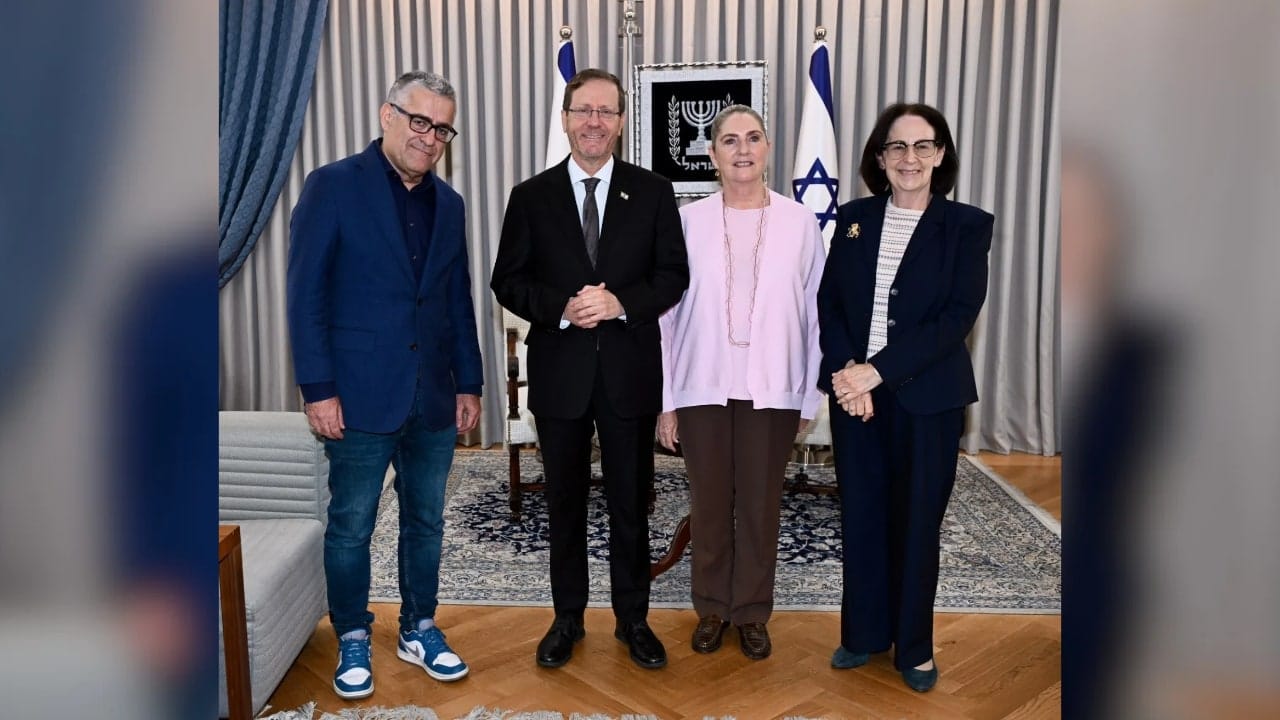
A Jewish Federations of North America (JFNA) loan fund has provided more than $240 million in financing to 4,132 Israeli small businesses since the October 7 massacre, the organization said, as President Isaac Herzog hosted an event honoring the initiative at his Jerusalem residence on Thursday.
The loans supported businesses accounting for an estimated 28,000 jobs, according to JFNA. Recipients included business owners serving in the IDF reserves, firms displaced from border communities, and tourism and hospitality businesses whose revenues were hit by the war.
JFNA established the Israel Small Business Loan Fund in the months following October 7, 2023, as part of its Israel Emergency Campaign, which ultimately raised more than $900m.
The fund itself raised approximately $92m. in philanthropic capital, which helped secure additional financing from banks. Together, those resources enabled more than $240m. in lending, JFNA said.
Repayments are used to finance further loans. According to the organization, approximately NIS 257m. in repaid funds has already been lent again, while less than 0.5% of the capital lent was more than a year overdue.

Herzog praised the initiative for helping business owners preserve their livelihoods and sustain their communities through the economic disruption caused by the war. He described the assistance as an expression of shared Jewish responsibility and confidence in Israel’s future.
Approximately 48% of the loans went to businesses in northern Israel, communities near the Gaza border, and the northern Negev, according to JFNA. Some borrowers faced several difficulties simultaneously, including evacuation, reserve service, and falling revenues.
Becky Caspi, JFNA’s senior vice president, said the initiative was shaped by the practical needs of business owners trying to keep operating, including shopkeepers in Kiryat Shmona and reservists managing businesses from their bases. Affordable credit, she said, was central to their ability to continue.
Business owners describe rebuilding after turmoil
Three borrowers shared their experiences during a panel moderated by journalist Miri Michaeli at the event.
Hadas Cohen, who runs Studio Dosa, a gold and gemstone jewelry business in Ramat Gan, managed the business alone after her husband and business partner was called up for reserve duty. The loan helped cover supplier payments and cash-flow needs, according to the release.
Atar Levy, owner of landscaping business Ginot Atar, was evacuated along with his employees and called up for reserve service. After resuming operations, he used financing to purchase a tractor, trailer, and professional tools.
Shirin Khatib, who runs a language college employing five people in the northern Arab city of Shfaram, received a loan from the Koret Israel Economic Development Funds in June 2024.
The financing, alongside professional guidance, helped stabilize the business after the war interrupted her expansion plans.
JFNA initiative helps businesses across different groups
The initiative operates through five lending platforms: Bizi, Daroma-Tzafona, the Koret Israel Economic Development Funds, Ogen, and SparkIL.
Their programs serve different groups – including businesses near Israel’s borders, reservist-owned enterprises, Arab and Ethiopian-Israeli entrepreneurs, and borrowers who struggle to obtain suitable financing through conventional institutions.
Assistance includes short-term working capital, low-interest and interest-free loans, and business mentoring.
JFNA said surveys conducted this year found that 71% of surveyed Bizi borrowers reported higher revenues than in the year before receiving their loans, while 96% had maintained or increased their workforce.
Sara Gottlieb, chair of JFNA’s Israel and Overseas Committee, said the fund was designed to allow donated capital to finance successive rounds of lending as business owners repaid their loans.