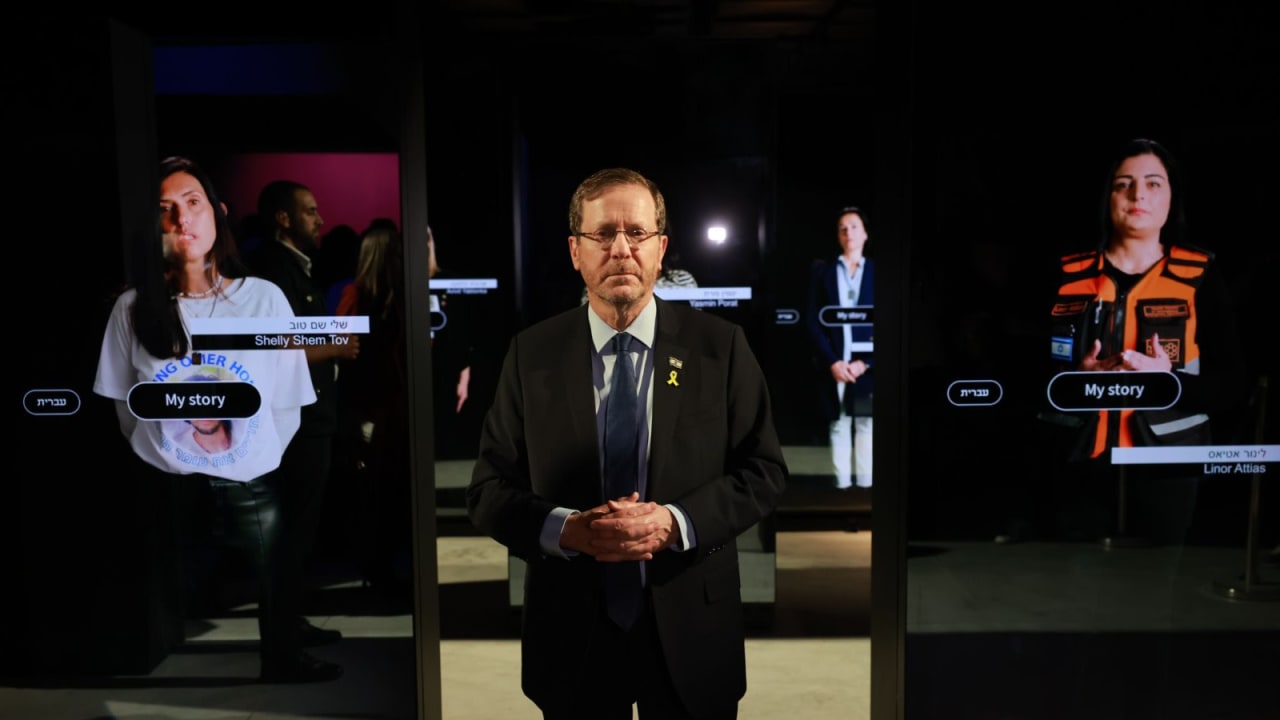
There are things a person should never have to see.
Women whose bodies bore evidence of sexual violence. Victims whose remains were left in frozen positions reflecting the extreme trauma they had endured. Women and men whose bodies had been mutilated, burned, or decapitated.
For the forensic professionals tasked with identifying the victims of October 7, these were not isolated cases. They encountered an unprecedented range of trauma, requiring them to draw on virtually every area of forensic expertise at their disposal.
But the forensic record of October 7 is about more than identifying the dead. It documents what was done to the Jewish people that day: deliberate murder, mutilation, burning, sexual violence and other atrocities inflicted on civilians. The attacks were an attempt by Hamas and other attackers to annihilate Jewish life in the communities surrounding Gaza and erase the Jewish presence in southern Israel.
Now, Hadassah Medical Center and the Museum of Tolerance Jerusalem have partnered together to present Lessons Learned From October 7 in Forensic Medicine on Oct. 13–14. Thanks to this partnership, for the first time since October 7, 200 members of the Israel Police, National Institute of Forensic Medicine, IDF and international forensic experts will convene under one roof. The conference will examine the knowledge, methodologies and lessons accumulated in the aftermath of such a complex tragedy, including revealing new methods and expanded capabilities in forensic identification, forensic medicine and disaster management.
The conference was conceived by Dr. Ira Titunik, a forensic odontologist with more than 40 years of experience in forensic medicine and human identification, and Prof. Esi Sharon, head of the Police Forensic Odontology Unit in the Division of Identification and Forensic Science. They joined forces with MOTJ Education Wing Director Dr. Granit Almog-Bareket to bring together Israeli professionals who carried out the forensic response and international experts as well.
Among the Israeli experts participating are Dr. Chen Kugel, director of the L. Greenberg National Institute of Forensic Medicine; Dr. Nurit Boubli, director of its Laboratory Division and Biological Laboratory; and senior experts from the Israel Police Division of Identification and Forensic Science. The international delegation includes Prof. Thomas Holland, a forensic anthropologist and former scientific director of the Central Identification Laboratory of the U.S. Department of Defense, and Dr. Michael Baden, a forensic pathologist and former head of the New York City Police Department’s Forensic Pathology Unit.
For the Museum of Tolerance Jerusalem, this symposium is a natural continuation of its work to preserve the memory and testimony of October 7.
The Museum’s 06:29: From Darkness to Light exhibition tells the stories of women who witnessed the aftermath of the attacks. To expand on those testimonies, at the conference, Almog-Bareket will present her research on how visitors process the exhibition and translate their experiences into perspectives on personal responsibility, hope, leadership and civic commitment. Based on a qualitative analysis of tens of thousands of visitor responses, the research examines how encounters with collective trauma can shape personal and collective memory, civic identity and social responsibility.
“The research offers a framework for understanding the process through which personal testimony takes shape as collective memory, and how that memory can become a source of civic commitment and leadership in action,” Almog-Bareket said.
Beyond preserving testimony, the Museum serves as a platform for translating memory into education, civic responsibility and leadership. As such, the conference brings together two complementary forms of documentation: the Museum captures memory, while forensic science establishes the evidence. Together, the partnership between these two Jerusalem institutions ensures that what happened is not only remembered, but documented.
“Alongside our obligation to uncover the truth and learn from it, we have a responsibility to ensure that it is preserved in memory and helps shape our future,” said MOTJ Managing Director Jonathan “Yoni” Riss. “At the heart of the Museum’s mission is the principle of mutual responsibility. In the aftermath of October 7 and the extraordinary forensic work that followed, we saw that responsibility in action. Even in the face of horrific circumstances and the deeply difficult nature of their work, these professionals never stopped leading. They did not allow themselves to become victims of what they were witnessing; they continued to act with purpose, humanity and a profound sense of responsibility to the victims and their families.”
“For those working in identification and forensic medicine, the mission does not end with establishing a person’s identity,” Sharon said. “Identification is the first step in a broader process of remembrance, recognition, and commemoration that enables society as a whole to confront its loss and preserve the stories of those affected for generations to come.”
Written in collaboration with the Museum of Tolerance Jerusalem