
The IDF announced on Thursday that it had completed the clearance of two Hezbollah underground infrastructures on the Ali al-Taher ridge in southern Lebanon and that forces are now working to neutralize them.
According to the military, the infrastructures were built over a period of about two decades and were planned and funded by Iran.
Forces from the IDF’s 36th Division have operated in the area in recent weeks and, according to the military, achieved operational control of the ridge both above and below ground. During the operation, the area was cleared of Hezbollah operatives who had been stationed there, with some killed and others fleeing.
Inside the underground infrastructure, the forces found command rooms, weapons storage rooms, generators, living quarters, showers, and a kitchen. The IDF said the complex allowed Hezbollah operatives to remain underground for extended periods and conduct combat operations from there.
According to the military, terrorist attack plans against Israel and IDF forces were carried out from the tunnels. Following operations conducted there in recent weeks, the ability to carry out additional attacks from the sites was neutralized. The forces’ efforts to neutralize the tunnels are ongoing, and once completed, the IDF will redeploy for defensive operations in accordance with its assessment of the situation.
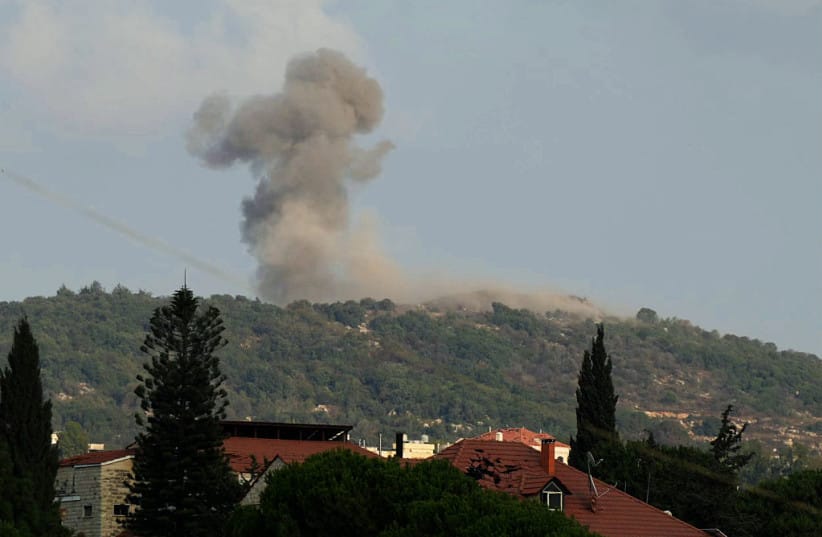
The military emphasized that operations in southern Lebanon are continuing and that the IDF remains committed to the ceasefire agreement in Lebanon.
IDF's Ali al-Taher operation lasted several months
The capture of the Ali al-Taher ridge, with its peak being the Beaufort Castle, was a complex operation that lasted several months.
In the first stage, engineering forces mapped the upper section of the ridge and destroyed tunnels, concealed openings, direct-fire positions aimed at Israeli communities and the border, weapons depots, long-term living quarters, command rooms, and operating rooms.
The second stage, locating the underground systems, was considered the most complex phase of the maneuver. It included locating the lower sections of the ridge and mapping the underground systems hidden beneath dense vegetation and rocks. Their construction, which required a massive financial investment by Iran and Hezbollah, lasted around 20 years.
Some of the underground systems were located and destroyed, as previously reported, while others were only discovered very recently. For weeks, IDF forces engaged in a battle of wits with Hezbollah to cut off the logistical route used to transfer food, water, and ammunition from Beirut to the underground tunnels on the Ali al-Taher ridge.
During the intense battle over the tunnel entrances, Hezbollah attacked the forces several times using drones. According to information obtained by Walla, in the past week Hezbollah’s connection with the trapped operatives may have been cut off, and they likely either died of starvation or escaped.
Over the past several months, Hezbollah’s leadership attempted to pressure the Iranians to tie the fate of the organization and its various infrastructures to negotiations with the US, but the effort failed. Now, the situation has shifted: Iran is attempting to deter Israel from destroying all of the infrastructure on the ridge, and Iranian operatives are apparently also trapped inside the tunnels.
Iran warns US it will respond with large-scale attack
Earlier on Thursday, Iran warned the United States that it would respond with a large-scale attack if Israel launched a full operation to capture the ridge, where more than a dozen Islamic Revolutionary Guard Corps personnel are entrenched alongside Hezbollah operatives.
According to sources briefed on the message, at least two senior IRGC officers are among those present on the ridge. The sources said the warning was conveyed to Washington through Oman, which has served as a mediator between the US and Iran.
Until now, Iran has refrained from attacking Israel, raising the question of why Tehran has chosen to issue threats again at this point, and specifically over the Ali al-Taher ridge. It can be assessed that Iran, which until now has avoided fully backing Hezbollah, is attempting to bring the Shi’ite organization closer to its side amid concerns of an impending military confrontation with the US and Israel.