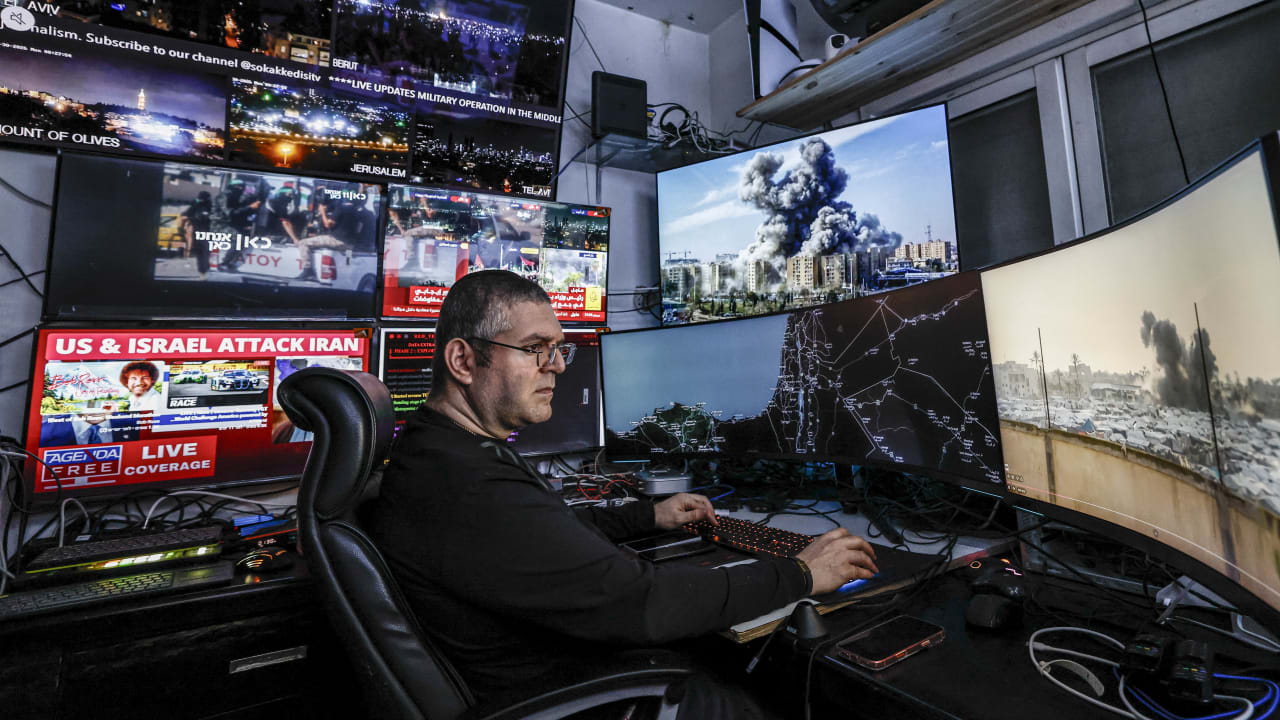
Over the past year, the Operations Directorate underwent a significant restructuring to update personal security policies for service members of all ranks, both domestically and abroad.
In recent months, the specialized branch's mandate expanded, taking responsibility for the security of IDF personnel both in Israel and abroad against a wide array of threats - ranging from active-duty soldiers to high-profile officials, major generals, and the Chief of Staff.
In an interview with Walla, the head of the expanding branch discussed the growing risks, active intelligence alerts, and the joint operational response across Israel's defense establishment.
"We are responsible for the entire spectrum of terrorist threats. This has hit home even more acutely since Operation Roaring Lion in Iran, driven by what the Iranians call 'settling scores' abroad, as well as the spike in antisemitic incidents we’ve been seeing," the branch head explained.
He added, "About a year and a half ago, it was published that we extracted a soldier from Thailand following public calls to harm him, along with various other antisemitic incidents in places like Amsterdam, as well as legal challenges."
An international incident mobilized the security establishment, changing it forever
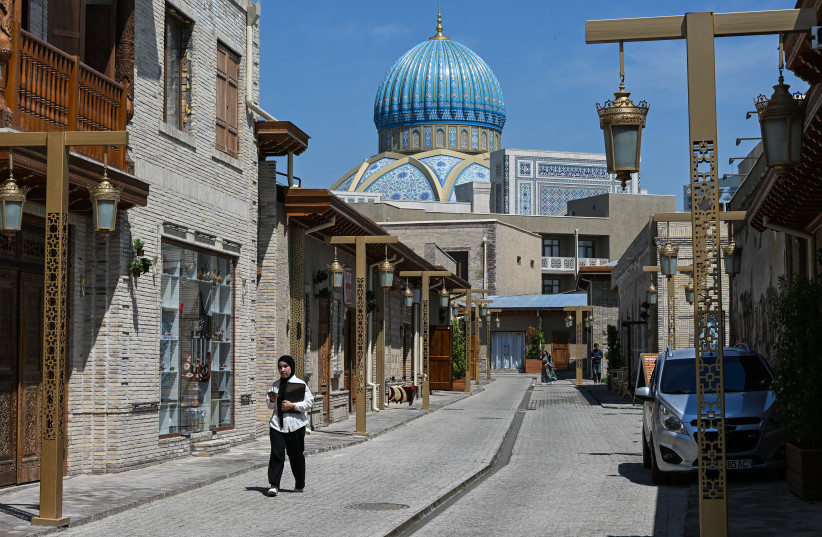
On November 2, 2022, details were cleared for publication regarding a 19-year-old lone soldier serving on active duty. Flying on a commercial flight to visit family in Uzbekistan, she departed the capital, Tashkent, heading toward Dubai in the United Arab Emirates as a layover on her way back to Israel.
Due to a severe medical emergency involving one of the passengers that required immediate attention, the plane made an emergency landing at around 5:00 a.m. in Shiraz - one of Iran’s major cities.
The soldier immediately alerted her family, who quickly notified her commanders. The information reached the Mossad, senior IDF officials, and the prime minister quickly. The minutes that followed were tense and felt like an eternity, as everyone understood she could be detained by local authorities the moment her identity was discovered.
A few hours later, under a total blackout in Israel and with the Mossad guiding and monitoring the entire situation, the plane took off for the UAE and then returned to Israel. It was a high-stakes crisis, with every development reported directly to the prime minister, the Defense Minister, and the IDF Chief of Staff.
The incident marked a turning point in how the IDF views the safety of its service members worldwide. In its aftermath, the Personal Security Branch was established under the command of Lt.-Col. "A" within the Security Division of the General Staff’s Operations Directorate.
Once it became clear that this sensitive issue required multi-agency coordination beyond the military alone, the decision was made to establish the Security Division within the Operations Directorate under the command of Brig.-Gen. "T."
This created a single, centralized authority responsible for issuing policies and technical directives across all service branches, directorates, arms, and regional commands. "Another step was appointing a dedicated intelligence officer for this domain, alongside a specialized reorganization within the Intelligence Directorate that I cannot elaborate on," Lt.Col. A. explained.
Route analysis, location tracking at the press of a button
One of the branch's initial tasks was a comprehensive risk analysis of global flight paths and routes that could pose a hazard to IDF personnel (similar to the emergency landing in Iran). In collaboration with the National Security Council (NSC), clear rules were established detailing which flights are off-limits due to the risk of emergency landings or layovers in enemy or hostile nations.
"All of this painstakingly gathered data was made accessible to every soldier via a dedicated app, allowing them to easily check what is permitted and what is off-limits," Lt.-Col. A. said. "Service members enter their full itinerary, including transit flights, and receive real-time threat advisories - including operational security guidelines and cybersecurity protocols. That's why we call it 'personal security.'"
The attack on Maccabi Tel Aviv soccer fans in Amsterdam in November 2024 served as another major red flag. Pro-Palestinian groups carried out coordinated attacks against Israelis across several locations in the city against the backdrop of the "Swords of Iron" war, sharing real-time information and documenting the violence on social media. Parts of the media described the events as a pogrom, while Dutch authorities characterized them as an antisemitic attack.
"When it started, we got a call saying the Chief of Staff wanted to know if any active IDF personnel were there. We checked and discovered a significant number of soldiers we had no prior record of - either because they had landed in another country and traveled to Holland by land, or because they were moving between cities. That event proved we had to expand our tracking and oversight capabilities for all IDF soldiers worldwide.
"Today, if an earthquake strikes Venezuela, for instance, I can generate a report at the press of a button showing whether any soldiers are there or just passing through. We handle everything directly from the branch and no longer have to scramble for information after the fact."
One ongoing challenge involves instances where a soldier flies abroad, and civil-military systems fail to automatically flag them as active-duty or career personnel, though a solution has been developed to retrieve this data that remains classified.
"Another major concern is dual citizenship, especially given the rise in antisemitism - whether it's protests outside the homes of soldiers living abroad or service members facing mandatory draft requirements in foreign countries that they need to resolve legally," noted the head of the Personal Security Branch.
"Because of this, all soldiers are required to report dual citizenship so we can vet their situation and issue appropriate instructions. We want to avoid a scenario where a soldier flies overseas and is arrested by local authorities for unresolved paperwork. This happened to us at the start of the Russia-Ukraine war, and we later discovered that mandatory draft laws exist in several European countries as well."
Doxxing, legal warfare, and the exposure dilemma
An equally complex threat involves the public exposure of soldiers' personal details, doxxing campaigns, and global efforts to issue arrest warrants.
"I sign off on all exposure protocols for commanders and officials regarding whether their name and rank can be published," said Lt.-Col. A. "There is a clear military order that we enforce to protect the identities of IDF personnel. On one hand, we want to allow public visibility - and we work closely within the intelligence community alongside the Shin Bet and Mossad. But unlike them, while they are covert organizations, the IDF is a public-facing entity."
"I recently explained this at Shin Bet headquarters: 'The IDF is the people's army; it comes from the people and returns to the people.' That makes it difficult to enforce a total gag order on the identity of a brigade training base commander or a brigade commander. On the other hand, we have a vital interest in protecting them from arrest abroad or from being targeted.
"We manage this tension on a daily - almost hourly - basis in close coordination with the IDF Spokesperson’s Unit. We constantly balance the desire for public engagement with the necessity of keeping service members safe. Ultimately, we set the policy on who can be named publicly, and it escalates up to the Head of the Operations Directorate (Maj.-Gen. Itzik Cohen). That provides a major advantage, as he has a macro-level view of the entire IDF and access to intelligence that gives us the full picture. I can conduct a proper risk assessment and damage control evaluation even if information happens to leak."
However, the Security Division's responsibilities extend beyond mandatory and career soldiers. An equally complex issue involves reservists who have completed their service and travel the world as private citizens. The Personal Security Branch has limited authority and oversight over them, as civilians are not required to report their locations to the military.
Despite this, the Operations Directorate’s Security Division works in tight coordination with the Foreign Affairs Ministry and the Justice Ministry.
"If a complaint is filed against a reservist, or if there is an intent to file one, we bring in the Military Advocate General’s International Law Department, working alongside the Justice Ministry and handling operational coordination with the Foreign Ministry. We manage these cases jointly through a streamlined framework we established to tackle the issue," Lt.-Col. A. said.
"Most of these reports stem from content posted online during 2023–2024. We aren't seeing new cases emerge. However, it's crucial to highlight the risk posed by hostile groups using data-scraping techniques: the moment a service member lands in a country and posts about it online, these groups sometimes manage to track them down."
Recently, a specific fund published allegations targeting naval reservists who allegedly took part in intercepting a protest flotilla. Following an investigation by the Personal Security Branch, it turned out the claims were made solely because the individuals listed details about their naval service on LinkedIn.
"We are formulating policies for these scenarios to define what is permissible online, even for reservists who are civilians and not fully subject to IDF regulations. At this stage, our focus is primarily on public awareness so everyone understands the threat," Lt.-Col. A. emphasized, clarifying that the individuals in question had not actually participated in intercepting the flotilla, but were targeted simply for having served in the Navy. "
We also recently saw a social media campaign involving career officers. We called them in, presented the risks, and explained our recommendations."
Psychological warfare, espionage, and physical threats
Beyond direct threats abroad, the Personal Security Branch also navigates the evolving online landscape of public diplomacy and legal warfare, particularly surrounding public controversies.
For instance, regarding the film NAZA - which sparked intense public debate in Israel and within the military, raising concerns about a potential wave of media and legal attacks against IDF soldiers - the branch head noted that it is too early to gauge the long-term impact.
The Security Division is currently awaiting a formal legal assessment from international law experts in the Military Advocate General's Corps.
"It's important to emphasize that none of these threats have materialized into actual legal complaints or immediate physical danger so far. It concerns us primarily because the line between legal proceedings and someone attempting to cause physical harm is very thin, which is why I treat this as a personal security issue."
Beyond the media arena, the IDF is bracing for immediate physical threats: revenge efforts by Iran, Hezbollah, and Hamas surrounding the sensitive High Holy Days, alongside warnings from the defense establishment regarding a fresh wave of espionage targeting IDF personnel and security officials - aimed in part at uncovering classified operational methods utilized during the war.
"This is the core purpose of the Security Division," Lt.-Col. A. explained. "Where we used to look strictly at VIP protection, today - when we sit down with partner agencies like the Shin Bet, Mossad, the Israel Police, and the Defense Ministry - we evaluate threats holistically with a completely different level of access.
"Take espionage cases, for example: I can immediately assess whether a threat impacts the Chief of Staff's immediate surroundings or affects someone traveling anywhere in the world. That is the Security Division's key advantage; previously, every security agency handled these matters in isolation."
According to the branch head, there are cases where the unit handles real-time threat mitigation regarding cyberattacks and mobile device security:
"We have significantly expanded our capabilities in executive protection. What has changed most is our capacity for intelligence monitoring - detecting a threat early and issuing an immediate alert and operational response. I cannot comment on specific operations, but we address these risks both through broad contingency plans and targeted interventions. We have encountered incidents - certainly involving senior officials, but also lower ranks - where we had to intervene, and we successfully protected our people. We have faced these threats continuously."
Asked whether there have been actual physical attempts on the lives of senior officials, Lt.-Col. A. replied, "Abroad, almost none - that falls largely under the Mossad's domain. But domestically, there were clear intentions that we identified early enough to prevent them from escalating into an attack. In other words, we never let it reach a 'near-miss' physical attempt."
He continued, saying, "We focus on identifying when something is brewing and deploying a response, supported by the Shin Bet and, for overseas matters, the Mossad. I am glad to say that our adversaries have had zero success so far, and I hope it stays that way. We work hand-in-hand with everyone - the Shin Bet, Mossad, and Police - because this is a challenge that affects us all."
Reflecting on the current threat environment and the enemy's motivation to target IDF soldiers and commanders at home and abroad, Lt.-Col. A. concluded: "There is far more focus on this now, and clear intent. Yes, their motivation is very high."