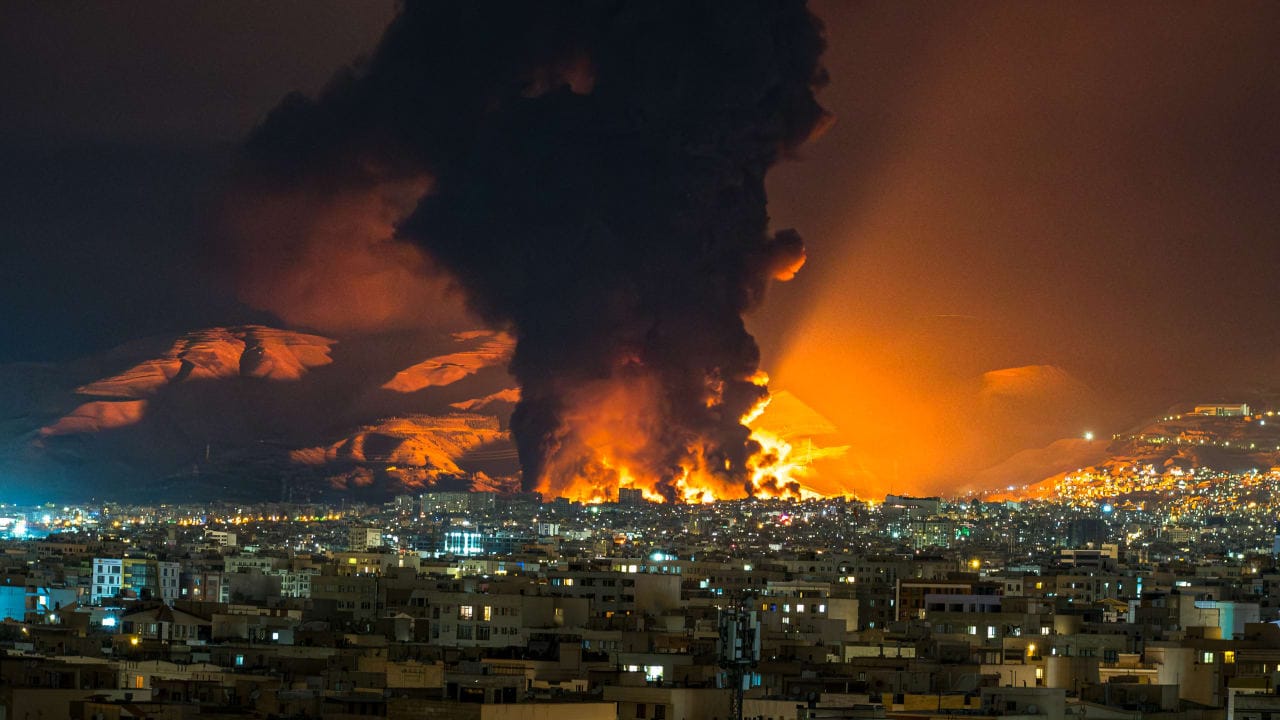
Many Israelis expect a third round of war between the US, Israel, and Iran (and whoever else in the region Tehran pulls in).
The next question many have is: will this really be the last battle or just another "round" in a series of new, seemingly endless rounds?
Israelis' experience with seemingly endless rounds of fighting can be seen on multiple fronts.
But it's freshest in Gaza, where major conflicts were fought in 2008-9, 2012, 2014, and 2021, plus another half-dozen or so minor conflicts, all before October 7.
If so, might Iran just become the new Gaza problem?
Iran may only be containable, not beatable
In other words, might Iran become an adversary who is too scary to go all out against and so cannot be completely beaten, but only contained, deterred, and delayed from perpetrating future attacks on Israel?
Might Iran become an unending series of "hiccups" when ballistic missiles rain down on all of Israel's cities (not "just" Sderot like the old days with Hamas), and the whole country shuts down with people hiding in their bomb shelters?
What will that mean for routine life, foreign investment, the constant need to produce hugely expensive air-defense interceptors, and air travel?
This is all assuming that Israel keeps having the heavy upper hand and the Islamic Republic at some point does not surprise Jerusalem with a new weapon or tactic that causes far more harm.
With all of those questions, why would Israel roll the dice to attack now, when there is no immediate danger from Iran either with respect to its nuclear or ballistic missile program?
Both issues could become threats again, but they are not expected to become imminent major threats for years.
There are at least two hopeful factors here which some Israeli officials think could make this third round more effective and the general struggle against Iran more successful faster than the drawn-out almost 20-year struggle with Hamas.
Officials point out that there are tens of millions of Iranians who hate the regime and want to tear it down – a much more formidable challenge for internal rebellion than Hamas ever faced in Gaza.
They also point out that Israel has the most powerful country in the world – the US fighting with it side by side – or in this case, fighter jet squadron by squadron.
There are numerous counterpoints which could make Iran's regime harder to topple than Hamas, not least of which is that a major land operation is either politically impossible or militarily highly impractical.
But these two positive points deserve attention.
When Hamas said it could wait out Israel during another round, it had almost zero opposition, and it was saying it could wait out a small country of 10 million people whose economy is highly vulnerable to minor disruptions.
By contrast, a million Iranians came out to protest against Iran's regime on January 8-9, and the American military has maintained a show of force and economic pressure now for most of 2026 in a way that Israel could never have done.
Even Israel's October 7 war with Hamas was never really two years long. It was usually a few weeks of intense fighting, followed by months of much lower-key patrolling or even withdrawing until another fight.
Optimistic to believe Tehran may bend on nuclear issue
So optimistic Israeli officials think that the regime in Tehran may really bend either on the nuclear issue or even get toppled at some point by virtue of an additional round of attacks and pressure.
They are far from certain that they are right.
After dropping more than 30,000 bombs on Iran over 40 days in early 2026 and not achieving nuclear concessions, let alone toppling the regime, they would be blind to assume victory is around the corner.
But that does not mean that their gamble – if it happens – might not pay off.
Whether it will be worth the cost to the Israeli home front will be a much more complex calculation.