As Israelis prepare to go to the polls in October, the question before them is about far more than who will form the next government. It is about the kind of Jewish state Israel intends to be. That question did not begin with the judicial overhaul initiated in 2023, nor will it end with the coming elections. It has been unfolding for decades, rooted in competing visions of Zionism and the identity of the State of Israel.
Jewish history offers a warning. Following the death of King Solomon, the kingdom split in two under his son Rehoboam. The rival kingdoms gradually weakened until both were destroyed. The lesson — that internal division leads to national catastrophe — remains painfully relevant.
To understand this moment in time, we must return to one that the country never fully confronted: the assassination of Prime Minister Yitzhak Rabin in 1995.
I will never forget the morning after Rabin was murdered. Hundreds of students gathered outside the university’s administration building, their eyes red from tears and a sleepless night, to light memorial candles. I spoke to them, my voice choked with emotion, about the Rabin I had known and about the stain his assassination would leave on Israel’s history.
I also told them that it would be a mistake to focus solely on the assassin, Yigal Amir. We had to examine the ideological environment that made the murder possible. Instead, under the banner of national unity, Israel largely avoided that reckoning, leaving the ideological roots of the assassination largely unexamined.
The Oslo Accords were the subject of legitimate public debate. Yet among some extremist elements within the religious settlement movement, opposition went beyond politics. Certain rabbis invoked the halachic doctrine of moser — a Jew who informs on fellow Jews or delivers their lives or property into the hands of hostile authorities. Under halachic law, a moser may be killed, and a Jew who kills him is considered to have performed a mitzvah.
Amir later stated that he had received rabbinic authorization to regard Rabin as a moser.
Leading rabbinic authorities, including the Chazon Ish and Rabbi Ovadia Yosef, had ruled that the moser doctrine had no place in the sovereign State of Israel. Yet Israel never fully confronted how such ideas had entered public discourse or what they signified for the future of the state.
The roots of that ideological transformation reach back to the Six-Day War.
Like many Israelis, I experienced the war as a moment of profound national renewal. As a paratrooper officer, I remember hearing Motta Gur announce, “The Temple Mount is in our hands.” It was a deeply emotional moment. Many Israelis, secular and religious alike, felt they had reconnected with the biblical sites of Jewish history.
But two very different conclusions emerged from that victory.
Most Israelis saw it as an extraordinary military achievement, won through blood, courage, sacrifice, and comradeship. We did not regard settlement throughout the territories as a religious obligation. Their future, we believed, should be determined by Israel’s democratic institutions, weighing security, diplomatic, and moral considerations.
Another current, inspired by Rabbi Abraham Isaac HaCohen Kook and developed by his son, Rabbi Zvi Yehuda Kook, saw the war as a decisive stage in the divine process of redemption. From this worldview emerged Gush Emunim, which regarded settlement throughout the biblical Land of Israel as a religious commandment and viewed the Six-Day War and the settlement enterprise as expressions of divine will.
This outlook gave rise to the question of the limits of obedience to the state when its decisions conflicted with the commandment to settle the Land. Over time, part of the movement underwent a deeper transformation. Increasingly, some held that the state lacked legitimate authority whenever it conflicted with the redemptive vision.
Following the disengagement from Gaza in 2005, this evolution accelerated. For some, the evacuation violated a divine commandment to “inherit the Land.” Among influential religious educators, particularly within the Bnei David pre-military academy and circles associated with the Mercaz Harav yeshiva, a new constitutional vision gained ground. Their objective was not merely to influence public policy but to reshape the state itself — replacing a Jewish and democratic state with one whose constitution is the Torah — while building the political, educational, and public power needed to advance this goal.
In this conception, democracy is understood primarily as majority rule. Judicial independence, checks and balances, and the protection of minority rights are not regarded as essential features of democratic government but as obstacles to establishing a halachic state.
It is against this background that the judicial overhaul proposed in 2023 must be understood. This is not merely a dispute over the powers of the Supreme Court or the role of the attorney general. It reflects a much deeper debate over the source of Israel’s authority: whether it should remain faithful to the vision embodied in the Declaration of Independence or move toward a fundamentally different, religious model.
To this day, political theory continues to rest on Aristotle’s foundational insight that it is not the role of the state to enforce ideological or social unity. On the contrary, the purpose of the state is to enable people with different beliefs and convictions to live together, while promoting stability, openness, and moderation as guiding values.
The architects of modern Zionism — from Theodor Herzl and Ze’ev Jabotinsky to David Ben-Gurion — rejected the idea of a theocratic state. They envisioned a Jewish state that would be democratic, committed to liberty, equality, and the rule of law. The Declaration of Independence captured that remarkable synthesis. It established Israel as the nation-state of the Jewish people while pledging to “ensure complete equality of social and political rights to all its inhabitants irrespective of religion, race or sex” and guaranteeing “freedom of religion, conscience, language, education, and culture.”
The judicial overhaul seeks to alter the very essence of the State of Israel and depart from the vision of Zionism embodied in the Declaration of Independence — a Jewish state committed both to national self-determination and to the principles of liberal democracy.
The coming elections offer Israelis an opportunity not merely to choose another government but to reaffirm the national commitment to the values on which the state was founded and finally provide them with the constitutional framework they deserve. Israel’s future as a Jewish and democratic state depends on it.
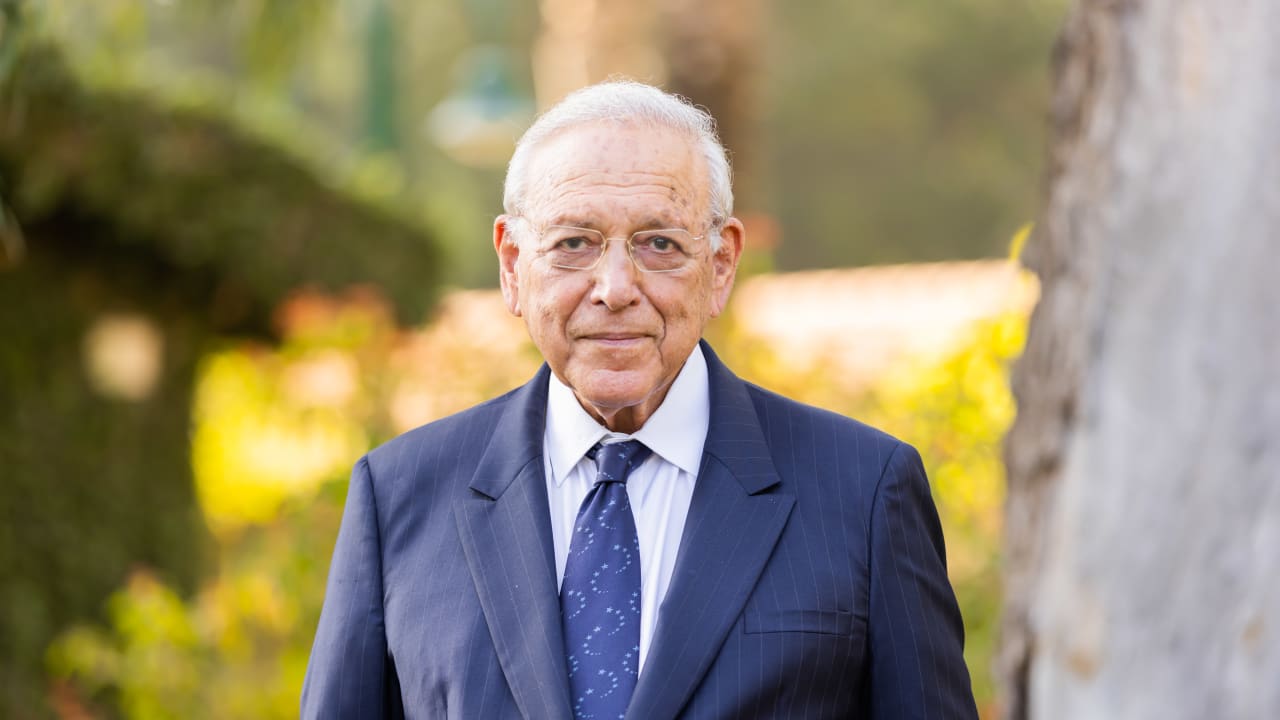
Prof. Uriel Reichman is the founding president and chairman of the Board of Reichman University. This essay is adapted from the author's address at the 2026 Herzliya Conference.