Saudi Arabia and Qatar’s quick message in support of continued negotiations is a way to signal to both Washington and Tehran that the conflict has not yet progressed to the point where diplomacy is no longer an option, Bahraini political analyst Dr Ahmed Alkhuzaie told The Jerusalem Post on Monday.
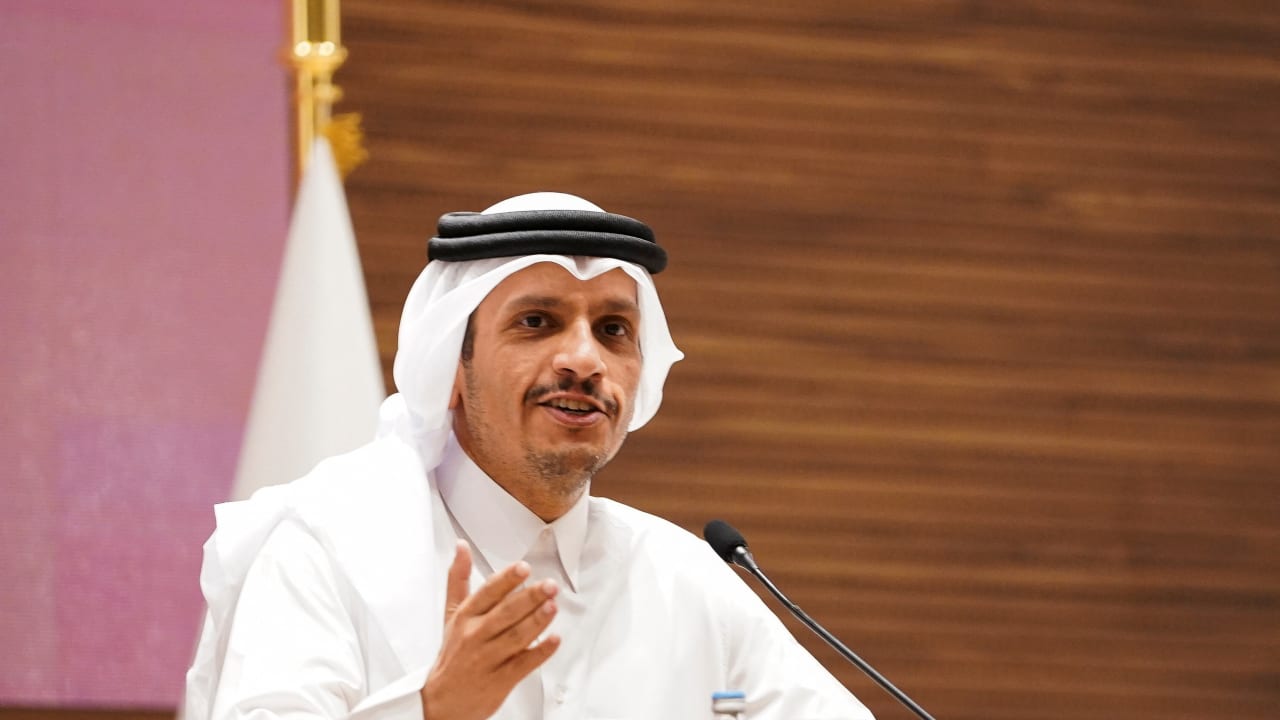
Qatari Prime Minister Mohammed bin Abdulrahman bin Jassim Al Thani and Saudi Foreign Minister Prince Faisal bin Farhan Al-Saud spoke on Monday morning about the necessity of facilitating mediation efforts between the United States and Iran, Qatar’s foreign ministry confirmed.
The call came only hours after the Islamic regime launched ballistic missiles at Israel, ending around a month of relative calm, in an apparent response to Israel’s attacks on Hezbollah targets in Lebanon. While the Iran-backed terror group has loudly rejected Beirut’s negotiations with Jerusalem, Tehran has demanded that Israel end its war against the terrorist organization as a condition for ceasing hostilities against US, Israeli and Gulf interests across the region.
US President Donald Trump has spent much of the hours following Iran’s attacks and Israel’s subsequent response demanding that the hostilities cease and Tehran return to negotiations for a peace agreement. His push for diplomacy is noticeably different than that taken by the American president in the early days of the war, which Alkhuzaei largely attributed to the influence of Doha and Riyadh.
Alkhuzaei, a managing partner at the Washington, DC-based Khuzaie Associates LLC, explained that both Riyadh and Doha influence Washington and Tehran, but the weight they hold with Iran is noticeably less than with the US.

Qatar, Saudi Arabia remain regional stability
Qatar and Saudi Arabia’s conversation was part of a “carefully calibrated message” indicating that both major regional players “remain committed to regional stability and do not wish to be drawn into an uncontrolled spiral of confrontation.”
As “stabilizing partners in energy and security,” influence over Washington is largely ”not confrontational but constructive,” he said, ensuring that Trump can still view both as ”indispensable allies…safeguarding US interests in the Middle East.”
The two Gulf nations’ relationships with Tehran are noticeably different. “Still positive,” Alkhuzaei explained that the influence was “subtler,” which has allowed channels of communication to remain open even as the conflict heightened and the Islamic regime attacked both countries.
The message pushed to Tehran is that “regional isolation is not inevitable if it engages constructively,” he explained, commenting on why both countries have continued calling for calm despite facing frequent attacks from Iran.
Qatar has continued its role as mediator between Western powers and Iran, facilitating humanitarian arrangements and indirect talks, while Saudi Arabia’s “cautious engagement, especially through regional dialogues and limited de-escalation initiatives, signals to Tehran that the Gulf states are not seeking perpetual confrontation but rather a framework for coexistence.”
“This helps temper escalation and creates space for diplomacy, even when broader US-Iran relations are strained,” he explained.
Pushing Washington and Tehran toward restraint
Together, both Riyadh and Doha have pushed both Washington and Tehran toward restraint, he asserted, adding that their efforts had undoubtedly created a “stabilizing effect” for the region.
Though other analysts have previously told the Post that Gulf trust in US-led security architecture had been eroded, Alkhuzaei explained that trust in US President Donald Trump’s diplomatic strategy was “pragmatic rather than logical.”
“By aligning with Washington’s reflexive ambiguity, where contradictory signals are deliberately used to unsettle Tehran, Saudi Arabia and Qatar show that they trust the administration’s ability to keep Iran off balance without committing to a fixed course of escalation,” he explained. “Their willingness to reinforce this ambiguity, whether through energy diplomacy or calibrated military messaging, reflects confidence that Trump’s approach preserves US freedom of action while giving Gulf partners space to maneuver.”
Through “embedding their own moves” in Trump’s strategy of “calculated uncertainty,” both Gulf states have been able to “avoid isolation and project agency.”
“Gulf confidence is reinforced by the perception that Trump’s strategy keeps multiple doors open, deterrence, negotiation, and escalation, without foreclosing any. For states like Saudi Arabia and Qatar, this flexibility is crucial: it allows them to hedge against sudden shifts in Iranian behavior while maintaining credibility with Washington,” he concluded. “The Gulf’s embrace of Trump’s reflexive diplomacy signals that they view it as a stabilizing mechanism, one that turns uncertainty into a shared asset rather than a source of vulnerability.”