
US Vice President JD Vance has become the key figure in recent Iran deal talks, and it’s clear why.
He has appeared in the media to support the memorandum of understanding. He is the perceived “closer” for the talks.
This is one of Vance’s most prominent roles in the administration since US President Donald Trump began his second term.
Vance has been in the spotlight in recent days for criticism of Israel, which has led to a torrent of pushback.
However, the perception that he may be even-handed in talks lends him greater credibility, which could be beneficial.
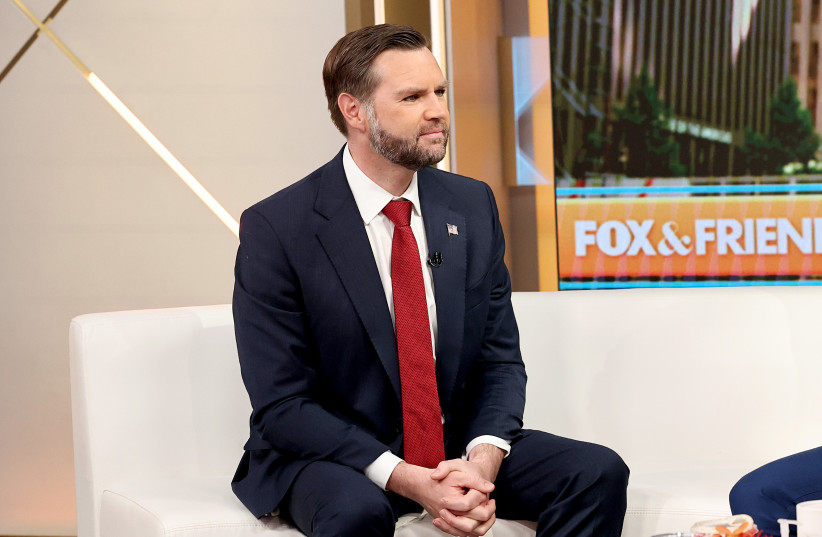
Vance has been tapped for other foreign policy initiatives.
Vance has been tapped for other foreign policy initiatives. He was in Greenland in March 2025 when the US was talking about acquiring the place from Denmark.
He received much attention in Europe between early 2025 and January 2026.
However, his role appeared to be slightly sidelined on some issues. Vance is perceived as more isolationist than other members of the administration.
He would be more likely to critique foreign policy adventurism, such as the Iran war, which began in late February.
However, his perceived isolationist tendencies are one reason that Tehran appeared to trust his role in discussions.
Tehran was suspicious after previous rounds of talks led to Israeli and US strikes on Iran. For instance, this was a pattern before the June conflict and the February 28 strikes.
Iran was unlikely to engage in talks if it felt it was being played. When Israel and the US couldn’t topple the regime in March, it became clear that some kind of negotiations would need to lead to a climbdown.
Vanc has shown he won't be played by Iran
Vance has shown that he doesn’t want to be strung along by Iran. During previous rounds of talks in Pakistan, he left when it became clear the Iranians were not going to make a deal.
He also didn’t go to Switzerland over the weekend. Instead, reports indicated that US diplomat Steve Witkoff was on his way to Bürgenstock.
Media in the Middle East are paying attention. Vance’s views on Israel and his willingness to critique some of the ministers in Israel’s government illustrate a willingness to speak his mind more than some other US administration figures.
This will inspire more confidence among other countries in the region, who want to see the White House be willing to rein in Israel.
For instance, recent comments by Israeli politicians suggesting collective punishment of all of Lebanon for Hezbollah attacks, or claims that Israel will never relinquish areas in southern Lebanon, have led to concern in the region.
In addition, comments in Jerusalem that suggest Israel is preparing for a future conflict with Turkey, Syria, Qatar, Saudi Arabia, or other “Sunni” powers have also raised eyebrows.
Countries want to feel that the White House is going to bring stability, not more conflict.
Al-Ain media in the UAE noted in a headline on Saturday that Vance now faces a crucial test. The report adds that “the name of US Vice President JD Vance has emerged as a key player in his country’s negotiations with Iran.”
This could appear representative of some of the thoughts in the Gulf about Vance’s role. The report noted that Reuters has also said that this is Vance’s “biggest role yet on the international stage.”
It argues that this is “a moment that could shape Vance’s future as Trump’s likely successor in the White House.”
There are several issues involved that make Vance well cut out for this role. As vice president, he cannot be fired. Therefore, he is willing to take some risks. He will want to succeed at this. On the other hand, if things don’t go well, it is still more than a year before there will be clarity about who might run for office next.
The Al-Ain report noted that “the talks represent a high-stakes scenario for all parties to the conflict, the Middle East region, and Vance’s political ambitions.
“The situation remains fluid, as Vance canceled a planned trip to Switzerland on Thursday evening to begin talks.”
There is also a sense that Vance could become a fall guy if things don’t go well. However, unlike others in the administration, any failure wouldn’t be met with calls for his resignation. He’s also less susceptible to influence campaigns or negative media coverage.
The Al-Ain article makes it clear that Vance is leading the way in walking point for this. There is a lot of work to be done, he noted. He also called on people to have faith in Trump’s policy.
The current administration appears to have warm ties with the Middle East
The Trump administration has achieved more in the region, including in relation to Israel, when it is perceived as working with the other countries.
The administration has warm ties with Turkey, Qatar, Pakistan, Syria, Saudi Arabia, and other nations.
Rising criticism of Syria, Qatar, Turkey, and Saudi Arabia in Israel is going to be felt in regional capitals. They want the Trump administration to stabilize things.
The Iran war brought chaos to the Gulf as Iran lashed out at many countries in the region.
Vance, seen as more rooted in US domestic policy, will be trusted in the region because he was not viewed as particularly gung-ho about the war.
Now the hard work begins. The memorandum with Iran may not achieve results. It may not lead to a deal. It could be just a temporary relief for the global community, as vessels now exit the Strait of Hormuz.
However, relief will be felt around the world for 60 days. This may create inertia against more conflict. Vance’s role may be greeted with skepticism in Israel or in some circles in the US.
However, there’s a chance that his role may help smooth things along because the mediators in the deal and also Iran see him as more balanced and arriving with less baggage.