In recent weeks, there has been talk in Washington about Syria potentially intervening in Lebanon. The reports have come as the Trump administration has expressed concern over Israel’s conflict with Hezbollah.
In essence, it appears that US President Donald Trump came to believe that Israel was not able to defeat Hezbollah quickly and that the war had led to too much destruction. Trump then considered whether Syria might help.
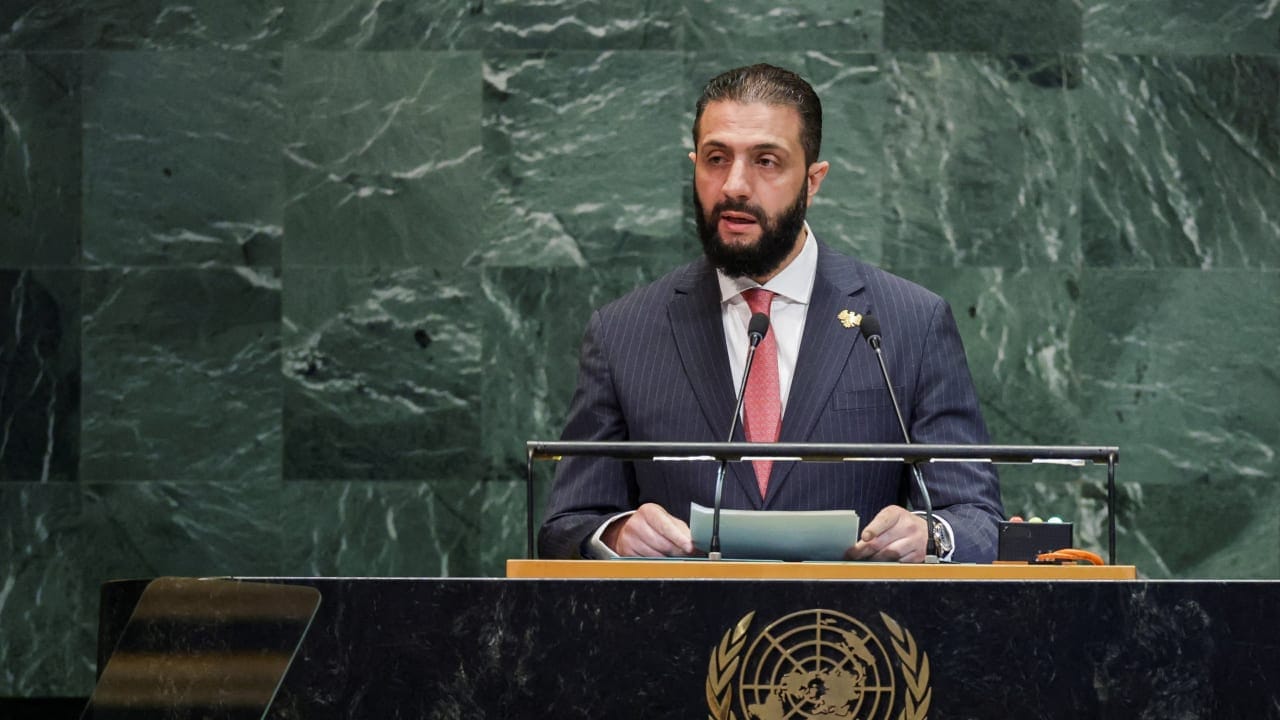
The Trump administration has embraced Syria’s transitional president, Ahmed al-Sharaa. Could Sharaa help solve the problem in Lebanon?
Could Sharaa help solve Lebanon?
Syria and Lebanon have more in common than just a border. Hezbollah intervened in the Syrian civil war and backed the Assad regime. Iran moved weapons via Syria to Hezbollah.
Hezbollah is widely seen by Syrian opponents of the Assad regime as having been complicit in Assad’s crimes. As such, it is believed that the Syrian rebel groups that came to run Syria after the fall of Assad in December 2024 might welcome the opportunity to fight Hezbollah in Lebanon.

Sharaa’s government has been cautious. It has helped prevent smuggling to Hezbollah, but it doesn’t want to plunge Syria into a new war.
Syria intervened in Lebanon in the past. It sent forces to Lebanon in 1976 and maintained a presence there until 2005.
Hezbollah was involved in the assassination of former Lebanese prime minister Rafic Hariri in 2005, and Syria was seen as working with Hezbollah. This led to the Lebanese demanding that Syria leave the country in 2005.
Syria thus knows the challenge of sending forces to Lebanon, and Sharaa recently said: “Lebanon needs joint solutions, and Syria is ready to anchor a new security path… Our goal is to back the Lebanese state, strengthen its institutions.”
He has argued that this means conducting talks with Lebanon, including possibly Hezbollah. Syria prefers diplomacy, not war.
“Syrian President Ahmed al-Sharaa denied on Sunday that his country sought to intervene militarily in Lebanon where Israel and Hezbollah are at war, after US President Donald Trump repeatedly suggested Damascus could get involved,” Saudi Arabia-based newspaper Arab News reported.
In an interview with Dubai-based news channel Al Mashhad, Sharaa said: “We are looking for economic channels between Lebanon and Syria, not military ones,” the report said.
“On Sunday, Trump told Fox News he was ‘disappointed Israel can’t put Hezbollah away,’ adding in reference to the fight against the militant group: ‘I’m close to giving it over to Syria,’” Arab News reported.
Trump’s apparent push for Syria to have a role could still manifest itself in other ways.
“Trump has not given up on disbanding Hezbollah, despite the memorandum of understanding with Iran, and is working in other ways to put pressure on the organization and strengthen the US position in Lebanon and the region,” Maariv reported, citing an Arabic-language news site.
Despite a push for a ceasefire and a new deconfliction concept in Lebanon, “it is estimated that Washington is using various tools simultaneously to try to disarm Hezbollah,” the report said.
US wants Hezbollah to disarm
Even as the US is involved in Iran talks in Switzerland, “at the same time, the United States imposed sanctions on Hezbollah allies, including Suleiman Frangieh, head of the Marada movement, and pressured the Syrian authorities to intervene in Lebanon,” Maariv reported.
“The sources note that the sanctions carry several messages: to Lebanon – to remain firm in the face of pressure; to Hezbollah – that the organization is still considered an organization that must be disarmed; and to the party’s allies – that there is no fundamental change in the domestic arena,” the report said.
Lebanon’s Naharnet news site reported: “The US Treasury on Thursday imposed sanctions on Marada Movement chief Suleiman Franjieh, Hezbollah political council deputy head Mahmoud Qmati and other individuals for using their influence to ‘obstruct Lebanon’s peace process and delay the disarmament of Hezbollah.’”
The US wants Hezbollah to disarm, and the Treasury Department is targeting Hezbollah’s financial networks.
Frangieh, who was born in 1965, is a former member of the Lebanese parliament. He is a Christian and was also a former supporter of Bashar al-Assad.
Frangieh has been backed by Hezbollah in the past. He is the son of Tony Frangieh, who was assassinated in 1978 by rival Christian fighters from the Christian Kataeb Party. He is the grandson of former Lebanese president Suleiman Frangieh, his namesake.
Frangieh is a former soldier who led the Marada Brigades militia, which was disbanded under the Taif Agreement that ended the Lebanese Civil War. He was appointed to a seat in parliament in 1991.