
Saudi Arabia has continued a trajectory of educational reform in its 2025 to 2026 school textbooks, according to a newly published report by the Institute for Monitoring Peace and Cultural Tolerance in School Education (IMPACT-se).
The study, which evaluated 136 textbooks across various humanities subjects, indicated that the kingdom’s curriculum aligns with the broader modernization goals outlined in Saudi Arabia’s Vision 2030.
Building on curriculum adjustments initiated in previous years, the report alleges that the latest educational materials exhibit a sustained push toward moderation, critical thinking, and peaceful coexistence.
According to the findings, the remaining examples of antisemitic content identified in previous IMPACT-se reviews have now been completely removed from Saudi textbooks.
The report details that these changes include the removal of a grade 7 “Life and Family Skills” hadith (“narration”) that compared adherents of Judaism, Christianity, and Zoroastrianism to maimed animals; the elimination of passages teaching that Jews are destined for hell and suggesting that Jewish influence contributed to the collapse of the Ottoman Empire.
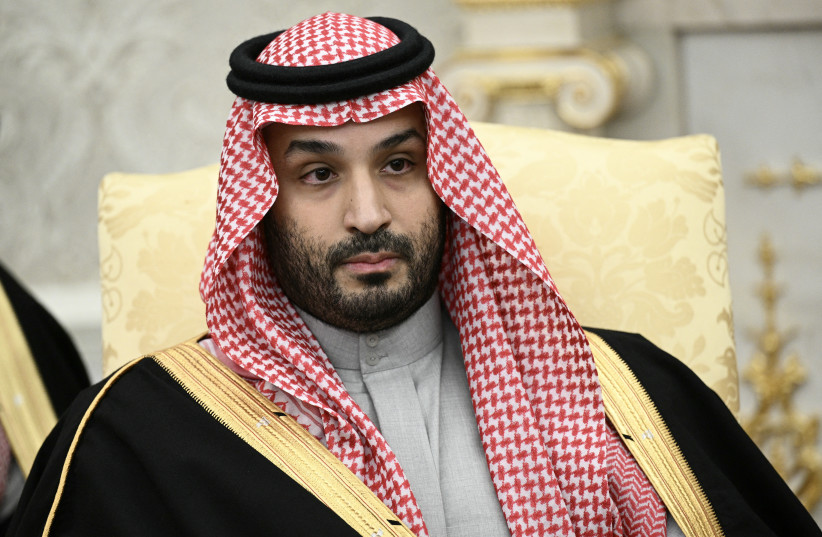
Report highlights expanded religious tolerance in curriculum
The report states that the latest curriculum editions demonstrate substantial improvements regarding the broader treatment of religious minorities and historical communities.
It notes that critical thinking textbooks for secondary grades emphasize peaceful coexistence and open dialogue as foundational human requirements.
According to the report, Saudi Islamic studies textbooks reinforce these themes by highlighting historical precedents, such as the Prophet Mohammed’s peace treaties and pacts with Jewish, Christian, and Arab tribal communities, framing them as models for conflict resolution and social cohesion.
The report details specific alterations in which earlier hostile phrasing was addressed: The authors state that previous characterizations describing Shi’a Muslims and Sufis as being of evil nature or practicing idolatry have been systematically removed or softened; while early Islamic historical narratives have been adjusted to remove passages blaming Jews as a collective for plotting against early Muslims, instead attributing actions specifically to individual tribes where relevant.
Additionally, lessons strictly forbidding Muslims from befriending Jews and Christians under the rationale that they were enemies of God have been excised, and civic and legal textbooks incorporate contemporary case studies addressing racial incrimination, as well as discrimination toward foreign nationals.
The evaluation highlights that the reviewed textbooks continue to emphasize peace, coexistence, and critical thinking across multiple grade levels.
Lessons concerning jihad and armed conflict have shifted away from the glorification of violence, with the report noting that a grade 9 Islamic studies textbook explicitly prohibits harm to non-combatants and a grade 12 rhetoric textbook has removed a passage that celebrated martyrdom in battle.
At the same time, the study points out that a grade 10 Islamic Studies textbook has reinstated a passage linking jihad to obedience to the King, which partially reversed a prior reform.
Additionally, the curriculum maintains a firm stance against extremist organizations, explicitly categorizing groups such as ISIS, al-Qaeda, Hezbollah, the Houthis, and the Muslim Brotherhood as purveyors of terrorism and extremism.
Holocaust omission and Israel references remain
Despite these reported strides forward, the study points out that certain structural tensions and omissions remain.
While the report indicates that the curriculum has successfully removed explicit derogatory tropes, it alleges that the kingdom’s coverage of World War II continues to omit any mention of the Holocaust.
According to the findings, a dedicated chapter covering the 1939 to 1945 world conflict in high-school history textbooks discusses major military developments, such as the German invasion of Russia and Japanese operations in the Pacific, alongside profiles of wartime leaders like Stalin, Hitler, and Mussolini, but fails to reference Nazi atrocities or the systematic extermination of European Jews.
The evaluation also details what it describes as the gradual moderation of anti-Israel content across the curriculum. Building on revisions identified in previous assessments, the report states that additional maps, such as those found in grade 5 social studies textbooks that previously omitted Israel and labeled the entire territory as “Palestine,” have been revised to remove the explicit Palestine label alongside the labels of other countries not bordering Saudi Arabia, while Israel remains unidentified on official maps.
According to the study, further hostile terminology has also been removed from historical texts, including instances where previous editions asserted that “Muslims will not give up Jerusalem,” which was removed entirely to eliminate politically and religiously contentious framing; alongside replacing direct labels like “the Zionist enemy” or “the Israeli enemy” with neutral or descriptive phrases such as “the Israeli occupation.”
In broader regional contexts, textbooks maintain critical portrayals of Iran, including referring to the Persian Gulf as the Arab Gulf, and continue to characterize revolutionary and separatist movements as sources of instability.
Curriculum reforms advance Vision 2030 goals
Reflecting Saudi Vision 2030 objectives, the curriculum has expanded the portrayal of women as active participants in social and economic development. Revisions cited in the report include removing traditional stereotypes, such as presenting household chores as exclusively female responsibilities, and eliminating passages detailing traditional views on marital obedience.
Commenting on the findings, IMPACT-se CEO Marcus Sheff said that “the continuous reforms demonstrate an encouraging path forward,” noting that the curriculum has “never been more positive in its portrayal of religious minorities or more encouraging of peace and tolerance.”
The review captures what the authors characterize as a “national educational ecosystem” actively navigating the complex balance between traditional religious frameworks and modern structural reforms.
While the report concludes that areas for further alignment with international tolerance standards remain, it alleges that the cumulative removal of extremist narratives marks a notable evolution in Saudi Arabia’s educational content.