
The Gazan Board of Peace expects the "very substantial groundwork" laid for the establishment of post-war governance and reconstruction in the Gaza Strip to transition into full-scale execution after the US midterms, according to a Saturday report by The Telegraph.
Sources told The Telegraph that little progress was expected to be made prior to the October 27 Israeli elections and the subsequent midterm elections in the US in early November.
“It’s not like we’re not moving. There is movement. There’s a lot going on, but maybe nothing that can be seen from the outside as ‘major movement’ before the elections,” a source told The Telegraph.
The report, which was published as an investigation into alleged conflicts of interest within the organization, said that "extensive planning" and "detailed groundwork" have been established over the past six months in preparation for the rebuilding of Gaza.
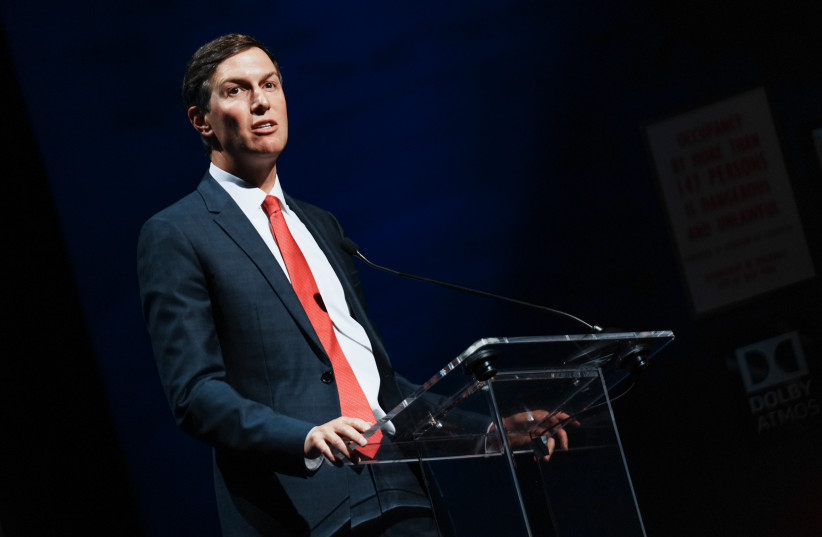
Board officials insist political obstacles remain the main challenge
The Telegraph report identified overlapping financial interests involving several senior figures in the initiative, including Trump's son-in-law Jared Kushner, US special envoy Steve Witkoff, and billionaire financier Marc Rowan, raising questions about the relationship between their private business activities and their roles in shaping Gaza's future.
At the center of the investigation is Affinity Partners, the private equity firm founded by Kushner, which has attracted billions of dollars in investments from Gulf sovereign wealth funds, including those associated with Saudi Arabia, Qatar, and the UAE.
According to The Telegraph, Phoenix was the largest institutional shareholder in Smart Shooter, an Israeli defense technology company that recently secured a US military contract worth up to $150 million.
The company manufactures artificial intelligence-assisted rifle sights and other weapons systems, including remotely operated gun platforms and armed drones. Its technology has been used by the IDF during operations in the Gaza Strip.
Despite the concerns raised by the investigation, officials involved in the Board of Peace rejected suggestions that financial interests were influencing its decisions.
Concerns over conflicts of interest were “bull----”, one of the sources told The Telegraph. “We literally have never had a single discussion at any point about business interests.”
Two people familiar with the board's operations told The Telegraph that the principal obstacles to implementing the Gaza plan were political rather than economic.
They said substantial preparations had been completed for a new Palestinian administration, an international stabilization force, and the establishment of a Palestinian police force.
The Telegraph investigation comes as the implementation of Trump's Gaza peace plan remains stalled, despite the ceasefire agreement that entered into effect on October 10, 2025.
Although the initial agreement facilitated the release of the remaining Israeli hostages, Hamas's disarmament, the establishment of new security arrangements, and major reconstruction efforts remain unresolved.
The Board of Peace's implementation roadmap calls for the transfer of Gaza's civilian governance to a Palestinian technocratic administration, alongside security arrangements intended to prevent armed groups from retaining control of the enclave.
A source within the board recently insisted that the organization was continuing to advance its plans, despite limited visible progress ahead of the Israeli election.
Kushner also marked the first anniversary of Trump's peace initiative on Friday, highlighting achievements including the return of the hostages while acknowledging the challenges remaining in Hamas's disarmament.
The latest investigation adds a further issue for the board to address as it attempts to translate months of diplomatic planning into concrete changes on the ground.
While its members maintain that private financial interests have not influenced their diplomatic work, questions surrounding their investments could complicate efforts to establish public confidence in the international body tasked with overseeing Gaza's reconstruction.
Board of Peace: Telegraph publishes sensationalization with little substance
The Board of Peace responded to The Telegraph report. In a statement posted by the organization on X/Twitter, it said the investigation is manufacturing conflict while failing "to identify a single Board of Peace contract, procurement decision, or diplomatic action influenced by the commercial interests it describes. There’s a whole lot of insinuation and very little substance conveniently wrapped into a sensationalized headline."
The statement also pushed back on the report's account of Kushner's private equity firm, Affinity.
"Affinity owns a minority stake in Phoenix, one of Israel's largest publicly traded, highly regulated financial institutions, managing approximately $220 billion across thousands of investments. Through its managed portfolios, Phoenix held shares in a small defense company that later won a *U.S. government* contract, not a Board of Peace contract...There was no Board of Peace involvement, no Board of Peace decision, and zero demonstrated personal benefit."
The Board of Peace statement went on to defend its progress in Gaza.
"Hamas has accepted a disarmament plan, the International Stabilization Force and Gaza’s transitional administration are preparing to deploy, and initial police recruits have been selected. Of course, significant challenges remain, and there is hard work ahead of us, but a year ago none of this architecture existed," the statements read. "These accomplishments would have made for a worthwhile story given the enormous positive consequences for the region."
The statement concluded by saying the bottom line is that the Board of Peace is committed solely to peace. It argued that too many people have become invested in perpetuating conflict - not just terrorists - but also members of an "international architecture" that they claim is invested in continuing a cycle of violence.