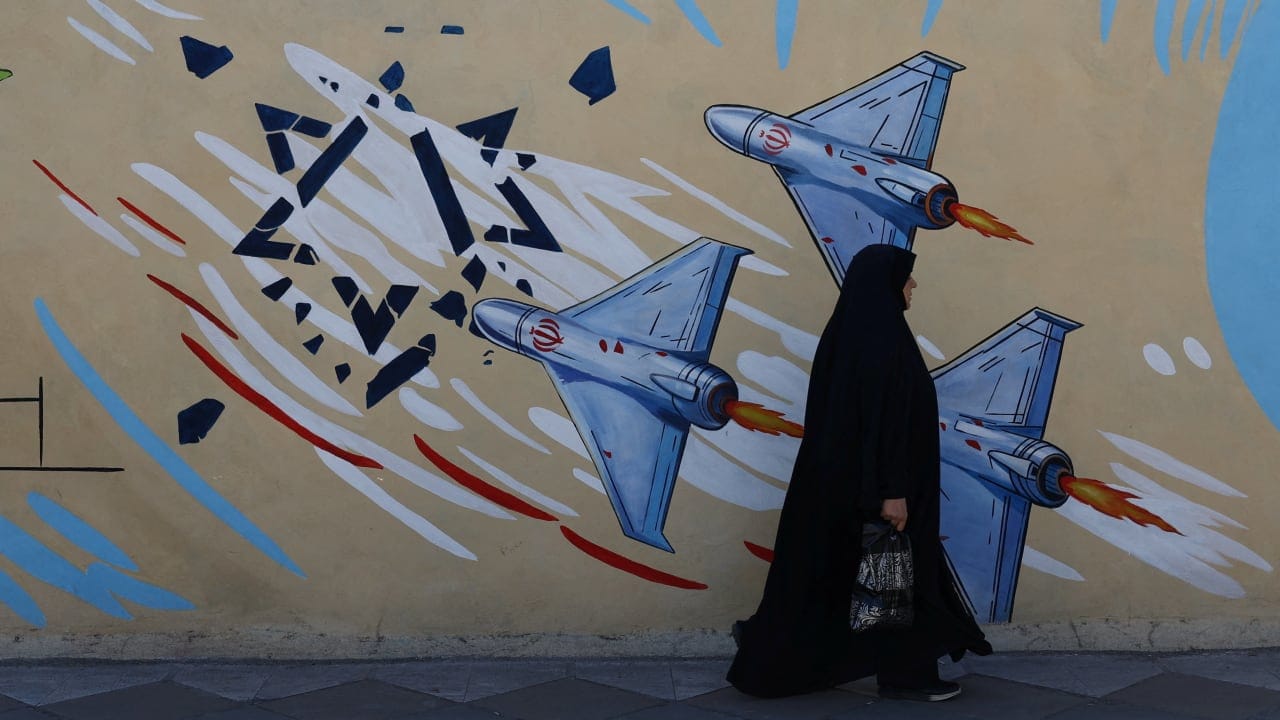
The Islamic regime in Iran is paying and blackmailing people to manufacture displays of support for Tehran in Sistan and Baluchestan province. It is pursuing the same policy among minority communities across Iran, a Baloch human rights activist in hiding told The Jerusalem Post late Tuesday night.
Identified only as “B” for security reasons, the activist has spent a decade in an Iranian prison over his ties to the Jebhe-ye Mobarezin-e Mardomi (People’s Fighters Front), an armed coalition of Sunni Baloch nationalists that has long fought the Islamic regime. The group has come under renewed attack in recent weeks following successful operations targeting the regime’s security apparatus, as the Post reported last week.
Through translation, B described the dire conditions facing the Baloch community since the revolution, from the psychological toll of repeated executions to extreme poverty in a region rich in oil and minerals. He claimed that across Sistan and Baluchestan, a vast province accounting for approximately 10% of Iran’s landmass, not a single Baloch family had been spared the loss of at least one of its members to the regime, either through shootings or executions.
According to Iran Human Rights, a nongovernmental organization that monitors executions, at least 108 Baloch individuals were executed in Iran in 2024, accounting for 11% of all recorded executions, despite the minority making up an estimated 2% to 6% of the country’s population. A report submitted to the UN Universal Periodic Review by several human rights organizations also found that Baloch people accounted for 29% of the 154 individuals executed in Iran between 2010 and 2023.
Although almost all Baloch are Muslim, the majority belong to Sunni or Zikri communities, which the regime views as heretical, B explained. He added that Tehran brands the Baloch and other minority groups as collaborators with Israel because they focus on human rights abuses committed in front of them rather than on a Jewish state more than 1,500 miles away.
'Israelis should be able to live a simple life'
“They tell members of the armed groups that the Baloch are enemies of the government, asking them, ‘Why are you not fighting Israel? Why do you have no problem with Israel? Why do you fight us?’ But Baloch people do not want to fight Israel or harbor hostility toward Israelis,” he said. “Most Baloch are religious Sunnis, and unlike the IRGC, which spreads hatred of Israel every day, they do not promote that kind of hatred. They believe Israelis should be able to live a simple life alongside Palestinians.”
Discrimination also limits the Baloch community’s economic opportunities. B noted that Iran’s Selection Law and other forms of discrimination prevent many Baloch from advancing in society, leaving some with few options but to smuggle subsidized fuel across borders to earn a living. Many have been burned to death by regime security forces, he said, adding that the forces knowingly opened fire on vehicles carrying the fuel.
Using the case of Ya’qub Mehrnahad as an example, a young blogger hanged in 2008 after a closed-door trial widely condemned as unfair, B said the Baloch people were denied justice at even the most basic level.
“He was just having a small protest about the regime, and he got executed,” B said. “They punish and torture people, forcing them to say on television whatever the regime wants them to say. The person is being punished or tortured, and they film them making statements they are being forced to make, then broadcast the footage on television. There is no court or proper judgment. They just arrest people, and this is still happening today.”
Reflecting on his own years in prison, B said he had seen multiple minors and individuals being held without charge.
Describing a reality in which people cannot afford food, and children must attend schools without shoes, classrooms, chairs or tables, he said the closure of the Strait of Hormuz had not worsened conditions for his community. B said the supplies imported to Iran had never been meant for his people and that it was better to continue the blockade than risk supplying the regime.
Love and respect for all Abrahamic religions
“Every penny that comes through this Strait of Hormuz goes to the [Islamic Revolutionary Guard Corps] IRGC. Even when it comes to medicine and other supplies, they go to the Houthis and the Lebanese people. Not even one person benefits from the Strait of Hormuz, so it should be closed. It is better anyway because if it gets closed and the regime comes under pressure, maybe we can get this regime to go. Any benefit it gets from the Strait of Hormuz or anywhere else allows it to rebuild from within and grow stronger to beat the people, stop them from protesting, and prevent the regime from falling. It will do anything for that.”
After signaling his own curiosity about how Israelis view the Baloch people, B said he and his community were happy when Israel began striking the regime and hoped the attacks would continue.
“People were incredibly happy about this war. I could hear how happy they were. They were saying the war should not stop and expressing their love for Benjamin Netanyahu and Trump for carrying it out,” he said. “They were sending Trump messages of support for waging this war against the regime… I think Iranians love Netanyahu. They strongly support this war, and some have even been praying for it to continue, saying it should not stop until the regime falls and is replaced.”
B noted that he was an observant Muslim, but he had love and respect for all Abrahamic people, insisting that once the regime was gone, they would be able to live in peace together.
“We understand you. You are people who deserve to live in peace. We don’t think you are bad people or that you should die. That is how the regime thinks, not us. We share the same enemy, and we understand each other’s situation,” he said. “We have the right to life and peace. You and I are human beings, and even other living creatures have the right to life. We believe in one God, who created us all, and we are no different from anyone else. We deserve to live in peace. No one has the right to tell us that we do not deserve to live.”