Ankara has abandoned much of its former Islamist alliance while maintaining support for Hamas and expanding its influence in Europe, a new study published by Austria's Documentation Center for Political Islam has found.
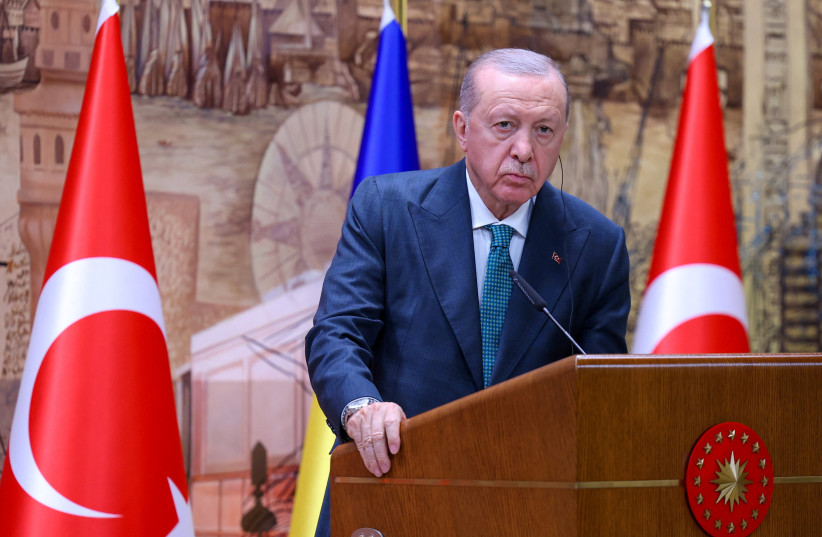
The 94-page report, titled 'The AKP and the Muslim Brotherhood: The Development and Failure of an Islamist Alliance in the Middle East and Europe,' examines how Turkish President Recep Tayyip Erdogan's government gradually abandoned its regional Islamist allies following their political defeats, while making an exception for Hamas after the October 7, 2023, terrorist attacks on Israel.
The study argues that Ankara has increasingly prioritized pragmatic and diplomatic relations with Egypt, Saudi Arabia, and the United Arab Emirates over its ideological commitments to the Muslim Brotherhood.
However, its relationship with Hamas has taken a different path, with Turkey becoming an "openly active patron and supporter of Hamas" as well as a supporter of Hamas's expanded networks in Europe.
Turkey's support for Hamas extends into Europe
The report identifies Turkey's continued relationship with Hamas as the most significant surviving element of its former alliance with Muslim Brotherhood-associated movements during the Arab Spring.
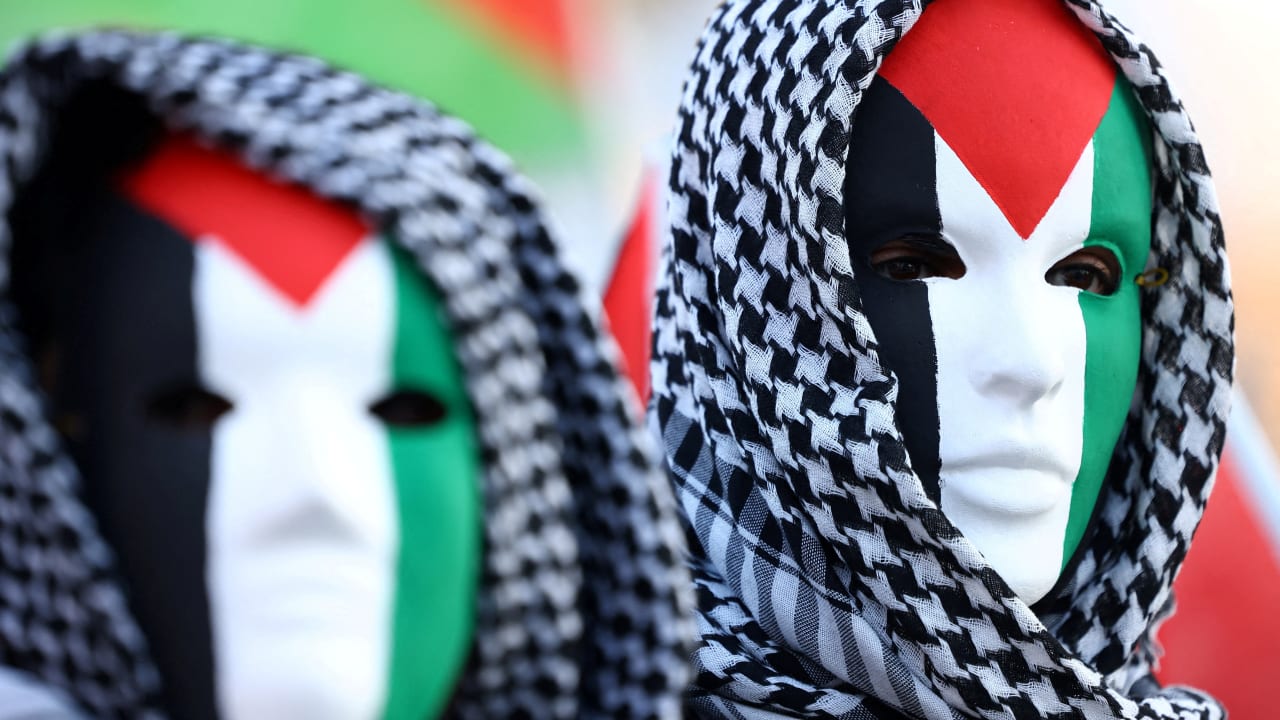
Hamas, which emerged from the Palestinian branch of the Muslim Brotherhood, has maintained close political relations with Ankara despite Turkey's growing distance from other Brotherhood organizations.
According to the study, these ties have implications beyond the Middle East, particularly in Europe, where Hamas has established fundraising networks.
The report cites an October 2024 statement from the US Treasury Department identifying Europe as an important source of Hamas financing, including fundraising through charities operating under false pretenses.
Financial operations involving Italy, Germany, and Austria were identified as significant channels for transferring funds from Europe to Hamas. The Treasury statement, which the Austrian study uses to support its assessment, forms part of the report's broader argument that Turkey's relationship with Hamas has implications for European security.
The author also warns that Turkish influence operations and media networks disseminate pro-Hamas and other Islamist narratives among diaspora communities in Europe.
The study says Ankara will likely maintain its openly pro-Hamas position, even as it continues improving relations with governments that oppose the Muslim Brotherhood, such as those in the Gulf.
How Turkey's Islamist alliance collapsed
The study writes that the relationship between Turkey's ruling Justice and Development Party (AKP) and the Muslim Brotherhood developed over decades but became particularly significant during the Arab Spring uprisings beginning in 2010 and 2011.
Turkey and Qatar emerged as the principal regional supporters of Brotherhood-linked political movements.
The election of Muslim Brotherhood candidate Mohammed Morsi as Egypt's president in 2012 represented a major victory for the alliance. According to the report, the Turkish government viewed the rise of Islamist parties as an opportunity to expand its influence across the region, challenging the established political order supported by Saudi Arabia and the UAE.
However, the alliance suffered a series of failures, most notably Egypt's military overthrow of Morsi in 2013 and subsequent repression of the Brotherhood.
Furthermore, defeats in countries including Tunisia weakened the movement's prospects of returning to government.
Turkey initially responded by "assuming a central role as a refuge for the exiled movement," in other words, Muslim Brotherhood members fleeing persecution. This turned Istanbul into one of the movement's principal international centers alongside London.
According to the study, approximately 8,000 Brotherhood exiles were estimated to be living in Turkey in 2020, rising to around 20,000 when family members were included.
Istanbul also became a center for Brotherhood-affiliated television stations. The report suggests that Turkey and Qatar likely provided financial support for some of these organizational and media activities.
However, as the prospects of various Muslim Brotherhood organizations returning to power increasingly faded, the study says Turkey gradually withdrew from the alliance and pursued rapprochement with the Gulf monarchies, the newly established regimes in Egypt and Tunisia, and the governments in Jordan and Morocco, which had emerged from the Arab Spring "relatively unscathed."
This, the study adds, continues to the present day.
Islamist networks and financial influence in Europe
The study also examines the activities of Turkish Islamist organizations and Muslim Brotherhood-associated networks across Europe.
It identifies contacts involving the Turkish-Islamic Union for Religious Affairs (DITIB), which operates under Turkey's Directorate of Religious Affairs, and organizations associated with the Brotherhood.
Representatives of Turkish religious institutions have participated in European Islamic bodies, including the European Council for Fatwa and Research, which the report associates with Brotherhood networks.
The Islamic Community Milli Görüş (IGMG), a Turkish Islamist movement with an extensive European presence, has also maintained connections with these institutions.
The report identifies personal relationships involving the Forum of European Muslim Youth and Student Organizations (FEMYSO), the Muslim Youth of Austria, and IGMG youth organizations.
However, the study emphasizes that these contacts have not produced substantial evidence of deeper organizational cooperation or a unified Islamist structure in Europe.
Nevertheless, the study argues that Qatar's financial support for religious institutions and Islamist organizations has been more consequential.
Citing earlier investigative reporting, it describes Qatari funding for mosques, schools, Islamic associations, and religious activities across Europe, identifying Eid Charity and the Qatar Foundation as important institutions in these efforts.
The funding activities described extend beyond Brotherhood-associated organizations to include smaller Salafist groups.
Could Muslim Brotherhood leaders relocate to Europe?
The study raises the possibility that further Turkish rapprochement with Egypt and Gulf states could eventually encourage Brotherhood leaders and activists to move their operations from Turkey to Europe.
However, it explicitly states that there is currently no evidence of a major relocation taking place.
It concludes that extensive new partnerships between Turkish Islamist organizations and Muslim Brotherhood-linked groups in Europe are unlikely, particularly as the Brotherhood's political influence across the Middle East continues to decline.
Nevertheless, the author identifies Turkish government-linked media, religious organizations, and influence activities as continuing challenges for European governments.