
US President Donald Trump reportedly received a warning in recent weeks that keeping the Strait of Hormuz closed would "trigger a global recession - not just in the US, but across the entire world."
The warning came from several economists and senior Trump administration officials.
As a businessman, Trump was deeply concerned by these warnings. They were reinforced by arguments from top White House aides and Republican Party figures that if the war with Iran continued and fuel prices for US consumers rose, then Republicans would almost certainly lose the November midterm elections.
Such a loss would hand Democrats control of both the House of Representatives and the Senate, effectively preventing Trump from advancing his agenda during the final two years of his presidency.
These concerns were likely a major factor behind Trump's decision to reach an agreement with Iran, even at the cost of making significant concessions.
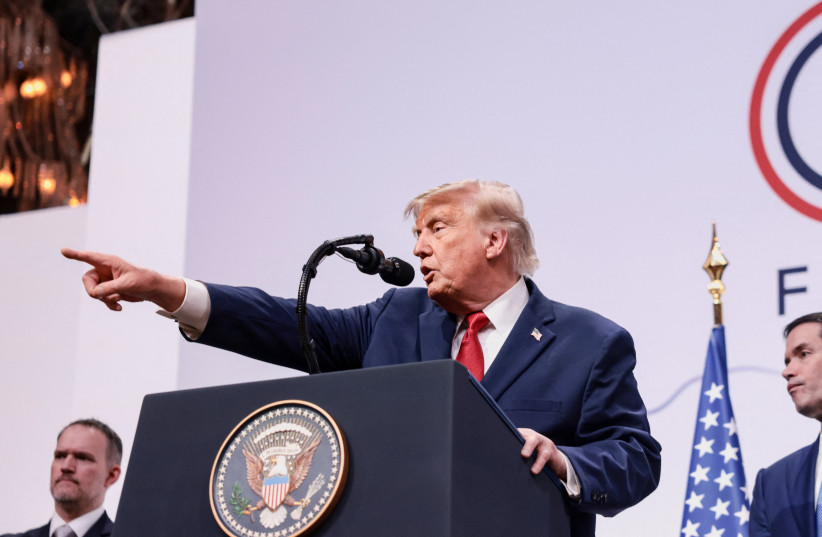
Just a month earlier, he told reporters that "economic considerations are not a factor in war, and the only thing driving me is the desire to prevent a nuclear Iran." But at a press conference held on Wednesday in France, his tone had changed. "I wanted to prevent an economic catastrophe," Trump said.
Trump says desire to avoid being remembered as this generation's Herbert Hoover
"There is only one president I never want to become, and that is Herbert Hoover," he added.
The Great Depression, which began with the dramatic collapse of Wall Street in 1929 during Hoover's presidency, triggered a severe economic crisis in the US and around the world that lasted more than a decade.
Within the US, unemployment reached 25%, and GDP contracted by 60%. The economic turmoil abroad caused severe hardship and soaring unemployment in Germany, contributing to the rise of the Nazis in 1933 under the claim that "our enemies and the Jews want to weaken us," and ultimately paving the way for World War II several years later.
Hoover failed to address the economic crisis effectively, and when he ran for re-election in 1932, eggs and rotten vegetables were thrown at his car. He was eventually defeated in a landslide by Franklin Delano Roosevelt.
Economic concerns, fear of Republican losses in election, explain Trump's rush to sign Iran MoU
These concerns help explain why Trump repeatedly emphasizes the reopening of the Strait of Hormuz as one of the key achievements of the Memorandum of Understanding with Iran.
"Not a single dollar will come from the pockets of American taxpayers, and fuel prices will fall," Trump and senior members of his administration have repeatedly said.
In other words, as James Carville, the strategist behind Bill Clinton's election victory in 1992, famously put it: "It's the economy, stupid." Once again, the economy dictated the outcome: First end the war, then deal with everything else afterward.