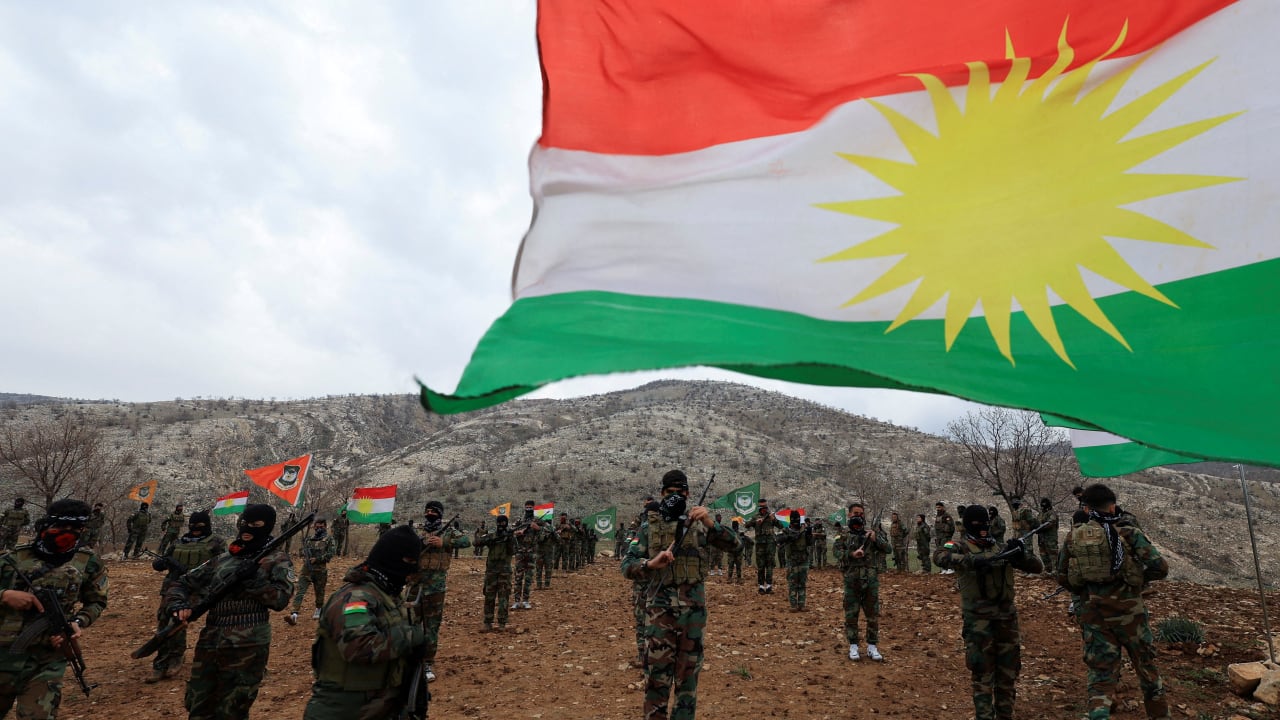
A wide range of views have come out about who was in favor and who was against the Mossad's plan to work with the Iranian and Iraqi Kurds to bring about regime change in Iran since US President Donald Trump vetoed the plan, and regime change has not materialized.
The latest to go public on the issue was Defense Minister Israel Katz on Monday in a briefing to military reporters.
When a reporter asked Katz whether he had supported the plan and believed it was realistic, he frowned twice and gave a clearly skeptical look.
He also did not offer any support for the plan, unlike top Mossad officials, who have said the plan could have succeeded had Trump not vetoed it.
The clear impression was that the defense minister had always been skeptical about the plan, just as many in the IDF and among US defense officials had been skeptical about the plan.

However, a number of officials were present when they said that Katz, at various points leading into the war and before anyone knew how the conflict would turn out, had clearly expressed strong support for the plan.
If true, this would not be surprising, given that a wide number of officials have said that Prime Minister Benjamin Netanyahu, with whom Katz has rarely disagreed in front of other officials, was a major fan of the plan.
Mossad plan to empower Kurdish forces
According to the plan, Israel was prepared to provide the Kurds not only with a no-fly zone, but with a continuous aerial firepower envelope to help them advance against any Iranian force which would have tried to assemble to block their path forward.
Weapons which the Kurds received both from the US and the Mossad – many of which were "re-tasked" after the IDF captured the weapons from Hamas in Gaza or from Hezbollah in Lebanon, and training they received from Israelis, made them fully ready to go.
There is a debate as to whether Trump was convinced to veto the operation more by some of his own top officials or by Turkish President Recep Tayyip Erdogan.
Although CIA Director John Ratcliffe has been reported as having taken a strong position against the Kurdish intervention, sources have said that he never told Israelis that he was against it. Further, they note the public reports that the CIA gave the Kurds weapons, meaning that the American clandestine agency acted in ways that could have helped the operation happen.