In his recent op-ed, French Ambassador Frédéric Journès laments what he calls the “staged hostility” of the Israeli public toward France. He paints a picture of a misunderstood ally, wounded by the “anger” of a nation at war.
As a citizen of France, the United States, and Israel, someone who equally loves the cultures of my three countries, and someone who is politically active against the current Israeli government, I feel uniquely qualified to tell the ambassador: you are not being misunderstood. You are being seen with painful clarity.
The ambassador suggests that the rift between our nations is a matter of “diverging opinions.” It is not. It is a matter of actions that have systematically undermined Israel’s security and moral standing at its most vulnerable moment.
The relationship between Israel and France
Let’s look at the timeline the ambassador conveniently glosses over.
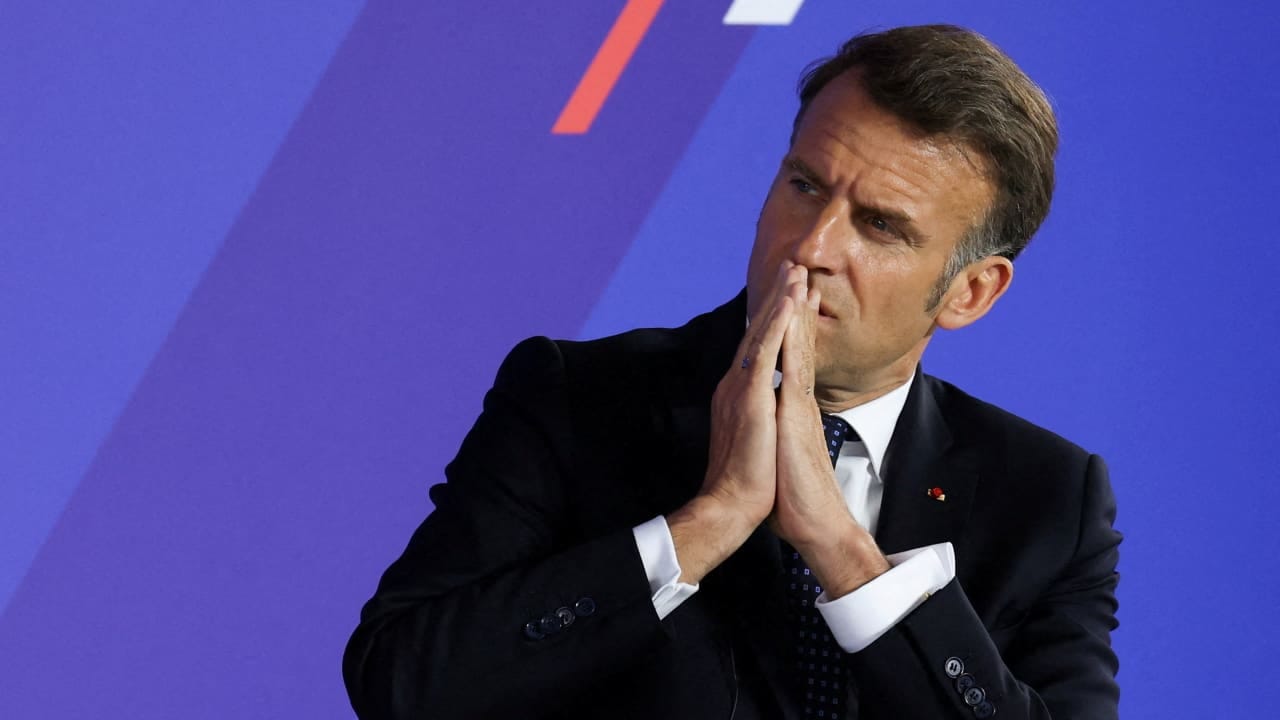
After the horrors of October 7, President Emmanuel Macron was the very last Western leader to visit Israel. While former US president Joe Biden, former German chancellor Olaf Scholz, and Former British prime minister Rishi Sunak arrived with speed and moral clarity, the Élysée hesitated. This was not “diplomatic nuance”; it was a signal of where we stood on the priority list.

Weeks later, when the streets of Paris saw a terrifying surge in Jew-hatred, a march against antisemitism was organized. In a move that shocked the French-Jewish community and Israelis alike, President Macron refused to participate. For a leader who speaks so often of “Republican values,” his absence was a thunderous abdication of moral leadership.
The ambassador defends France’s stance on Lebanon, but he ignores the rhetoric that accompanied it. To hear Macron accuse Israel of “spreading barbarism in the region” as it fought to stop Hezbollah’s relentless rocket fire was a breaking point. It felt less like a strategic critique and more like a defense of France’s historical raison d’être in Lebanon at the expense of Israeli lives. To use the word “barbarism” against the victims of October 7 while they fight an Iranian proxy is an inversion of reality that no “friend” should utter.
Then came the diplomatic sucker punch: the announcement of an upcoming, unconditional recognition of a Palestinian state. By moving toward recognition then, without a negotiated settlement or the release of our brothers and sisters still rotting in Hamas tunnels, France effectively rewarded the October 7 massacre. This move did not advance peace; it actively derailed the delicate negotiations to free our hostages by signaling to Hamas that it need only wait for the West to hand it a victory.
To add insult to injury, France then moved to boycott Israeli defense companies at major exhibitions. How can a nation claim to support our “right to self-defense” while simultaneously banning the very tools we need to exercise that right?
A diplomatic double standard
Ambassador Journès, you claim there is a “double standard” being applied to France. On the contrary, we are simply applying the same standard to you that you apply to us. We see the consistency with which France treats Israeli security as a secondary concern to its own Mediterranean grandstanding.
I am not a fan of the current Israeli government. I protest its policies and worry for our democracy. But being a critic of my government does not make me suicidal for my country. Loving France does not mean I must accept its gaslighting.
We don’t need “smooth conversations,” Mr. Ambassador. We need an ally that doesn’t treat our survival as a bargaining chip for its own regional relevance.
Our anger isn’t “staged.” It is the natural response of a people that expected more from the patrie of Liberty, Equality, and Fraternity.
The writer is an investor based in Tel Aviv, a former secretary-general of the French Union of Jewish Students, and a former board member of UJA-NY.