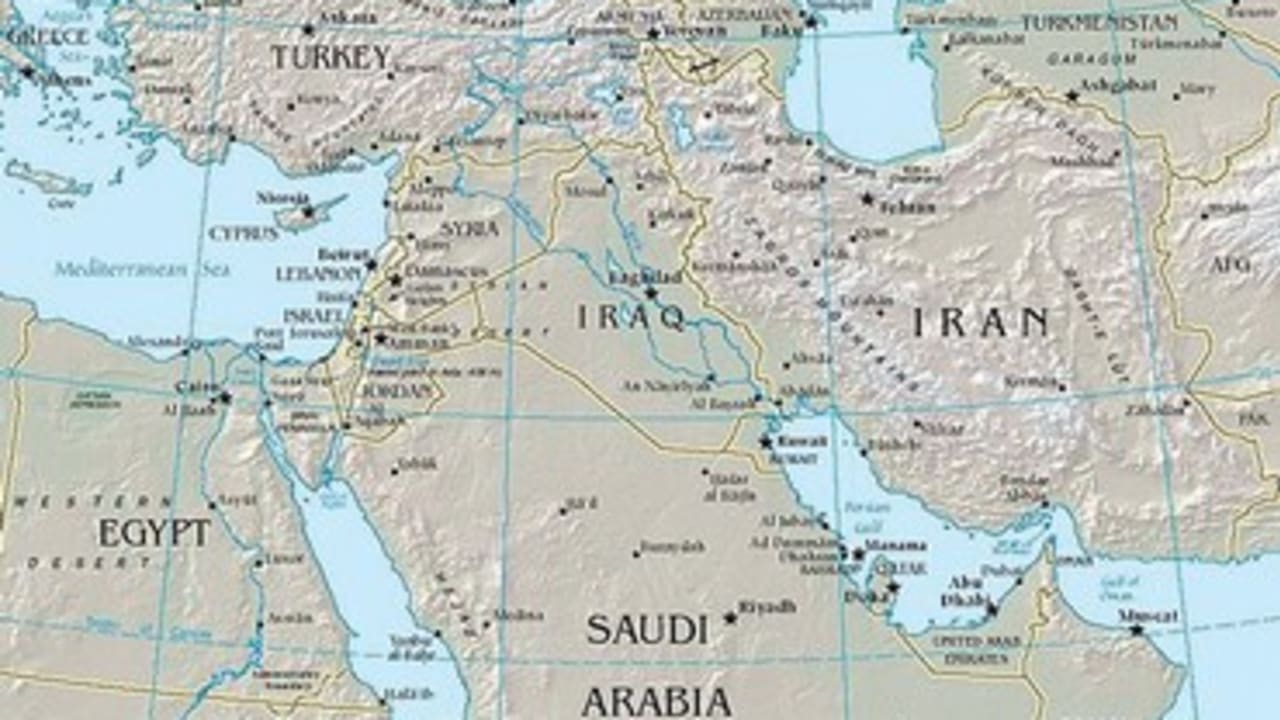
“Sunni axis” is a term that is gaining currency. It refers to a new security alliance of Sunni states that seems to be emerging. At its heart is a Pakistan-Saudi Arabia mutual defense pact signed on September 17, 2025 – the Strategic Mutual Defense Agreement (SMDA).
One noteworthy feature of the SMDA pact is an explicit collective‑defense clause that closely echoes NATO’s Article 5, namely that “any attack on one country will be viewed as an attack on both.” This has led some commentators to dub the agreement an Islamic NATO.
This Pakistan-Saudi arrangement, according to Pakistani ministers, is not only capable of being expanded, but action is in hand to do so. Turkey and Qatar have been mentioned as the first states to turn the bilateral pact into a collective‑security grouping. Egypt is a fifth potential member.
Back in January, Turkey was said to be in advanced discussions to join the SMDA pact. It seemed a natural and appropriate extension of an existing partnership. Turkey is Pakistan’s second‑largest arms supplier, and the military‑industrial connection is flourishing in terms of aircraft, drones, and naval assets.

In an interview with Reuters, reported on January 15, 2026, Pakistan’s Defense Production Minister Raza Hayat Harraj said: “The Pakistan–Saudi Arabia–Turkey trilateral agreement is something that is already in the pipeline.”
His words presaged an axis that grouped key Sunni powers (Saudi Arabia, Pakistan, Turkey, Qatar, and potentially Egypt) on one side of a regional balance, with Iran’s mainly Shi’ite but essentially anti-Israel network (Iran, Iraq‑based pro-Iran militias, Hamas, Hezbollah, Houthis, etc.) on the other.
However, something of a change of tone seemed to emerge in an interview given to the Bloomberg news agency by Pakistan’s Defense Minister Khawaja Asif on May 13.
While discussing the idea that Turkey and Qatar may join the mutual defense cooperation pact between Saudi Arabia and Pakistan, Asif said “if Qatar and Turkey also join this existing agreement, it will be a welcome development,” a comment that clearly viewed their participation as a possibility rather than “in the pipeline,” as his ministerial colleague had claimed back in January.
Whether there has been a cooling of enthusiasm on Pakistan’s part is difficult to assess. The glitch may be caused by the prospect of a tighter Turkish-Saudi connection. They remain, in many arenas, competitors for leadership of the Sunni world. Moreover, despite the recent rapprochement, relations have been anything but warm over some of the past eight years.
It was on October 2, 2018, that Saudi dissident journalist Jamal Khashoggi was assassinated inside the Saudi Arabian consulate in Istanbul. Turkey reacted with fury. In a series of speeches and leaks, Turkey’s President Recep Tayyip Erdogan called the murder “savage,” said it was ordered from the “highest levels” of the Saudi state, and demanded the extradition of the Saudi suspects.
Turkish authorities opened a criminal investigation, searched the Saudi consulate and the consul’s residence, and leaked detailed allegations to the media about Khashoggi’s strangling, dismemberment, and the pre‑planned nature of the operation. Turkey then launched a trial in absentia of 26 Saudis, deepening the rift with Saudi Arabia, which insisted its own courts had jurisdiction.
The thaw took a few years to develop. Finally, on April 7, 2022, an Istanbul court halted the trial and transferred the Khashoggi case to Saudi Arabia. On April 28, Erdogan visited Saudi Arabia, met King Salman and Crown Prince Mohammed bin Salman (MBS), and said he hoped “to launch a new era.” On June 21, 2022, MBS paid his first visit to Turkey since 2018.
On the face of it, Turkish-Saudi relations should be firmly re‑established. However, negotiations aimed at bringing Turkey into the Pakistan-Saudi security pact have been dragging on now for half a year, and the arrangement is still not ready to be implemented. Instead, the political narrative has drifted toward a flexible Saudi‑centric security framework in which Turkey would be less than a full partner.
Regional Implications
If actually completed on the lines originally envisaged, the new Sunni axis would amalgamate four formidable components: Saudi and Qatari financial resources and arms‑procurement; Turkey’s NATO‑standard conventional forces and advanced defense‑industrial base; Pakistan’s nuclear deterrent and ballistic‑missile capabilities; and Egypt’s massed conventional army, control of the Suez corridor, and diplomatic weight in Arab and Gulf security affairs.
These powerful elements could theoretically give it the ability to deter conventional attacks and influence conflicts across the Middle East and beyond. In reality, however, converting the security pact into a tightly disciplined combat-ready military alliance is less than likely. Internal divergences, domestic constraints, and each state’s ties to Washington, Beijing, Moscow, and Brussels would rule it out.
Even so, several interested parties and groupings perceive this Sunni axis as at least potentially threatening.
Iran and its allies would naturally be apprehensive about the emergence of a Sunni power bloc opposed to the Iranian regime’s bid for regional and religious dominance in the Middle East, and widely seen as a counterweight to Iran’s Axis of Resistance.
Indian analysts have already warned that a consolidated Pakistan–Saudi–Turkey security structure, backed by oil wealth and Pakistani nuclear capability, would upset the current security balance and challenge India’s defense environment.
Some Israeli strategic commentators believe that a more cohesive Sunni military grouping involving Turkey and Qatar could constrain Israel’s operational freedom. Both Turkey and Qatar have a history of supporting Hamas.
Some eastern Mediterranean states, such as Greece, Cyprus, and Armenia, are already at odds with Ankara, and view with concern the prospect of Turkey being backed in the future by Gulf money and Pakistani deterrence.
But all this calculation seems premature. Extending the Pakistan-Saudi defense and security pact to embrace other Sunni states, such as Turkey, Qatar, and Egypt, seems far from imminent. Even Turkey, apparently on the verge of full accession back in January, is still hovering in the wings, talking about the possibility.
In short, if the enhanced alliance emerges, it would indeed be a significant new factor in the region’s political alignment. Even in prospect, it is enough to shape calculations in Tehran, New Delhi, Jerusalem, and Washington. But a new Sunni axis simply does not yet exist.
The writer, a former senior civil servant, is the Middle East correspondent for Eurasia Review. Follow him at: www.a-mid-east-journal.blogspot.com