
There are few things more deceptive than a man in a turban speaking the language of eternity while discussing import monopolies.
I learned this during my years inside the Islamic Republic of Iran, where power rarely introduces itself honestly.
The outsider arrives expecting theology and encounters logistics. One anticipates mysticism and instead finds procurement contracts, sanctions networks, shipping routes, and men who speak of martyrdom with the cool detachment of financiers discussing quarterly returns.
When I first entered circles close to the regime, I still carried many of the assumptions Western observers cling to today. We imagine the Islamic Republic of Iran as a state governed principally by clerics, animated by religious fervor, and sustained by revolutionary zeal.
Certainly, this is how the regime presents itself. Portraits of martyrs stare down from every public building. Speeches overflow with references to sacrifice, justice, and divine struggle. Entire boulevards pulse with the iconography of resistance.
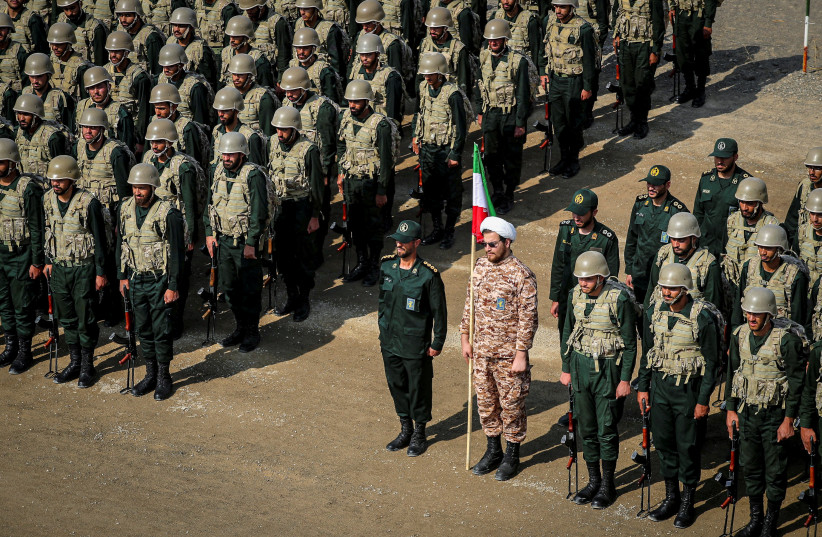
But revolutionary slogans function rather like theatrical scenery. Their purpose is to direct your gaze while obscuring what is happening backstage.
The IRGC is the true center of power in Iran
And backstage sits something very different from the image that Western diplomats still flatter themselves into believing. The true centre of gravity inside the Islamic Republic is no longer the clergy in any traditional sense, nor even the machinery of the state itself.
It is the IRGC: an ideological-security apparatus that has evolved into something far more sophisticated than a mere military force and far more adaptable than most Western policymakers yet understand.
We persist in analyzing the regime through categories inherited from the 20th century because our political vocabulary has not caught up with the thing standing in front of us. We call it authoritarian. Theocratic. Fascistic. Totalitarian. Yet none of these descriptions fully fit.
The Islamic Republic of Iran has produced something newer. A fusion of mafia economics, paramilitary capitalism, apocalyptic ideology, information warfare, and religious symbolism stitched together into a permanent system of controlled instability.
The Soviet Union, for all its brutality, still operated with a certain bureaucratic logic. European fascism clothed itself in industrial nationalism and martial spectacle. The regime in Tehran is more elusive than that. More fluid. It survives precisely because it can speak in several languages at once.
To Western academics, it offers anti-imperialism. To radicals, it offers resistance. To the devout, it offers sacred struggle. To parts of Europe’s activist class, it offers the narcotic pleasure of permanent grievance. And to those inside the system itself, it offers something much simpler: access.
Access to contracts, to monopolies, to smuggling routes, to black-market economies, to infrastructure projects, and to sanctioned industries. The IRGC now touches nearly every profitable artery of Iranian life: construction, telecommunications, ports, energy infrastructure, cyber operations, regional militias, and sanctions evasion networks. The revolution long ago ceased merely to govern the economy. It absorbed it.
This is the part Western governments still struggle to grasp. The Islamic Republic of Iran is not merely surviving sanctions. Entire sections of the regime benefit from them. Isolation created monopolies. Black markets created fortunes. Endless confrontation justified endless consolidation of power.
Resistance became an industry.
And because the West remains sentimental almost to the point of self-harm, we continue assuming ideological regimes secretly desire what we desire: stability, prosperity, diplomatic equilibrium, and eventual normalization. But the system sustaining the regime in
Iran does not feed on stability. It feeds on permanent tension. Crisis legitimizes repression. Foreign hostility justifies militarization.
Regional chaos expands strategic relevance.
Instability is not a malfunction of the system. It is part of the business model.
Which brings us, rather uncomfortably, to Britain and Europe.
For years, Western elites treated radicalism largely as rhetoric. Slogans were dismissed as emotional excess. Sectarian language was tolerated beneath the comforting fiction that words remain harmless until accompanied by physical violence.
But revolutions rarely begin with gunfire. They begin with vocabulary.
The Islamic regime understood this decades ago. It grasped early that language itself could function as a weapon: One first reshapes moral perception. Society is divided between the “righteous” and the “corrupt,” the “oppressed” and the “oppressor,” the “pure” and the “contaminated.” Once those categories harden sufficiently, intimidation becomes easier to justify. Censorship becomes moral. Coercion acquires the appearance of virtue.
And one cannot help noticing echoes of this logic now spreading across parts of Britain and Europe.
Citizens increasingly speak tribally rather than civically. Public debate hardens into performance. Intimidation dresses itself in activist language. Hatred acquires social permission provided it marches beneath fashionable slogans.
Entire communities, Jews especially among them, are discussed less as citizens than as symbolic obstacles within somebody else’s revolutionary drama.
Meanwhile, our political class responds with the baffled passivity of people watching smoke gather beneath a door while insisting the building remains fundamentally sound.
What the Islamic Republic of Iran exports now is not merely missiles or proxy militias. Its most successful export may well be fragmentation itself: the corrosion of shared civic identity, the normalization of ideological intimidation, and the steady replacement of democratic confidence with permanent agitation.
This is the genius of the ideological-security state. It does not always seek conquest in the old territorial sense. It seeks exhaustion.
Confusion. Distrust. A condition in which democratic societies become so uncertain of their own values that they gradually lose the instinct for self-preservation.
And Europe, increasingly, looks vulnerable to precisely this condition.
The old Cold War frameworks no longer fully apply. We are confronting a political model that understands the psychological weaknesses of liberal democracies perhaps better than liberal democracies understand themselves.
That, I suspect, is the real significance of the Islamic Republic.
It is not merely a relic of an older revolutionary age. It may well be the prototype of a new one.
The writer is the executive director of the Forum for Foreign Relations.