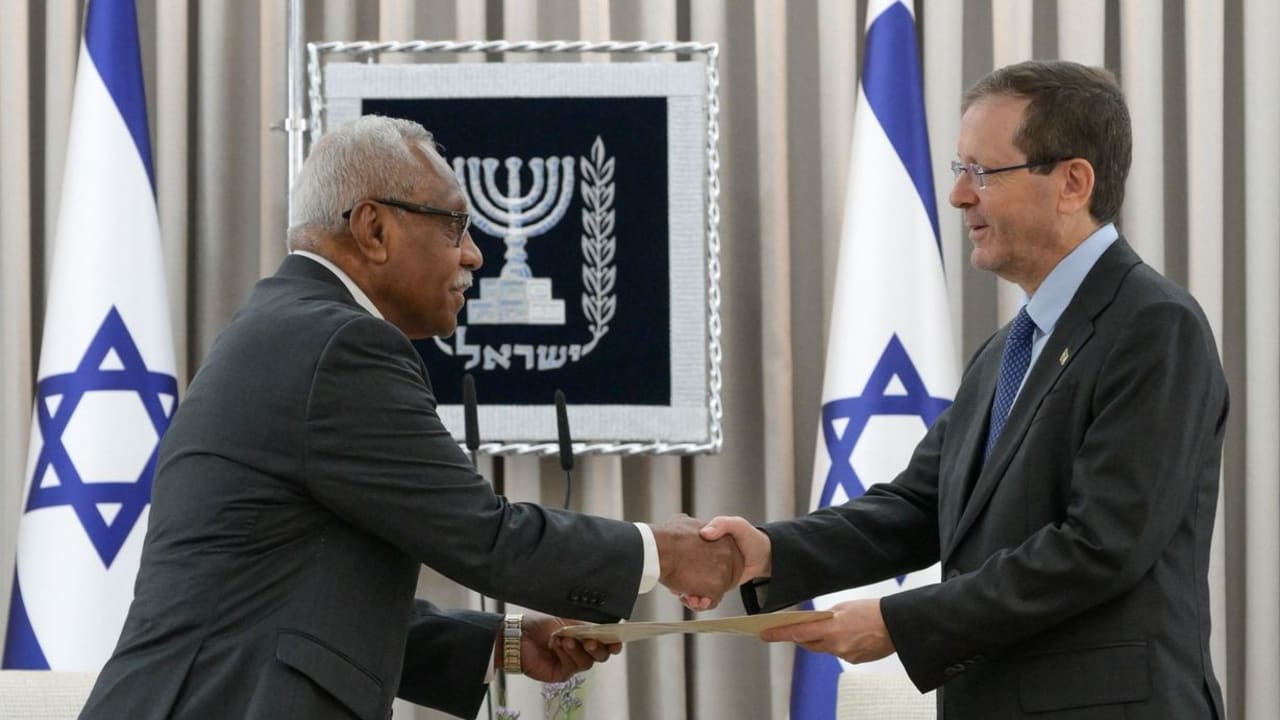
With Israel’s diplomatic isolation deepening in Europe and its public support eroding in parts of North America, some may consider Tuesday’s opening of an Israeli embassy in Fiji a curious diplomatic indulgence.
Why spend money on an embassy in the South Pacific when those resources could be devoted to shoring up support in Western Europe?
The answer is simple: Diplomacy is not only about trying to win over critics. It is also about strengthening relationships with friends.
Fiji, and most of the nine other Pacific Island states that the embassy in Suva will serve, are among Israel’s most reliable supporters on the international stage. While many larger and more influential countries have grown increasingly hostile, these small nations have consistently stood with Israel in international forums where every vote counts.
Consider a vote last June on a United Nations General Assembly resolution calling for an immediate ceasefire in Gaza. The measure passed overwhelmingly, 149-12, with 19 abstentions. And of the 12 countries that voted with Israel, seven – Fiji, Micronesia, Nauru, Palau, Papua New Guinea, Tonga, and Tuvalu – will be served by the new embassy.

That is no coincidence. Nor is the decision to open the mission.
Rather, it reflects an increasingly visible diplomatic philosophy being advanced by Foreign Minister Gideon Sa’ar: Reward countries that stand with Israel and reconsider investments in countries that consistently work against it.
The closure of Israel's embassy in Ireland
The opening of the embassy in Fiji needs to be seen alongside another diplomatic move, namely the decision to close Israel’s embassy in Ireland in late 2024 because of Dublin’s hostile actions and rhetoric.
Around the same time, Israel opened new embassies in Moldova, Estonia, and Zambia – countries with which it enjoys warm and constructive relations. It is now planning to close either its embassy in Oslo or its consulate in Chengdu, China, this year as part of a broader effort to redirect resources from hostile to friendly states.
If diplomatic resources were unlimited, there would be a strong case for maintaining embassies everywhere, even in countries with strained relations. Diplomatic missions exist, after all, not only to engage friends but also to explain policies, advocate positions, and persuade skeptics.
But resources are not unlimited. Every embassy represents a budgetary choice. And some countries, such as Ireland, seem unreceptive to Israeli arguments regardless of what Jerusalem says or does.
The Pacific is different.
Israel once maintained an embassy in Fiji, opening it shortly after diplomatic ties were established in 1970. The mission was closed in the mid-1990s for budgetary reasons, as maintaining a diplomatic presence in the island region was considered a luxury.
That calculation has changed.
With Israel finding itself under mounting diplomatic pressure, the value of loyal allies – even small ones – has increased. The reopening of the embassy signals recognition that support in international institutions matters, regardless of the size of the country providing it.
In the UN General Assembly, population size does not determine voting power. Fiji, with a million people, has one vote, as does China, with 1.4 billion.
Nevertheless, the support from Pacific Island nations is not merely transactional.
Israel's connection to Pacific Island nations
The deep affinity many of these countries feel toward Israel stems from a combination of factors, notably deep Christian faith, close ties to the United States, and identification with Israel as a small nation navigating an often hostile international environment.
Whatever the reason, their support has been remarkably consistent and extends beyond the UN.
Fiji, which established its embassy in Jerusalem last year, recently joined Israel’s side at the International Court of Justice in opposition to South Africa’s genocide case against the Jewish state. Ireland, by contrast, aligned itself with the South African position.
Opening an embassy there is a statement of priorities. Countries that repeatedly support Israel should expect greater engagement and investment. Countries that consistently work against it should not assume that diplomatic business will continue as usual.
Israel’s embassy in Fiji matters not because Suva is a global capital, but because, in modern diplomacy, small states can be strategic. They provide votes, moral backing, and proof that even during a period of growing international pressure, Israel is not standing alone.
Sometimes the wisest diplomatic investments are not made where support is weakest but where friendship has already been proven.
This is one of those times.