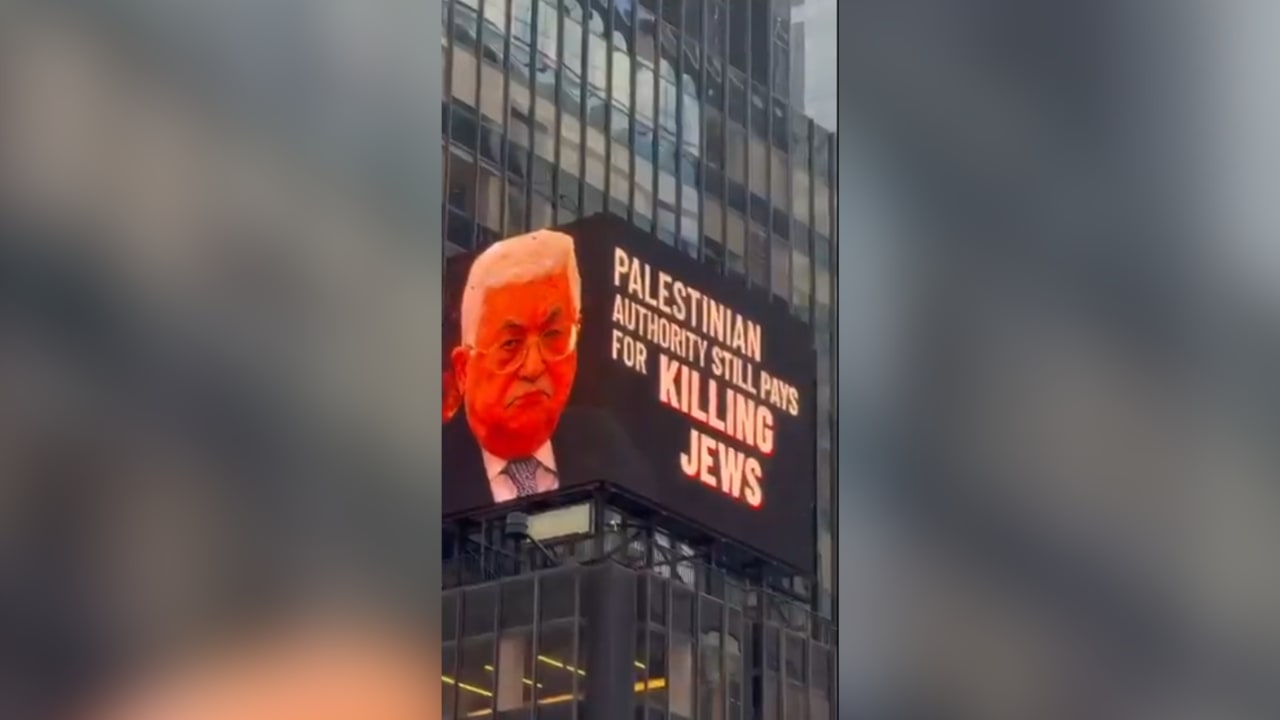
Last month, after more than three years of litigation, the US State Department settled a lawsuit in which I was a plaintiff.
The settlement requires Washington to adhere to the Taylor Force Act and bars the US from sending American taxpayer dollars to the Palestinian Authority for the next 10 years if it continues to operate its “Martyrs Fund.”
Otherwise known as “pay-for-slay,” the funds reward terrorists and their families with monthly stipends for murdering Israelis and Americans. The law is named for American student and Taylor Force Army veteran, who was murdered by a Palestinian terrorist in Jaffa in 2016.
You see, exactly 23 years ago, I was nearly killed by a suicide bomber.
June 11, 2003, was an ordinary day. Until it wasn’t.

At approximately 5:30 pm, an 18-year-old terrorist strapped with explosives and dressed as a hassidic Jew boarded Jerusalem’s 14A bus at the Mahaneh Yehuda market. He waited until the bus passed the crowded Davidka Square to detonate his bomb for maximum impact, just a few feet from where I sat.
In a matter of seconds, there was smoke, blood, screaming, sirens, and utter confusion. A total of 17 people were murdered, including everyone seated and standing around me. I was one of the more than 100 people injured, including dozens of people on the street. Hamas claimed responsibility for the attack.
Twenty-three years is an odd amount of time, long enough for anyone born after the attack to now be an adult, long enough for collective memory to blur, long enough for the world to move on. Except for those of us who lived through the attack. Our memories are clear, and a part of ourselves remains in that exact place.
People often ask about my memories from that day, but trauma does not live in neat little memories. It lives in fragments. It’s in certain sounds. Certain smells. The feeling of panic. The silence afterward. The realization that life is divided into “before the attack” and “after,” without warning.
If I’ve learned anything over these past 23 years, it is that surviving terrorism is not just about surviving the attack itself. It’s about surviving everything, and the years that come after it. The anniversaries. The triggers you cannot explain to people who have never experienced trauma. The exhaustion of carrying something invisible while trying to build a normal life around it.
There is a strange expectation placed on survivors. People expect us to be symbols of resilience, to have the story fit into a neat little pile. They want survival to look inspiring.
And sometimes it is.
Strength to Strength
I built a life after that bombing when I could have let the pain and trauma destroy me. I founded an organization that brings together victims of terrorism from around the world because I understood how isolating survival can feel.
Over the years, through Strength to Strength, I have sat with survivors, bereaved family members, and first responders from countries around the world. Different religions, different languages, and different attacks. Yet our conversations are often the same.
They understand the “before and after,” and the feeling that the world expects you to move on when part of you is still processing what happened. They understand things others don’t, like the feeling when people stop asking questions because “enough time has passed,” that “you should be over it,” even though the experience never fully passes for you.
One of the most powerful things I have witnessed through my work with terror victims is what happens when people no longer need to explain themselves. There is comfort in sitting across from someone who already understands the fear, the grief, the guilt, the hypervigilance, and the complicated process of rebuilding a life after terror.
Sometimes healing begins with simply not feeling alone. Trauma changes over time. Survival feels physical at first. Later, it becomes emotional, then psychological. Eventually it is quietly woven into ordinary, everyday life.
You notice it in crowded spaces, in the way your body reacts in certain places before your mind catches up. In how suddenly your anxiety sharpens, and memories begin surfacing without invitation as certain dates approach.
Even after 23 years, June still doesn’t feel like every other month. Probably the hardest thing to explain is that life continues at the exact same time as grief and trauma. You still go to work, celebrate birthdays, and laugh. You build friendships and careers and futures.
But somewhere within, there is a younger version of yourself that is still trying to make sense of what happened. Trying to make sense of how someone you never met tried to kill you.
I sometimes think about the person I was before that attack. Not because I wish to live in the past, but because terrorism changes your relationship with safety, with innocence, and with the assumption that the world fundamentally makes sense.
There are moments when I miss the version of myself that boarded that bus believing evil was something distant. Temporary. Rare. Surviving terrorism taught me otherwise.
It also taught me about the extraordinary strength of human connection. It taught me that healing often comes not from politics or headlines, but from human beings showing up for one another in the darkest moments.
Choosing light over darkness
Terrorism is built on hatred and destruction. The greatest response I have found is refusing to let that hatred define me.
But refusing to let hatred define me does not mean accepting a system that continues to reward it. That is why the pay-for-slay settlement matters so much, and why I will be in Jerusalem on Monday to keep pushing for accountability. Justice for survivors is not only about how we heal internally. It is also about ensuring that the world we live in does not keep subsidizing the violence that broke us in the first place.
Moving forward does not mean forgetting. It does not mean the pain disappears. It means choosing to build something meaningful despite it.
To choose light over darkness.
All these years later, I still carry that day with me, and I always will. But I also carry the people who helped me survive it and who continue to be there for me every day. They have become my extended family around the world. I cannot imagine my life without them.
And maybe that is what survival truly means. Not forgetting or “moving on,” but learning how to keep building a life filled with meaning, connection, and light after experiencing so much darkness – and continuing to fight so that the systems that enabled that darkness are finally held to account.
That’s why I’ll be in Jerusalem on Monday, for an important conversation with others on the price of terror, what this legal victory means, and how much work remains.
What defines me is not what happened to me that June day. It’s how I chose to live my life afterward.
The writer is founder and director of Strength to Strength, a nonprofit organization that unites international victims of terrorism and provides long-term psychological and peer support to help them heal and move forward. She is a survivor of a terrorist bus bombing that took place in Jerusalem, Israel, in June 2003, and was a plaintiff in the recently settled lawsuit against the State Department over pay-for-slay funding to the Palestinian Authority.