
The word “proxy” has done heavy duty lately. We use it to describe Hamas and Hezbollah as instruments of Iran, and the label fits. Their ideology, their strategy, and their ultimate aim are indistinguishable from Tehran’s: the destruction of Israel, pursued without regard for the cost to their own people.
They take direction from the patron that funds and shelters them, and they execute it faithfully. That is what defines a proxy – not an ally with shared interests, but an actor whose agency has been surrendered to someone else’s ends.
By that definition, we should be alarmed at what Israel is becoming.
Reassured for years that America is committed above all else to the safety of the Jewish state, Israel has allowed its own strategy to be quietly subordinated to Washington’s priorities. Our decisions increasingly serve American financial and geopolitical interests – the price of oil, control of global energy routes, the architecture of the Abraham Accords – more than they serve Israeli security. And when those interests collide with our survival, it is our survival that gives way.
The collision is no longer theoretical. On June 14, after Hezbollah fired on northern Israel and the IDF struck a Hezbollah command center in Beirut, US President Donald Trump did not stand with the country he claimed to protect.
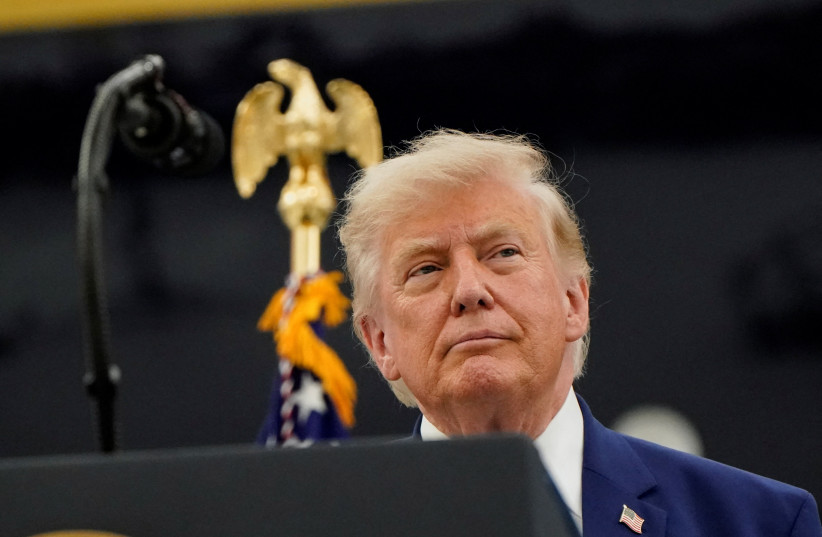
He faulted Israel publicly, calling the attack it had answered “very small and meaningless,” insisting “nobody was hurt, injured, or killed,” and warning that Israel’s response “should not disrupt this important process.” The process he had in mind was his emerging deal with Iran. The targeting of Israeli civilians and the killing of Israeli soldiers did not register. The deal did.
Asked soon afterward whether he could keep Israel from striking Lebanon at all, the president was unguarded: “They have a lot of respect for me, and they do as I say.” It is hard to describe a patron-and-proxy relationship more plainly – except that here, the president of the United States described it about us.
From ally to proxy?
For more than two years, the north has been left to fend for itself: communities emptied, families living without any sense of security, soldiers killed almost daily – and we have been urged to absorb it quietly, so as not to disturb an American negotiation.
That negotiation has now produced the Islamabad Memorandum between the United States and Iran. Read it closely. It says nothing about Iran’s ballistic missiles – the very arsenal Washington once vowed to neutralize – and nothing about Tehran’s network of terror proxies.
It defers every meaningful question about Iran’s nuclear program to a later round of talks that may never conclude. What it does do is commit its signatories to ending the war “on all fronts, including Lebanon.” Iran has seized on that clause to demand an Israeli withdrawal from Lebanon as a precondition – before it will concede anything real on the nuclear file.
Israel, which never signed the document, is nonetheless expected to be bound by it. We have been reduced to a pawn on a board where we are not even seated as a player.
Which brings us to the question now consuming our politics: who serves, and why. The fight over drafting Haredi yeshiva students fills the headlines daily, but the deeper question is owed to every Israeli family, religious and secular alike. We ask our sons and daughters to place their lives in the hands of the state. That is a sacred contract, and it runs in both directions.
The nation may demand sacrifice only if it is genuinely prepared to defend those who make it – to secure the borders, to finish the job, to put Israeli security first and answer to no one else for it.
Can we honestly say that it does? If our strategy is dictated in Washington and our deterrence is bargained away to serve someone else’s deal, then we owe our children an answer before we send them to the front. A sovereign nation asks its young to risk everything for its own survival. A proxy asks them to risk everything for someone else’s.
Israel cannot be a proxy.
The writer is a serial entrepreneur and seasoned investment professional specializing in disruptive technologies and financial analysis. He is a researcher at the Jerusalem Center for Security and Foreign Affairs (JCFA).