A temporary security buffer cannot fully protect the Druze who now depend on Israel for survival. Only a lasting Israeli presence can.
Israel must convert its military incursion in southern Syria into a long-term investment in the country’s political order. A buffer zone running from the Golan Heights into Quneitra may protect Israel’s northern border in the short term, but the Druze of Sweida who depend on Israeli guarantorship cannot be protected without a prolonged military presence.
Folding the breakaway region of Jabal al-Druze into that security belt would protect Israel’s frontier and signal to Damascus that the existence of the Druze people is non-negotiable.
Israel’s war in Syria followed a predictable formula before Bashar al-Assad’s fall. The Israel Air Force struck Iranian and Hezbollah militants in what it called the campaign between wars, never holding ground or clashing with the Syrian Arab Army.
That changed on December 8, 2024, when Damascus fell to a coalition spearheaded by Hay’at Tahrir al-Sham under the leadership of Ahmed al-Sharaa, the former al-Qaeda commander once known as al-Julani.

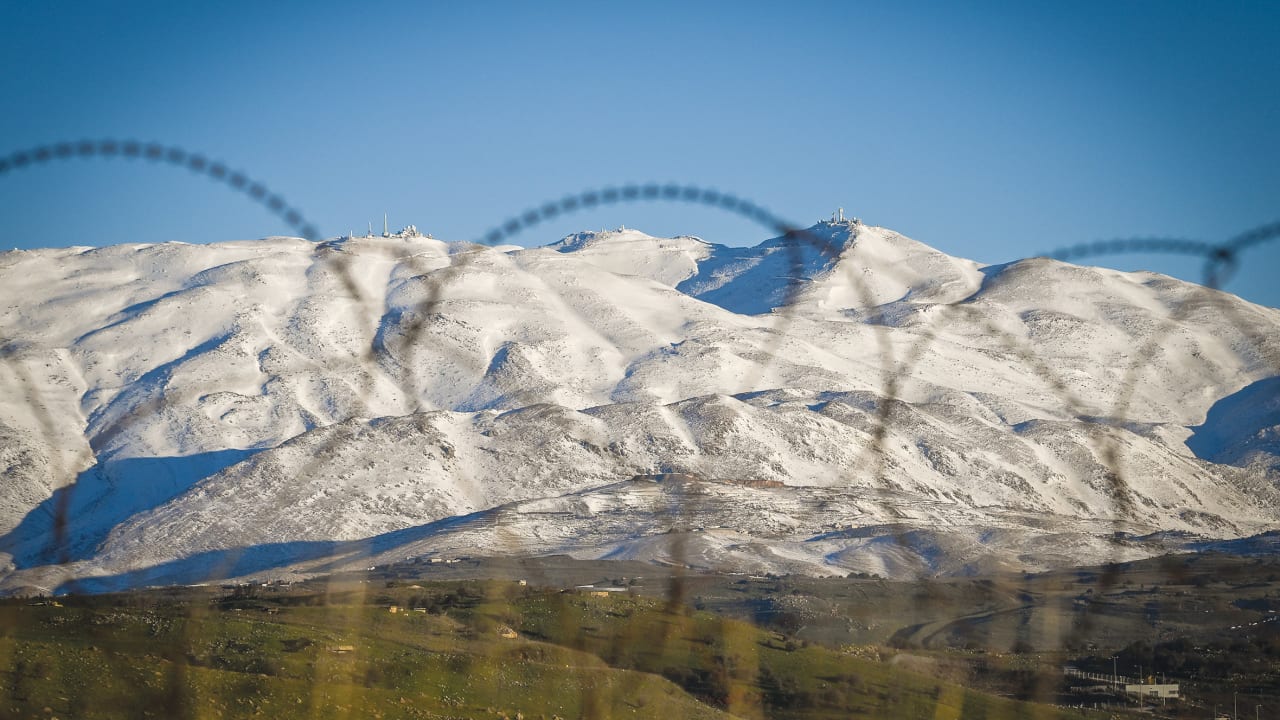
Within days, the IAF and IDF initiated Operation Bashan Arrow, carrying out more than 400 strikes, the IAF’s largest air operation ever, destroying most of the old Syrian military infrastructure. Special forces took Mount Hermon, and the army seized the United Nations’ 1974 demilitarized zone and pushed into Quneitra and western Daraa, holding approximately 665 sq.km.
What began as a limited step to stabilize Israel’s northern frontier soon evolved. Foreign Minister Gideon Sa’ar called the incursion temporary in December 2024, but by January 2025, Defense Minister Israel Katz said the army would stay indefinitely.
A year and a half later, Israel holds fortified outposts across Quneitra with no date to depart, its mission now the protection of Syria’s minorities. Prime Minister Benjamin Netanyahu offered a hand of peace to the Druze, Kurds, and Christians, and demanded the south’s demilitarization.
When violence erupted in Sweida in July 2025, Israel answered the state-backed assault on the Druze with three days of airstrikes, even hitting the defense ministry in Damascus, invoking their “deep covenant of blood” with the Druze.
Syria remains governed by an Islamist movement that has bent the state to its own ends. Faction commanders have been folded into its ministries and its new army, which includes foreign fighters from as far as Uzbekistan across the jihadist internationale, whose hostility to minorities is a matter of creed.
Some 1,400 Alawites were killed on the Latakia coast in March 2025, and more than 1,700, mostly Druze, in Sweida that July; civilians were overwhelmingly cut down in sectarian massacres. Kurds in the northeast live under the same pressure that drove those massacres, as the state tightens restrictions on them and fails to fulfill the promises made in its “integration” agreement.
This is the country Israel must plan around: a Syria not just broken but a haven for extremists.
Whatever legal rights al-Sharaa promises, and however many integration deals he signs, the record is clear: Damascus is intolerant of its minorities and will use every state mechanism to violently impose its will. The Druze and Alawites are now the most exposed to that violence.
Waiting to trust Damascus
In April 2026, the Druze spiritual leader Sheikh Hikmat al-Hijri declared the formation of an autonomous Administrative Council of Jabal Bashan in Sweida and called the break with Damascus irreversible.
Earlier, he set his condition: autonomy required an outside guarantor, and only Israel could play that role. More than 40 Druze militias now hold the ancient mountain against the government, which has imposed a de facto blockade on it.
Jabal al-Druze lies more than 100 kilometers from the Golan. While the IAF delivered air support at the height of the July massacres and deterred Syria by striking Damascus, a line drawn to shield the border does not shield the mountain. The day Israel draws down, the community that staked its survival on the Jewish state will be left to a government that has shown what it does to those it cannot absorb.
In any future settlement, the lives of the Druze should not be traded for a cold peace. I have written before that normalization with Damascus would serve Israeli interests, but never as a blank check to al-Sharaa, the trap of any future talks.
A deal that trades the buffer and the Druze guarantee for the signature of a government that cannot protect its own people invites the next massacre. Israel can normalize, but from the ground it holds, and only with a Syria that has earned it.
The alternatives will fail. Internationally guaranteed autonomy has no enforcer; no Western capital will fight for the Druze, and a federal Syria with paper protections rests on the good faith of a government that already has shed blood.
Israel should therefore stop treating the incursion as a holding action and make it the foundation of a durable order, extending the security belt to take in Jabal al-Druze and formally accepting the guarantor’s role al-Hijri has requested.
Damascus cannot provide the medical care, food, and basic services the zone needs; only Israel has the military, economic, and political means to ensure the survival of Syria’s Druze.
The day a Syrian government can and will protect them, or a new one emerges that will, the case for their presence falls away.
However, the same entanglement that makes the guarantee credible makes leaving hard, and a protected people can become a hostage to its protector, which is why the Druze long resisted this embrace. A people who have buried their dead twice in a year have weighed that risk and chosen, and Israel should take them at their word.
Critics will call this a violation of sovereignty and point to civilians killed in the zones, but they should recall the decade of violence visited on Syria’s minorities and who now governs in Damascus: a new Islamist internationale, blessed by a former al-Qaeda leader, that slaughtered Alawites on the coast and Druze in the south.
Had Israel not intervened in July, the killing that painted the coast of Latakia would have dripped down to consume all of Sweida. It was because Jerusalem bloodied al-Sharaa’s nose that Damascus pulled back.
The question is whether to make the gains durable or surrender them to a government that has earned no trust.
The buffer was the easy part. Turning it into a guarantee the Druze can rely on, held only until Damascus can be trusted to protect them, is the harder task. Their existence is not negotiable, and only Israel can make that promise hold.
The writer is an Australian researcher and conflict analyst who writes on foreign policy, conflict, international security, and human rights. You can find him on X: @StoicViper.