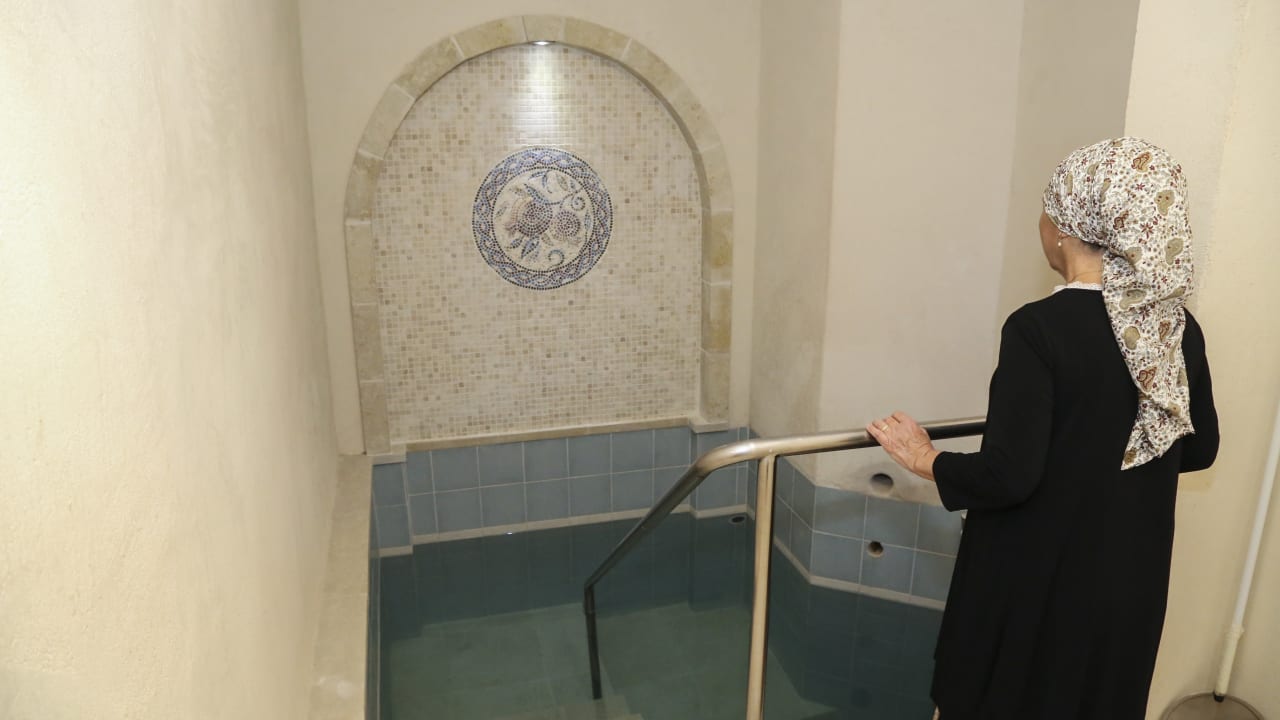
The Chief Rabbi’s call this week for mikveh attendants to disregard a ruling of Israel’s Supreme Court should concern every Jew who cares about the rule of law, religious freedom, and basic human dignity.
At issue is a Supreme Court decision from almost a decade ago affirming that women using public mikvaot cannot be subjected to intrusive questioning or religious policing by mikveh attendants.
The ruling came after years of complaints from women who described being humiliated and even denied access to publicly funded ritual baths.
Since the decision, halachic writing acknowledging that the way mikvaot were supervised in Israel only represented one dimension of the halachic tradition has increased exponentially. One only needs to read posts this week from Israeli scholars such as Avraham Stav, Yoni Rosensweig, Tirza Kelman, and Eli Reif (just to name a few) to see how much more this is in the consensus than it was a decade ago.
Following ITIM’s victory in the Supreme Court, which granted women autonomy in the mikvaot, we have continued to receive calls where women reported being asked deeply personal questions about their observance, and being refused entry to immerse without supervision.

We have filed hundreds of complaints and engaged in our own surveys to ensure that the Supreme Court decision is being implemented.
The Supreme Court rightly recognized that public mikvaot are public institutions. Women who use them are entitled to dignity, privacy, and respect.
The Chief Rabbi’s statement – to encourage attendants to ignore the Court’s ruling – is deeply troubling. In a democratic state governed by law, public employees do not get to decide which court rulings they will follow and which they will disregard.
One does not have to agree with every judicial decision to understand that openly encouraging civil servants to defy the law sets a dangerous precedent.
But there is another aspect of this controversy that deserves attention.
Every year, more than 650,000 immersions take place in Israel’s mikvaot. The overwhelming majority of the women who use these facilities are not enemies of Judaism. They are not opponents of Torah. They are not seeking to undermine religious life.
Quite the opposite.
These women choose to participate. They come from different communities, different levels of observance, and different religious outlooks. Yet they share a desire to connect with a practice that has been central to Jewish life for generations.
To suggest that women seeking a respectful and private immersion experience are somehow acting against Torah values is not merely wrong; it is absurd.
Torah demands that people be treated with dignity
What Torah value is served when a woman is screamed at in a mikveh?
What Torah value is advanced when a woman is publicly shamed?
What Torah value is protected when a woman fears being interrogated before she can immerse?
The Torah repeatedly commands us to treat people with dignity. Chazal – the Talmudic rabbis – teach that human dignity is so fundamental that it can override significant religious considerations. The mikveh should be a place of tahara – ritual purification – not anxiety.
Many, even most mikveh attendants, understand this. Thousands of women have positive experiences every year thanks to dedicated attendants who approach their work with sensitivity and compassion. They help create an environment where women can observe this mitzvah with meaning and dignity.
Those attendants deserve praise.
But when women are encouraged to yell or intimidate, something has gone terribly wrong.
This debate is not about whether mikvaot should be religious institutions. They are. Nor is it about whether Jewish law matters. It does.
The question is whether publicly funded religious services exist to serve the people of Israel or to judge them.
The Supreme Court’s ruling reflects a simple principle: women who enter a public mikveh should be treated with respect. They should not have to surrender their privacy, endure interrogation, or fear humiliation.
That is not a liberal value. It is not a secular value.
It is a Jewish value.
And it is time that every woman who enters a mikveh in Israel can expect nothing less.
The writer is the founder and director of ITIM.