
Every empire eventually learns the same lesson.
Taking territory is one thing. Taking possession of a people is another.
History remembers battles because they change maps. It remembers cities because they fall. Yet the real struggle has always taken place somewhere less visible: in the space where trust is built, identities take shape, and communities decide whether they still believe in one another.
Occupation does not begin at a border. It begins inside the human mind.
That is why sexual violence has remained such an effective weapon across centuries. It reaches far beyond the individual. It strikes at the relationships that allow societies to function.
For years, I found myself asking why this form of violence appeared so consistently wherever ideological extremism or totalitarian ambition took root. Bosnia. Rwanda. The Yazidi genocide. Sudan. The atrocities committed on October 7.
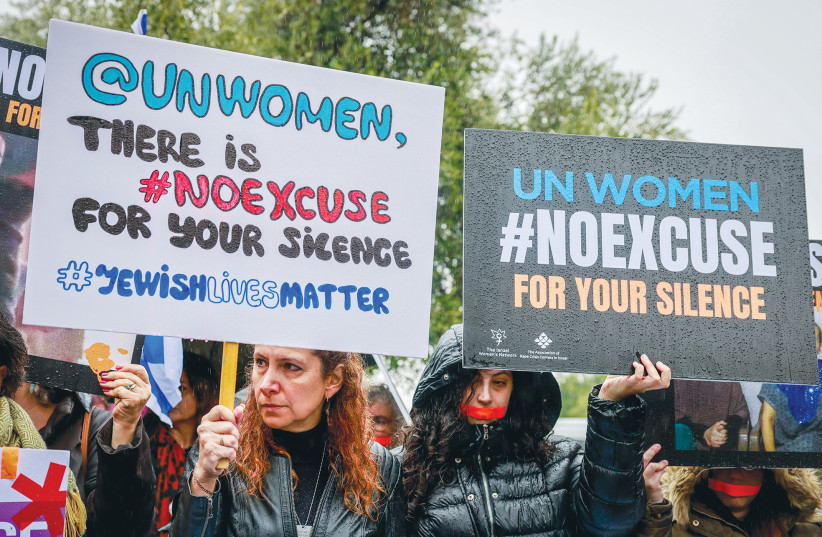
Different places. Different actors. The pattern barely changed.
Eventually, I realized I had been asking the wrong question.
The real question is not why individuals are attacked; it is why entire communities are.
During the years I spent moving within circles connected to the Islamic Republic of Iran, I came to understand that power was rarely discussed in the way liberal democracies understand it. We count military hardware, economic strength, strategic alliances, and territorial gains.
Those conversations often began somewhere else entirely. They centered on people. On fear. On dependence. On the ways societies could be reshaped long before an army ever crossed a border.
Violence was judged less by the number of bodies it left behind than by the psychological consequences it produced.
A missile can destroy a building.
Fear can empty an entire neighborhood.
Trauma can linger for generations.
That distinction matters.
Military thinkers have long understood that victory depends on more than defeating an opposing army. Carl von Clausewitz argued that war is ultimately about breaking the enemy’s will. Modern revolutionary movements have pushed that logic further. Rather than confronting military power head-on, they work to erode the social foundations that make organized resistance possible.
A frightened society is easier to control.
A fractured one is easier still.
Psychology helps explain why.
Trauma changes the way people think. Survivors often carry a lasting sense of danger even after the immediate threat has passed. Many develop hypervigilance. Others withdraw into silence. Shame replaces confidence. Suspicion replaces trust. Families begin protecting themselves by saying less, not more. Communities stop speaking openly because fear becomes woven into ordinary life.
Over time, people adapt to living under pressure.
That adaptation comes at a cost.
Trauma alters judgement. It changes who we trust, what risks we are prepared to take, and whether we still believe resistance is possible. Psychologists have described this in different ways, from learned helplessness to moral injury, but the outcome is remarkably consistent. People begin to limit themselves before anyone else has to.
The effects rarely stop with the victim.
Violence rooted in everyday life
Sociologists have long argued that societies are held together by invisible ties: families, friendships, neighborhoods, shared rituals, mutual obligations, and collective memory. These are not abstract ideas; they are the infrastructure of everyday life. They determine whether people cooperate, whether they come to one another’s aid, and whether they believe they belong to something larger than themselves.
Sexual violence attacks those bonds all at once.
Its consequences ripple outward. Parents struggle to protect their children from a trauma they cannot explain. Marriages collapse under the weight of shame imposed by someone else’s crime. Communities become divided between compassion and stigma. Children inherit silences that shape their lives without ever understanding their origin.
The violence does not end when the assault ends.
It settles into the life of the community.
That is why I have come to see sexual violence not simply as an atrocity but as a means of dismantling the social architecture on which free societies depend.
What struck me most during my years observing the ideological culture surrounding the Islamic Republic was the patience with which power was understood. Immediate victories mattered far less than lasting influence. Conversations returned repeatedly to the same question: How do you weaken a society until it begins to weaken itself?
No one needed to outline every method.
The logic surfaced often enough.
Break confidence.
Create uncertainty.
Turn neighbor against neighbor.
Convince people that speaking carries greater risks than remaining silent.
Once that takes hold, repression no longer depends entirely on force. People begin policing themselves.
History offers countless examples.
Colonial administrations understood that lasting control required more than soldiers. Divide communities. Reward collaboration. Punish dissent selectively. Make resistance appear futile and isolation inevitable. The objective was never simply obedience. It was fragmentation. A divided society is easier to govern than a united one.
Revolutionary movements have repeatedly adopted the same approach: the language changes, the ideology changes. The mechanics remain strikingly familiar.
Sexual violence amplifies those mechanics in ways few other weapons can.
Its effects are deeply personal.
Its consequences are collective.
Its memory outlives the conflict itself.
A bridge can be rebuilt. A school can reopen. Roads can be repaired. Trust does not return on a construction schedule. No peace agreement can erase the silence that settles over a family or restore the confidence stolen from an entire community.
Perhaps that is why these crimes continue to appear wherever domination becomes the objective. Those who seek to control societies understand something many democracies still struggle to grasp.
Human beings are social before they are political.
Break the individual, and you weaken the family.
Weaken enough families, and communities begin to come apart.
Once communities begin to unravel, the nation itself becomes easier to intimidate, manipulate, and ultimately control.
For that reason, sexual violence cannot be treated solely as a humanitarian concern. It belongs in discussions about national security, conflict strategy, and societal resilience. It is designed to achieve what military force alone often cannot: the slow corrosion of a people’s confidence in themselves and in one another.
If we continue to see these crimes only through the suffering of individual victims, however profound that suffering is, we will miss the wider objective.
The assault is directed at a person.
The intended target is the society to which that person belongs.
That is what gives this violence its political power.
And that is why confronting it requires more than justice after the fact. It requires recognizing the strategy before the damage becomes irreversible.
The writer is the chief policy adviser of Stop The Hate UK.