
Defense Ministry Director-General Amir Baram on Wednesday said that Israel viewed Iran as more of a danger than did the United States, leading to different policy decisions and interests, even as both regard Tehran as a threat.
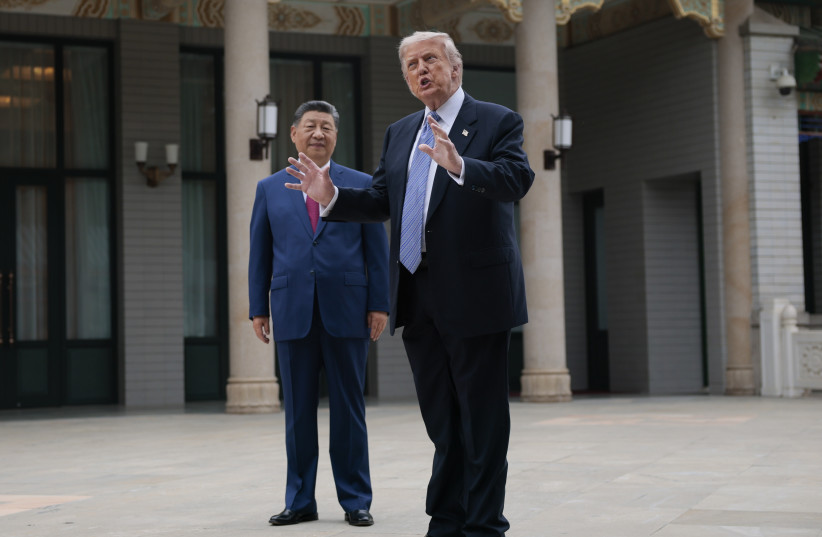
“The difference between us is not in how we understand the threat, but in our priorities: For us, Iran is an existential threat. For the United States, it is a chronic regional challenge, while China and the Indo-Pacific theater remain the core concern. We think Tehran, they think Taiwan,” he said.
Baram added, “We cannot afford to judge current American policy through a provincial lens. What some in Israel perceive as weakness or folly, an apparent disregard for every warning sign on the ground, is viewed in Washington as cold, calculated, and clear-eyed risk management in an era of shifting global attention.”
Addressing why extra criticism of Israel and of Iran has come from the Pentagon, the director-general stated, “From the Pentagon’s perspective, with American munitions stretched between supporting current wars and preparing for a potential confrontation in the Taiwan Strait [160 kilometers of water separating China and Taiwan], a prolonged war in the Middle East runs counter to America’s global posture.
Baram explained, “At the same time, based on my deep familiarity with the range of views within the American system, if there is one thing Americans hate more than this war that has dragged on for them, it is losing a campaign they have already won. Either way, as the United States operates under an America First approach, our partnership cannot rest on shared values alone.”
The defense ministry official warned, “The agreements now taking shape around the world, which could channel hundreds of billions of dollars into Iran, could dramatically accelerate its military buildup.” Facing this danger, he said, “the State of Israel must prepare through tailored force buildup and advance a new regional architecture, first and foremost with our strategic ally, the United States, and with others.”
MoU to govern US-Israeli relationship for a decade, rests on independence, stability
Moving on to discussing the upcoming memorandum of understanding (MoU) which will govern the Israeli-US military relationship for a decade to come after 2028, he said, “It must also rest on hard interests: a strong, independent, and proactive Israel that stabilizes the Middle East is the very asset that allows the United States to redirect resources toward Asia. This is the foundation of the next memorandum of understanding on security cooperation now being formulated. The agreement will need to generate security, economic, and strategic benefits for both countries for years to come.”
On the subjects of the Gulf and the new space of alliances, Baram said: “The war has sharpened – for every actor in the region – the price of Iran’s military buildup. It has created a shared interest in forging a broader alliance, from India through the United Arab Emirates to Greece and Cyprus. Israel’s strengths in technology, proven operational experience, and defense innovation, combined with the Gulf’s financial power, could enable a new security-economic front. Expanding our strategic partnerships is not a substitute for our partnership with the United States, but it will allow Israel to broaden its room to maneuver and its standing on the international stage, and will allow us to diversify our strategic footing.”
In this specific speech, Baram did not address those who have argued that the Iran war harmed Israel; however, on June 2, top Israeli defense sources told The Jerusalem Post and other media that in the wake of the Iran war, Israel will have an even larger influence in the region among Arab states, despite a wide range of contradictory trends.
Among the contradictory trends cited by commentators have been that at times Arab states have seemed to want to move closer to Israel, seeing the power it can project to protect them against Iran, and at other times they have seemed more worried by the danger Iran poses or by the concept of Israel emerging as a regional dominator.
These contradictory trends could translate into either expanding the Abraham Accords alliance beyond countries such as the UAE to countries like Saudi Arabia – viewed as the crown jewel of normalization – or into distancing Israel from growing the Arab normalization alliance.
Top Israeli defense sources said on June 2 that the full picture would only become clear when the current Iran war truly ends and the dust starts to settle.
However, the sources also pointed out that the various mixed trends in the region go beyond views on Israel, given the UAE’s exit from the Organization of the Petroleum Exporting Countries (OPEC), which was once an entirely unified and seemingly all-powerful force in the global energy sector.
The UAE and the Saudis are now in open and repeated conflict on a wide array of major issues.
According to sources, they disagree about how to handle Iran and their economic interests, and their handling of relations with Israel is just one of a long list of multiple important disagreements
Nevertheless, the defense sources remain confident that Israel’s influence overall with Arab countries will grow following the war with Iran, including its defense sales to the region.
While a number of former senior defense officials have slammed the length of the recent wars Israel has been involved in and have demanded that Jerusalem return to shorter wars, Baram rebuked this view as unrealistic, saying that the IDF must be ready for this new style of long war, regardless of convenience.