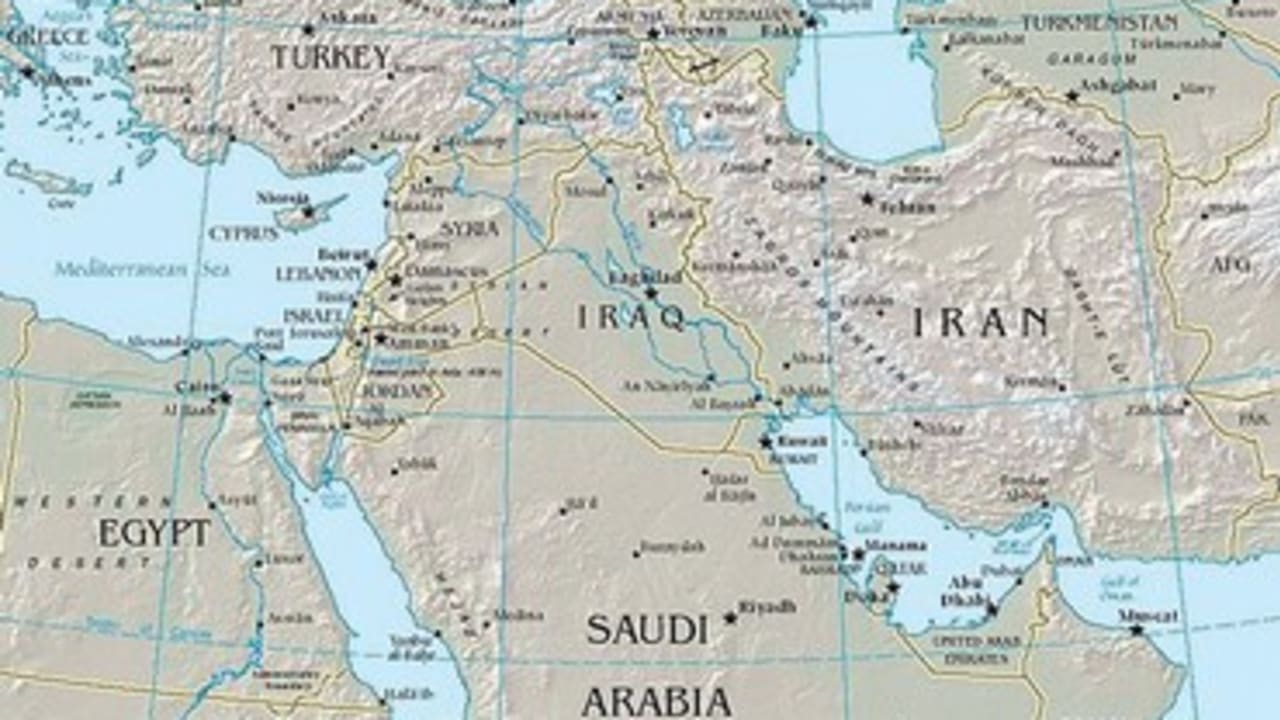
While most of the Israeli public’s attention has been focused on the military campaign against Iran and its proxies and the upcoming elections, several commercial decisions in the Eastern Mediterranean have gone largely unnoticed that carry real costs for Israel’s long-term energy security.
Israel expanded its natural gas export agreement with Egypt – the largest in its history – while ENI and TotalEnergies committed Cyprus’s Kronos field to Egyptian liquefaction terminals, and QatarEnergy signed a new investment agreement with Egypt encompassing Eastern Mediterranean infrastructure.
Individually, each decision has a defensible commercial rationale. But together, they point towards a regional energy architecture that concentrates exposure around a single node, placing Israeli energy security at risk.
On paper, exporting natural gas to Egypt makes sense. Egypt has a large and growing domestic energy market, operational liquefaction infrastructure in Idku and Damietta, and fewer immediate political complications than some alternative routes. Compared to a pipeline to Cyprus or a floating LNG facility offshore, routing gas through Egypt requires less new infrastructure and fewer parties need to be brought to the table.

Chevron, as operator of both the Leviathan and Tamar fields, has its own reasons to prefer a well-established export route. When the most financially rewarding route runs through Egypt, that is where the gas will flow.
It is worth recalling that the extension of the Leviathan export agreement was not a straightforward commercial decision. Prime Minister Benjamin Netanyahu delayed the deal for months before approving it under American pressure, and only agreed to do so after the inclusion of clawback clauses designed to protect Israeli supply in the event of future domestic shortages.
Whether those safeguards are sufficient – and whether they will hold under the commercial and diplomatic pressure that accompanies a long-term export relationship – is a question that hasn’t been seriously debated.
The problem is that two of the Eastern Mediterranean’s most significant gas assets will flow through the same node, making Egypt’s economic and political stability variables in Israel’s energy security.
Egypt has been managing fiscal pressure, currency volatility, and dependence on IMF support. However, it remains a complicated anchor for a regional energy architecture. Its dependence on Gulf financial support, particularly Qatari capital, is growing, and the QatarEnergy investment agreement only deepens that dynamic.
A state serving simultaneously as a transit hub for other countries’ gas and as a recipient of Qatari financing is not in an unconstrained negotiating position. For Israel, whose relationship with Qatar has been complicated by Doha’s relationship with Hamas, the prospect of Qatari capital acquiring influence over the infrastructure through which Israeli gas flows deserves serious attention.
Turkey has also been making strategic decisions over the past decade. Through commercial agreements between state-owned BOTAŞ and operators including Chevron, BP, Shell, ENI, and TotalEnergies, Ankara has accumulated influence over future permit decisions, investment patterns, and project timetables across the region.
Turkey’s “Blue Homeland” maritime claims have not gone away; they have been complemented by a commercial toolkit that achieves similar ends without the international criticism that naval brinkmanship garnered.
This matters for Israel because the operators Turkey has cultivated relationships with are the same ones whose participation would be required for future energy infrastructure projects: new gas pipelines, undersea electricity interconnectors, and corridors like IMEC.
That leverage grants Ankara influence over whether those projects advance, stall, or get rerouted in ways that work against Israeli interests.
This should not be understood as a critique of the Israel-Egypt energy relationship, which has come a long way since the collapse of their previous arrangement in 2012, and the Eastern Mediterranean Gas Forum remains an important platform.
But it would be derelict to ignore how commercial logic has produced a chokepoint that leaves Israel with limited options if the Egyptian route underperforms, if Qatari influence produces outcomes that run counter to Israeli interests, or if Turkey’s leverage is exercised against connectivity projects that could swing Israel’s economic future.
Israel’s domestic energy outlook adds greater urgency. At present, 70% of Israel’s power generation depends on natural gas. Under current trajectories, domestic reserves are expected to last two to three decades, though demand is not static; electrification of transport, population growth, and the expansion of data centers will all accelerate projections of when Israel reaches peak gas.
The long-term export contracts that made commercial sense today will narrow the state’s options at exactly the moment when flexibility will matter most.
So what should Israel actually be doing?
The 3+1 framework – the partnership among Greece, Cyprus, Israel, and the United States – has entertained infrastructure projects that would reduce Israeli dependence on the Egyptian hub. To date, it has not produced a major energy project.
The Great Sea Interconnector, an undersea electricity cable connecting Israel, Cyprus, and Greece, has been in development for years and remains plagued by financing and technical challenges – one of several examples that expose the gap between political declarations and private sector interests.
The closure of the Strait of Hormuz has shifted that calculus. Unlike the interconnector, whose commercial case rests on long-term grid integration, a Cyprus-based LNG facility addresses a specific market need: a reliable export pathway that does not run through Egypt.
The Christodoulides government has shown interest in building such a facility near Vasilikos. But Cyprus has its own political challenges that have complicated its ability to translate energy ambitions into concrete projects.
Relying on legacy political structures to deliver what they have consistently failed to deliver would be a mistake. Israel should be meeting Cypriot interest with pipeline feasibility studies, development finance engagement, and offtake agreements – not warm communiques and ministerial visits.
The Abraham Accords established a framework for energy cooperation with the UAE that has largely gone unexploited. Mubadala’s recent acquisition of an 11% stake in Tamar signals genuine Emirati interest. Their development finance could play a meaningful role in making alternative infrastructure routes commercially viable, particularly for a Cyprus-based LNG facility. What is missing is an earnest effort to bridge political and commercial interests – a priority for Israel’s next government.
Israel also needs to treat gas revenues as seed capital for what comes after gas. Chevron controls much of domestic production while serving as the principal exporter, a dual role that creates tension between domestic supply reliability and maximizing export volume.
Accelerating renewable deployment, scaling energy storage, and building grid flexibility are not optional. They are what Israel will need when gas reserves decrease and export commitments peak simultaneously.
The window for action is narrow. Israel’s post-war agenda and domestic disputes will consume the government’s time and resources, and American engagement in the region cannot be assumed to continue in its current form.
The main question is whether a commercial entity can navigate the noise and the nuances of Israel-Cyprus relations, to translate political interest into a bankable infrastructure project before that window closes.
When Tamar and Leviathan were discovered in 2009 and 2010, Israel was satisfied with securing any viable export route. Its energy arrangement with Egypt delivered, and the benefits have been real. But the commercial logic that dictated those decisions should not be the sole determinant of Israeli strategy in the decades ahead.
As Israel transitions out of wartime toward a period where domestic demand and export commitments will peak simultaneously, it faces a version of the same vulnerability it has watched Gulf states confront during the Hormuz crisis: a single choke point, built not by accident but by the accumulated logic of past decisions.
The question is whether Israel will use the current window to diversify before that vulnerability becomes a strategic constraint.
The writer is a Senior Policy Fellow at Mitvim – the Israeli Institute for Regional Foreign Policies and a Visiting Fellow at the German Marshall Fund.