In the realist tradition of international politics, military victories are rarely self-executing. They create opportunities that must be seized through political arrangements that align interests and reshape incentives.
Since October 7, 2023, Israel’s military campaign against Iran’s ayatollah regime and its terror proxies has produced significant tactical gains: degraded command networks, depleted rocket arsenals, severely degraded Tehran’s nuclear program, restored deterrence, and severed the IRGC’s land corridor from Iran through Iraq and Syria to Lebanon.
Yet these achievements will remain fragile unless embedded in a broader political architecture. The expansion of the Abraham Accords offers precisely that framework, a pragmatic way to convert battlefield achievements into a durable shift in the regional balance of power that marginalizes revisionist actors and advances the interests of both Israel and the United States.
Prime Minister Benjamin Netanyahu captured the stakes by stressing, “As I promised you two days after October 7, we are changing the face of the Middle East.”

The Hamas atrocities of October 7 shattered the prior equilibrium and exposed the limits of containment. Israel’s military response demonstrated its ability to impose costs, but the deeper challenge is translating that capacity into a new regional order in which Israel is accepted, not perpetually isolated.
Iran long recognized the danger of normalization. When the UAE and Bahrain joined the Abraham Accords in 2020, Tehran condemned the deals as betrayal and warned normalizing states they were “betting on a losing horse.” These were not empty words.
Iranian-backed Houthis attacked Emirati targets in 2022, while IRGC-linked networks intensified destabilization efforts in Bahrain and targeted commercial vessels in the Gulf. The message was unmistakable: cooperation with Israel would carry unacceptable risks.
The same logic applied closer to Israel. The 2022 Negev Summit triggered a wave of Iranian-channeled terrorism through Palestinian Islamic Jihad and Hamas, aimed at turning the West Bank into “a second Gaza.” Documents seized from Hamas after October 7 confirm that the massacre was partly designed to derail Saudi-Israeli normalization by reigniting the Palestinian issue in its most violent form.
Saudi Arabia has so far yielded to Iranian threats and domestic anti-normalization pressure. Yet Senator Lindsey Graham rightly described expanded Abraham Accords participation – especially Saudi inclusion – as potentially “one of the most consequential” agreements in Middle East history, capable of delivering unprecedented stability and turning the region into an economic powerhouse rather than a powder keg.
The recent Israel-Lebanon framework agreement (June 26, 2026) further illustrates the pattern: diplomatic progress that weakens Hezbollah provokes accelerated Iranian countermoves.
Countering this backlash requires Israel to act as a proactive architect of regional stability, including expanding energy partnerships, technological cooperation, intelligence sharing, and joint counterterrorism. This serves US interests by reducing America’s military burden and building a self-reliant network of capable partners.
Henry Kissinger observed that military outcomes create new realities, but these must be translated into accepted political arrangements to endure. The Abraham Accords represent exactly this translation mechanism. They create vested interests in stability among Arab states, raise the cost of Iranian disruption, and give Washington a lower-cost path to regional influence than perpetual deployments.
Trying to prevent the vacuum
The region is in tectonic flux. The degradation of Iranian proxies in Gaza and Lebanon, combined with prospects for new diplomatic openings, creates possibilities for a reconfigured order – but also vacuums.
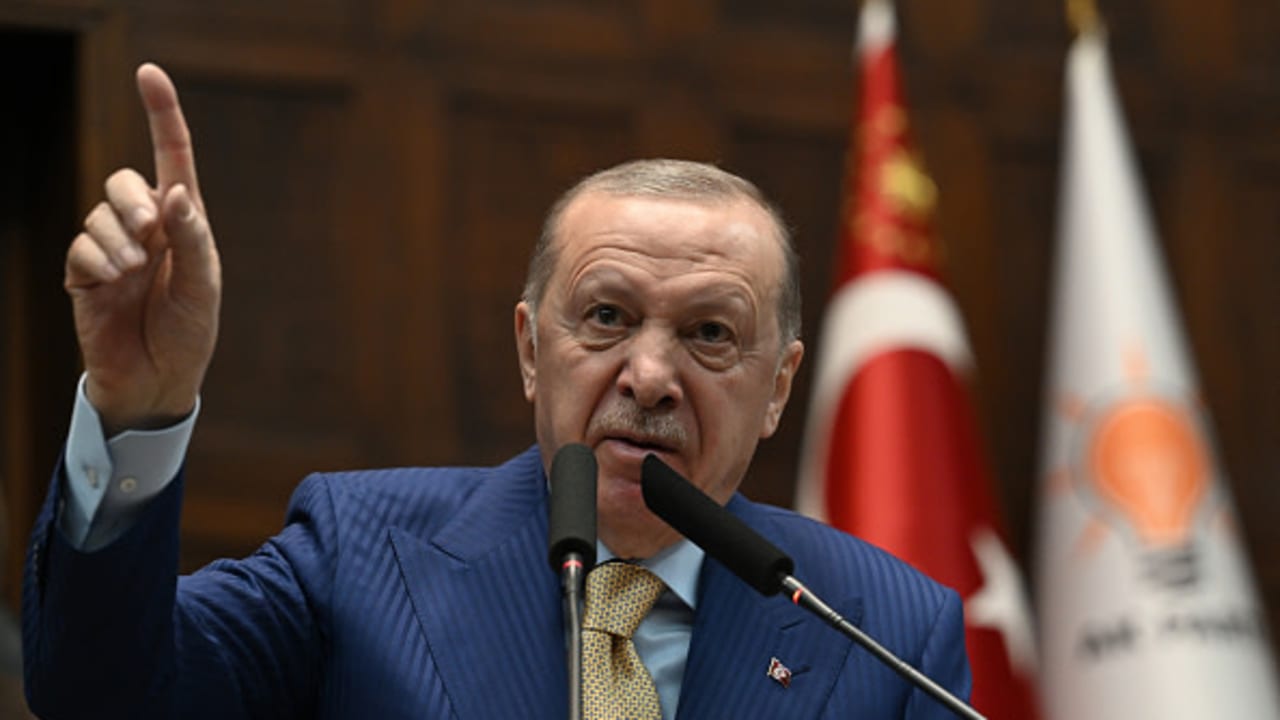
Turkey seeks greater influence through diplomatic leverage and military presence. China offers economic penetration via infrastructure and technology deals, positioning itself as an alternative partner unbound by Western security demands. If the US and Israel fail to fill these spaces through expanded normalization, others will.
A coherent strategy must treat military pressure and diplomatic integration as complementary, not sequential. Operations that degrade Iranian capabilities open space for normalization, while normalization raises the costs of renewed Iranian adventurism. Relying solely on military action risks repeating two decades of tactical successes that never produced strategic closure.
The path forward is clear. The United States should use its leverage to advance further normalization, addressing legitimate Arab concerns while insisting that integration with Israel strengthens their security. Israel must demonstrate that deeper ties deliver tangible benefits in technology, trade, and intelligence.
By pursuing this course with persistence, Washington and Jerusalem can consolidate recent gains into a stable equilibrium. The alternative is to cede the vacuum to competitors. In the realist calculus of power, influence, like nature, abhors a vacuum.
The writer is the editor-in-chief of TV7 Israel News, a senior adviser at the Foundation for Defense of Democracies (FDD), and a senior fellow at the Jerusalem Institute for Strategy and Security (JISS).