
Every new document about Hamas’s preparations for the October 7 massacre makes the same question harder to escape: How did Israel fail to see what was being built in front of it?
The latest revelations about Hamas leader Yahya Sinwar’s plan are horrifying – not only because of what they show about Hamas, but also because of what they show about Israel’s failure to understand the enemy it was facing.
According to newly revealed documents, Hamas contemplated an invasion force of up to 10,000 fighters against more than 200 southern communities and IDF outposts. The actual invasion involved about 5,600 attackers across several waves, according to the report.
That is almost unbearable to absorb. October 7 was the worst massacre of Jews since the Holocaust: More than 1,200 people were murdered, and 251 were taken hostage.
And yet, according to these documents, Hamas had imagined something even larger, and that is the scale of the failure that must be understood. If what happened on October 7 was not the upper limit of Hamas’s planning, but rather the scale it managed to execute, then Israel owes itself something much deeper than what it is currently getting.
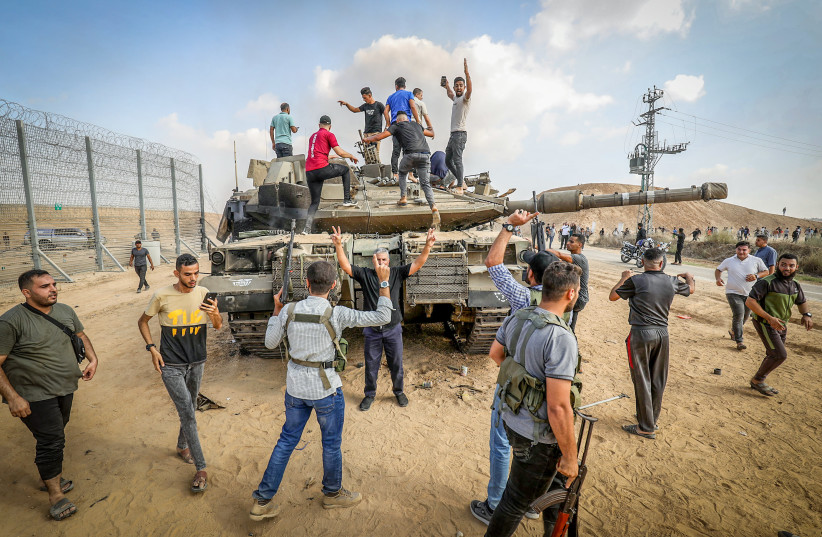
For nearly three years, Israelis have been asked to live with the consequences of the October 7 massacre without being given a full national accounting of how it happened. There have been internal military inquiries, State Comptroller’s Reports, arguments in court, political proposals in the Knesset, and repeated promises that the time for a broader reckoning will come later.
But later has become both a policy and a shield, a way of ensuring that responsibility is postponed until it is blurred. That is unacceptable.
Oct. 7 involved widespread failures
The failures of October 7 were not limited to one unit, a command post, an intelligence assessment, the border fence, or a ministerial decision. They involved intelligence assumptions, political policy, military deployment, deterrence doctrine, border defense, and the relationship between the political echelon and the security establishment.
No single internal probe can answer all of that. The High Court of Justice already has made clear the depth of the problem. More than two and a half years after the massacre, no appropriate mechanism had been established to investigate the disaster and draw lessons from it.
The High Court limited the state comptroller’s ability to examine some of the most central questions surrounding the October 7 massacre, including Israel’s Hamas policy, Gaza border defense, intelligence handling, and the conduct of the political, military, and Shin Bet (Israel Security Agency) leadership during the terrorist attack.
That ruling only strengthened the case for a state commission of inquiry. This is a basic obligation of the state to its citizens and one that everyone deserves.
A state commission of inquiry is about establishing facts, identifying failures, assigning responsibility where responsibility belongs, and ensuring that Israel does not enter the next war with the same illusions that led it into the last disaster.
This is precisely why the current political maneuvering around an alternative inquiry framework is so troubling. An investigation into October 7 cannot be born inside the same political battlefield it is meant to examine. A commission whose composition is shaped by politicians cannot command the gravity of an independent state commission established under the existing legal framework.
Israel is now heading into an election season. On October 27, citizens will go to the polls, more than three years after the deadliest day in Jewish history since the Holocaust. Parties will campaign on security, leadership, unity, responsibility, hostages, war, religion, cost of living, and power.
But before politicians ask the public for another mandate, the public is entitled to ask them a simpler question: How can you ask to govern again before the state has properly investigated how its representatives failed so catastrophically last time?
Oct. 7 investigation must be priority of next gov't
If a state commission of inquiry is not established before the election, then establishing one must be among the first acts of the next government. Immediately.
The October 7 massacre was a terrorist invasion by Hamas. It also was a collapse of Israel’s most basic promise to its citizens: that the state would protect them.
Hamas planned, prepared, deceived, and struck. Israel must now investigate, learn, repair, and take responsibility. Anything less would be a second failure.