
The recently published reports about the Mossad’s alleged plan, under the leadership of Prime Minister Benjamin Netanyahu, to overthrow the Iranian regime through a coordinated operation involving Kurdish forces and the “installation” of former Iranian president Mahmoud Ahmadinejad have been revealing.
At first glance, the plan may appear creative, reminiscent of other celebrated Mossad operations such as the stealing of Iran’s nuclear archive, the pager operation against Hezbollah fighters, the assassination of Iranian nuclear scientists, and others.
A closer look, however, raises serious questions about the judgment behind a plan that sounds more like fantasy than strategy. Several factors render the idea deeply flawed and premature.
First, the assumption that several thousand Kurdish fighters could ignite an uprising in Iranian Kurdistan and thereby encourage other minorities and opposition groups to rise against the regime is, at best, doubtful.
Even if Israel intended to provide military assistance, it is difficult to believe that a non-Persian minority lacking broad legitimacy within Iran could rally nationwide support.
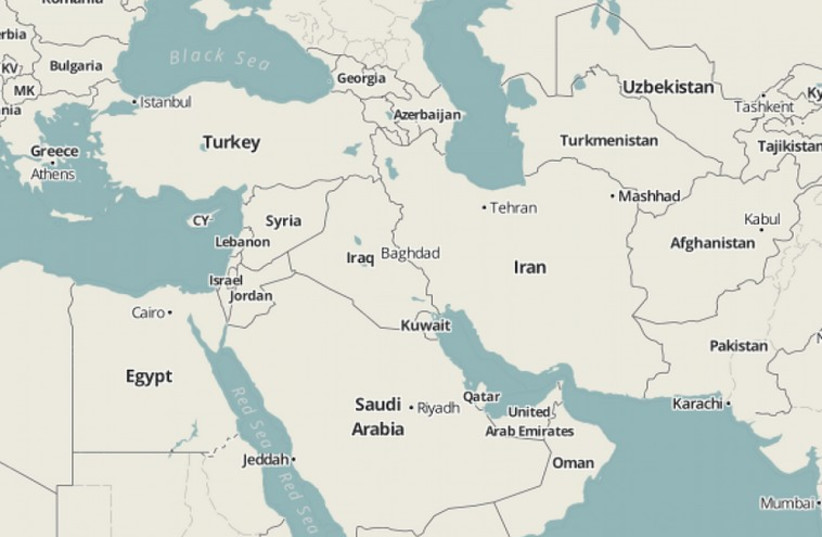
If Syria served as the model, Ahmed al-Sharaa, despite his jihadist background, belonged to the Arab Sunni Muslim majority. Moreover, he emerged after the Assad regime had already been severely weakened by years of civil war. Israel, incidentally, has not enjoyed notable success with Kurdish allies in the past: despite supporting the rebellion against Iraq, the Kurds failed to attract Iraqi forces to the extent Israel had expected during the wars of 1967 and 1973.
The reliance on Ahmadinejad as the pivotal figure is equally puzzling. This is not only because of his well-known anti-Israeli and antisemitic record – although it has been claimed that he has undergone an ideological transformation – but because his ability to mobilize large segments of Iranian society remains questionable.
Furthermore, dependence on a single personality can prove disastrous. One need only recall the assassination of Bashir Gemayel, the Lebanese president elected under Israeli bayonets, whose death brought Israel’s attempt to establish a friendly regime in Lebanon crashing down.
The current affair inevitably recalls Lebanon in 1982. In both cases, the Mossad spearheaded the initiative despite opposition from many within the military and intelligence establishment.
The Maronites in Lebanon, much like the Kurds in Iran today, constitute a minority within their own country, and their reliability was also questionable. Ultimately, the Maronites did not provide Israel with the assistance it had anticipated during the war.
Whereas then-defense minister Ariel Sharon led the Lebanese initiative, in the present case Netanyahu directed the Iranian operation, viewing it as a potential means of redeeming himself before the next elections after the failures of October 7. Moreover, both Sharon and Netanyahu mistakenly hoped that a single military campaign would transform the Middle East.
Israel's interventions in the region
From a historical perspective, Israel’s involvement in Iran is far from unique. A broader look at Israeli regional policy since the state’s establishment reveals repeated interventions in neighboring countries, driven by different strategic objectives.
The first category of intervention involved rescuing friendly regimes. The best-known example occurred in 1970, when Israel helped Jordan’s king Hussein preserve his throne against the combined threat posed by Palestinian organizations and Syrian forces during what became known as Black September. It is important to note that Hussein secretly conveyed his request for assistance through the United States and Britain.
The second sought to undermine hostile regimes. One common way was by supporting minority groups engaged in civil wars against central governments. This was the rationale behind Israel’s support for the Kurdish minority in Iraq (1963-1975) and assistance to the Christians of southern Sudan in their struggle against the Muslim regime in Khartoum between 1969 and 1982. Similarly, Israel supported the Zaydi royalists (a branch of Shi’ite Islam) in Yemen in their fight against the pro-Egyptian republican regime that seized power in the 1962 revolution.
The third, and most common, form of intervention has involved neutralizing threats on foreign soil. Examples include the destruction of Iraq’s nuclear reactor in 1981 and Syria’s nuclear reactor in 2007, the attempted assassination of Khaled Mashal in Jordan in 1997, the killing of Mahmoud al-Mabhouh in Dubai in 2010, operations against the PLO in Jordan and Lebanon, and, more recently, the attempt to assassinate Hamas leaders in Qatar in 2025.
The most extreme version of this form of intervention has involved prolonged military presence in occupied territory, as following Operation Litani in southern Lebanon in 1978. Israel’s occupations of territory in Lebanon and Syria after October 7 represent further examples of this pattern.
The fourth type of intervention consists of attempts to overthrow hostile regimes. During Israel’s first two decades, it cultivated secret contacts with military officers and civilians viewed as potential leaders of domestic change.
One example was cooperation with the Syrian officer Adib al-Shishakli, who ruled Syria between 1951 and 1954 and was expected to carry out a military coup with Israeli support. However, Egyptian President Gamal Abdel Nasser’s nationalization of the Suez Canal in 1956 derailed the initiative.
Israel also joined Britain and France in an attempt to topple Nasser during the Sinai War in October 1956. The effort actually strengthened Nasser politically, elevating his stature as the leader of the Arab world while reinforcing pan-Arabism and the pursuit of Arab unity as the region’s dominant political ideology.
The final type of intervention has involved attempts to install regimes friendly to Israel in the hope of building alliances and perhaps concluding peace agreements. The most prominent example was Israel’s effort to cooperate with the Maronite Christians in Lebanon. As noted above, the “installation” of Bashir Gemayel ended with his assassination, while Israel’s Lebanon project ultimately concluded with a major victory for Hezbollah.
UN Charter prohibits states from interfering in the internal affairs of another. An exception exists when the intervention is requested by the state concerned, as was the case with Jordan in 1970. In situations of outright hostility or immediate threat, intervention may appear justified.
However, when such operations take place on a friendly territory, they constitute a serious breach. Beyond the legal question, any intervention must be judged according to its prospects. Taking into account existing conditions, the relevant actors, and the lessons of history.
The historical record of Israeli interventions should have demonstrated that these efforts usually fail. In many respects, this parallels the histories of failed American intervention in Vietnam, Afghanistan, Iraq, and even Iran during the Mosaddeq period.
In light of this record, one may conclude that the attempt to overthrow the Iranian regime was misguided. It also reinforced Israel’s image as a regional “bully,” willing to employ almost any means in an effort to reshape the Middle East according to its own ambitions.
The writer teaches in the Department of Islamic and Middle Eastern Studies at the Hebrew University of Jerusalem. He is a member of the Executive Board of Mitvim, the Israeli Institute for Regional Foreign Policies, and a member of the Coalition for Regional Security.