

As the proverbial noose tightens around Jewish communities throughout the world, making it ever more problematic to identify as Jews among the general public, a breath of fresh air – not to mention fresh kosher food – can be found in virtually every locale.
I am talking, of course, about the global Chabad movement. Not only do they now operate in all 50 states of the US, but they are also alive and well in the most far-flung of countries.
On our recent trip throughout the Far East, we – like thousands of other wandering Jews – found a home in Chabad wherever we went. The food, of course, is always the main attraction. Unlike in America – where a large percentage of processed foods of every kind have some type of hashgacha (kosher certification) and are readily available, such easy access is rare in many parts of the world. A good portion of the Far East diet, for example, centers around items that are listed right at the top of our forbidden food list.
Challenges to finding kosher restaurants abroad
So, being able to find a kosher restaurant in places like Delhi (yes, there is a deli in Delhi!), Chiang Mai, Shanghai or Taipei is not just convenient; it brings out a little bit of home and “connects you” back to the source.
All Chabad houses – some are actually in houses, while others, such as the one in Bangkok, enjoy beautiful, six-story complexes – contain a Bet Knesset where you can return to our native language and pray for a successful journey.
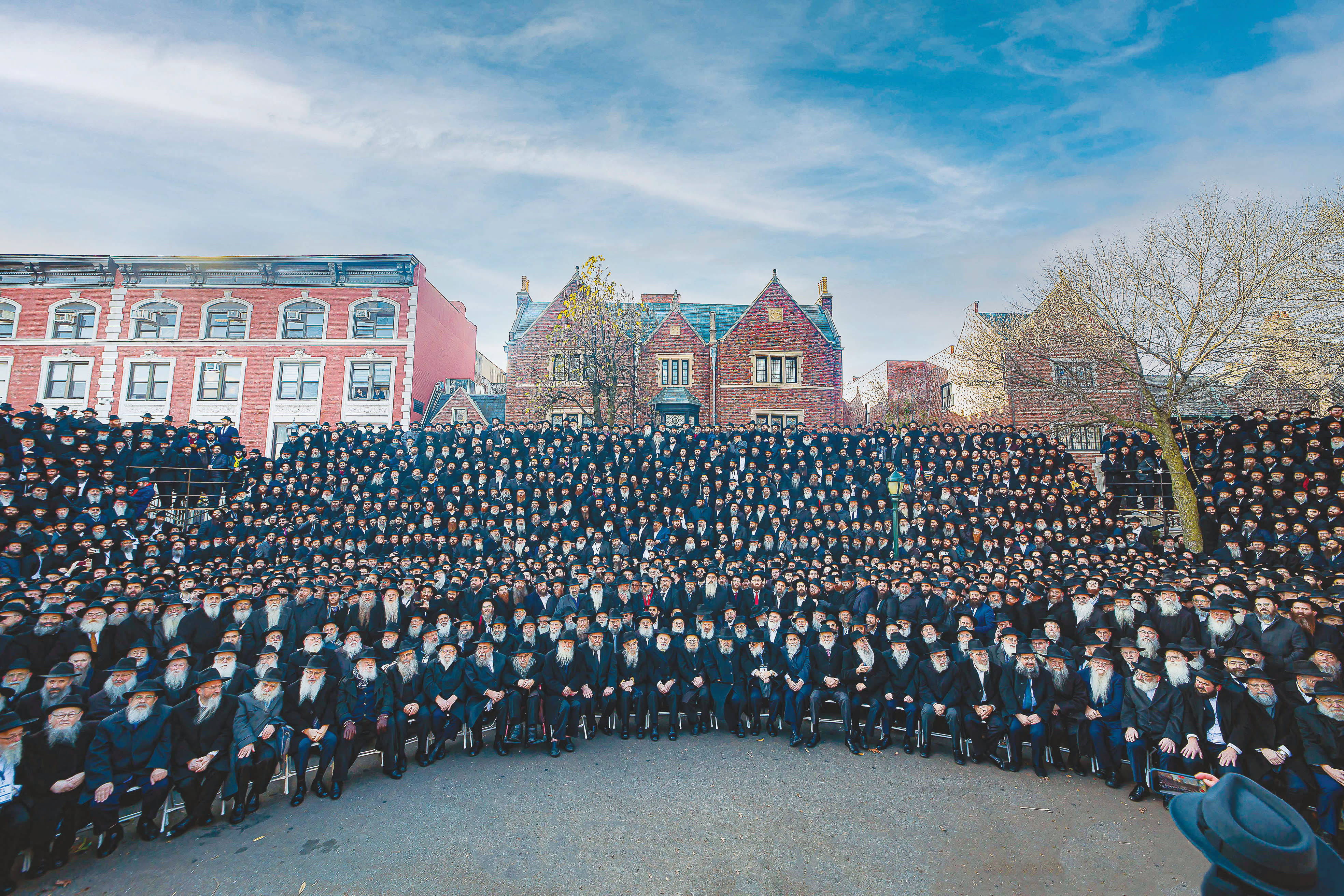
Most of all, it is a sanctuary where Jews and Israelis (some might consider that redundant!) can find comfortable, common ground with the same people they’re probably trying to get away from for a while. Chabad sites are also clearinghouses for travel info, leading to umpteen shidduchim enabling backpackers to hike together.
When the Lubavitcher Rebbe passed away in June of 1994 – with no successor to be named – there was an enormous void that made people wonder whether Chabad could survive. Well, it not only survived, but it also flourishes a thousand-fold and continues to grow exponentially. There are today almost 5,000 shluchim (emissary) families operating 3,500 institutions, along with 1,000 schools and 500 campus Chabad centers. Chabad rabbis regularly go to jail, as well – thankfully in the positive, pastoral sense.
How do they do it? What is their secret for success? I suggest there are two primary engines of their energy.
The first is their unabashed acceptance of every Jew, “ba’asher hu sham,” wherever he or she may be on the “Jewish scale.” They are loving, giving, and completely non-judgmental. You’re a “frum” Jew – be our guest! You’re non-practicing, please, come in! You’re a Talmudist, a Zionist, a Zoroastrian, a believer or a non-believer – there’s a place for you here!
Somehow, miraculously, the elderly man who hasn’t opened a siddur since his bar mitzvah is praying now; the incorrigible, turned-off teenage rebel is grabbing a chair and hotly debating God’s existence over drinks with the shaliach. Even at the World Series or World Cup, Chabad is outside the gates, ready with tefillin, if you are.
The minute you realize you’re not being brainwashed or indoctrinated, you lower your natural defense mechanism, and you just join in.
Chabad's principle of paying it forward
The other strategy perfected by Chabad is the principle of Paying it Forward. There is no entrance fee to Chabad houses, no fee for classes, no charge for Shabbat candles. There were 1,500 guests for dinner at our recent Shabbat in Ko Samui; no advance payment was required.
If you chose to make a donation after Shabbat, well, that was completely up to you. Somehow, the massive meals will go on, and the bills will get paid because Jews have big hearts and, unprodded and left to their own conscience, they will step up in gratitude and in recognition of true, unsullied tzedakah (charity).
Though I am not a card-carrying Chabadnik, and I never had the privilege of meeting the Rebbe, I was blessed while growing up to have been heavily influenced by two of Chicago’s Chabad leaders: Rabbi David Lieberman (who later became chief rabbi of Antwerp) and Rabbi Joshua Goodman.
They taught me to never underestimate the Jewish soul – the Pintele Yid – that may at times lie dormant, yet lives within each of us. They challenged me to go beyond my own desires for achievement, and help to assist others in reaching their spiritual potential. (And their wisest advice, as to how to get to fellow Jews: “Feed them!”)
Last week, there was an opinion piece in this newspaper which, while recognizing the amazing growth of Chabad, maligned the movement for being “proselytizing,” and referred to it as a “business.”
The writer was misinformed; perhaps he has had no personal interaction with the organization. For those who have, they know that Chabad does not proselytize; it exists to serve, and it provides numerous levels of support with no quid pro quo.
While individuals may choose of their own volition to study teachings of Lubavitch, such as the Tanya, they may freely draw their own conclusions as to its innate wisdom.
Secondly, a “business” smacks of an attempt to merely amass profit, reducing the effort to one of separating the consumer from his or her money. While Chabad is indeed highly organized and efficient, their “stock in trade’ is a genuine attempt to find common ground between all Jews, to create “safe spaces” where all Jews can feel welcome.
Would that all of our Jewish organizations – as well as our government here in Israel – similarly dismantle the barriers, act out of love rather than desire for power, and strive for that which unites, rather than divides us. If, sadly, we are being rejected by the world at large, let us at least embrace one another.
The writer is director of the Jewish Outreach Center of Ra’anana. rabbistewart@gmail.com