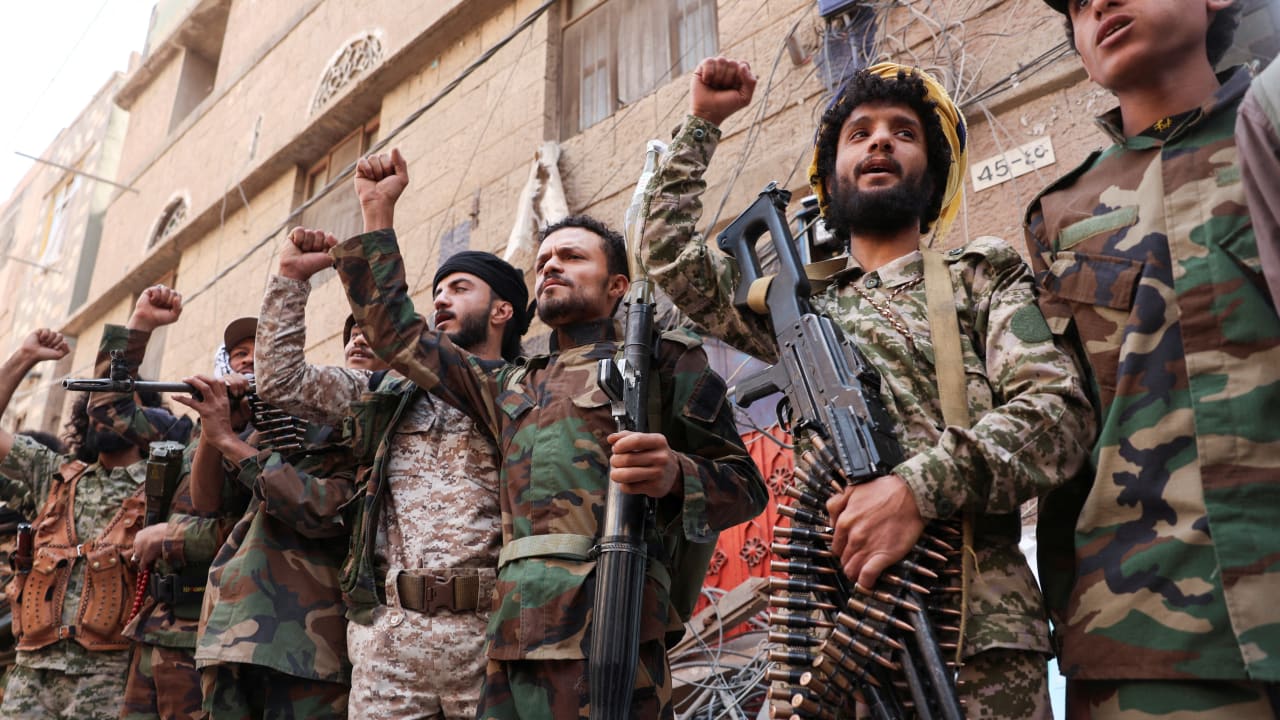
The drums of war are beating once again along the Saudi-Yemeni border. As Houthi drones and ballistic missiles resume their trajectories toward Saudi airspace and international shipping lanes, reports out of Riyadh suggest the Kingdom is quietly mobilizing for another round of military operations.
But do not mistake this flash of steel for strategic strength. If Saudi Arabia finds itself facing a permanent, hostile proxy state on its southern border, it is not because the Houthis are invincible. It is because Riyadh spent a decade trapped in a labyrinth of its own strategic miscalculations.
Understanding Yemen: A tale of two distinct entities
To understand why the richest monarchy in the Arab world failed to pacify its poorest neighbor, one must understand that Yemen was never truly one country. It was a forced marriage between North and South.
For nearly a millennium, North Yemen’s mountains were governed by a fiercely independent, militant Zaydi Shia Imamate. It was a warrior society that even the Ottoman Empire at its peak could never fully tame. South Yemen was an entirely different universe: a Sunni-majority maritime society shaped by Indian Ocean trade routes and decades of British administration.
The fractured union (1990)
When the two halves hastily unified in 1990, the South did not merge with the North; it was swallowed by it. The resulting state was less a unified nation and more a ticking geopolitical time bomb.

The 2014 Houthi takeover
When that bomb finally exploded in 2014, the Houthis, a Zaydi revivalist movement, weaponized and financed by the Islamic Republic of Iran, swept out of their northern mountain fortresses to seize Sana’a. The alliance between Houthi forces and loyalists of former President Ali Abdullah Saleh was crucial to the initial takeover but proved fatal for Saleh. In 2017, the Houthis executed Saleh after he attempted to break away, highlighting the group’s internal ruthlessness and power-sharing tactics.
The coalition counter-offensive and the critical role of the UAE
Riyadh’s response was a massive conventional air campaign. Yet conventional air power does not win asymmetric civil wars. The anti-Houthi coalition clawed back territory only through ground operations orchestrated by the United Arab Emirates and battle-hardened local fighters of the South.
It was a UAE-backed lightning war that reached the gates of Al-Hudaydah, the Houthis’ primary maritime artery for Iranian smuggling and piracy. Victory was within reach. Citing a humanitarian crisis, UN Secretary-General António Guterres brokered the Stockholm Agreement in 2018.
Instead of delivering the decisive blow, Saudi Arabia halted the offensive; Al-Hudaydah remained under Houthi control, and the movement retained the logistical artery that later sustained its war effort.
Political missteps: The Muslim Brotherhood and coalition friction
Had Saudi Arabia used that stalemate to consolidate its alliance, the story might have ended differently. Instead, Riyadh committed its most fatal political blunder: it attempted to build a post-war Yemeni government around the Islah Party, the Muslim Brotherhood’s local branch This decision was a disaster. For Abu Dhabi, political Islam is an existential red line. For the secular, independence-minded southern fighters, northern Islamists were a non-starter. By forcing an Islah-dominated government onto the South, Saudi Arabia alienated its most effective military allies on the ground.
Rather than fixing this fractured alliance, Riyadh chose the illusion of peace. It entered a prolonged, politically costly ceasefire with the Houthis, legitimizing them as a governing authority while the group quietly restocked its arsenals with Iranian missiles, suicide drones, and anti-ship weapons.
The ultimate manifestation of Riyadh’s strategic blindness came over the last two years. As Israel and the United States degraded Iran’s military and its so-called “Axis of Resistance,” shattering Hezbollah’s leadership and decapitating Hamas, the Houthis were left isolated and vulnerable. Additionally, Israeli and American airstrikes significantly degraded Houthi infrastructure.
Miscalculation: Turning weapons on allies
It was a historic geopolitical window to crush a disrupted enemy. Instead of turning the screws on the Houthis, Saudi Arabia did the unthinkable: Riyadh moved against UAE-backed southern forces, culminating in airstrikes on military shipments for the Southern Transitional Council at Mukalla, out of fear of a rising independent South Yemen. The episode showed how Saudi Arabia had come to view its nominal allies as a more immediate political challenge than the Houthis.
The bill for a decade of bad math has now come due.
The cost of miscalculation
Today, the Houthis hold the Bab al-Mandeb Strait hostage, choking global energy corridors that feed the East. Saudi Arabia is preparing to fight again, but enters the arena alone. By prioritizing Islamist forces over military realities and choosing a hollow ceasefire over tactical resolve, Riyadh alienated the Emiratis and lost the trust of southern forces.
If Saudi Arabia steps back into the Yemeni furnace, it will do so without the only partners who delivered meaningful battlefield gains. Riyadh did not lose Yemen because it lacked military power; it lost because it repeatedly confused political ambition with strategic judgment. That is the true cost of a decade of strategic miscalculation.
The strategic pivot: Embracing the non-Islamist South Yemen and Somaliland
Ultimately, Riyadh’s deepest failure was not tactical but psychological: a persistent historical anxiety over the rise of a powerful, independent South Yemen. For decades, Saudi policymakers viewed a sovereign South as a threat to their hegemony. But in the brutal arithmetic of the modern Middle East, this fear has proven the ultimate miscalculation. A non-Islamist, fiercely anti-Houthi South Yemen is not a threat to the Kingdom; it is its vital shield. South Yemen alongside Somaliland represent a natural geopolitical buffer capable of securing Saudi Arabia’s southern flank and safeguarding the Bab al-Mandab Strait from Iranian encirclement. This vision is already championed by the United Arab Emirates and aligned with Israeli interests in guaranteeing unhindered maritime commerce through the Red Sea.
A recent defense pact with Pakistan and Turkey will not solve Saudi Arabia’s fundamental problem: no external alliance can win a war against the Houthis in the mountains of northern Yemen.
If Riyadh wants to escape the Yemeni furnace, it must conquer its own ghosts. The path to victory lies in abandoning the illusion of aligning with Sunni Islamist forces against Shia Islamists and embracing secular southern forces. Only by securing the South can Saudi Arabia contain the North, stabilize the region, and turn a decade of bad math into strategic triumph.
The existential threat: Confronting the head of the octopus in Tehran
Ultimately, Riyadh must recognize that trimming Houthi branches is futile without confronting the head of the octopus in Tehran. No matter the financial or diplomatic cost, Saudi Arabia cannot neutralize the danger on its borders without actively aligning with the Iranian people and their leader, Prince Reza Pahlavi, in their fight to dismantle the regime.
The Islamic Republic poses an existential threat to Saudi Arabia, as it does to Iran itself, Ukraine, and Israel. This threat cannot be mitigated through political zigzags, diplomatic appeasement, or delegations to Tehran. Without decisive, unyielding resolve, mirroring the strategic clarity shown by Israel, Saudi Arabia’s grand developmental visions, particularly its multi-billion-dollar Red Sea projects, remain vulnerable. In the current volatile landscape, a single act of Houthi piracy or drone warfare can turn Riyadh’s economic dreams into ashes.
The writer is communications director to Prince Reza Pahlavi, and an Iranian journalist who previously served as editor-in-chief of news at Manoto TV, a UK-based Persian-language television network.