
What if, on October 7, 2023, Gazans had gone to the neighboring Israeli kibbutzim to pick olives with Israeli civilians instead of killing and kidnapping?
It may sound impossible today. But I have learned that things that appear impossible can become possible when people choose to see one another as human beings before seeing one another as enemies.
I remember 2014.
I was suffering from a heart condition, and after doctors in Egypt, Ramallah, and Hebron were unable to resolve the problem, I received a referral for treatment in Israel.
Before entering through the Erez crossing, I was thinking deeply. It was going to be the first time I would meet Israelis face to face.
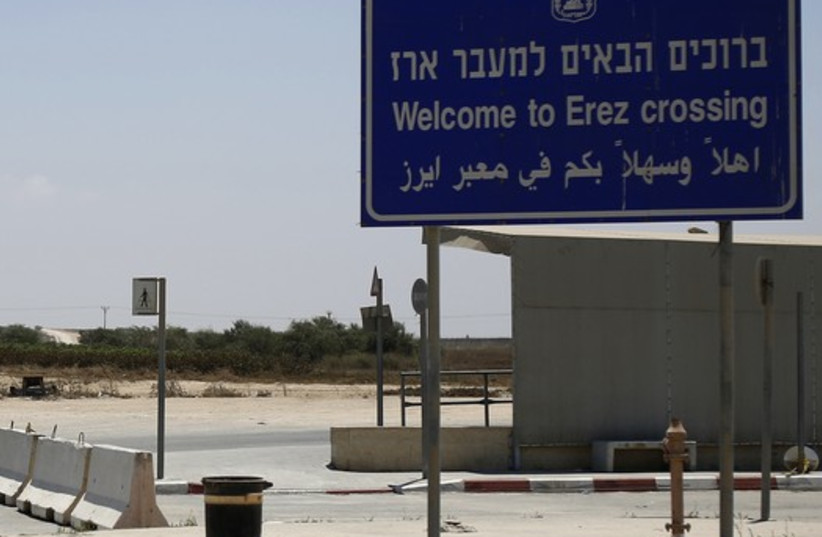
As a child, I had only seen Israelis from the other side of the border. I saw the soldiers. I saw Palestinian youths throwing stones. I sometimes went to the border, but I never threw a stone myself.
I remember standing there and thinking: Who are the people behind that border? And who are we on this side?
Then something unexpected happened.
As I crossed the checkpoint, Israeli soldiers helped me carry my bag to the other side.
I remained silent.
I eventually arrived at Ichilov Hospital in Tel Aviv.
Suddenly, I saw an Israel I had never experienced before.
There were civilians everywhere. Buses, trains, and trams. Flower sellers, falafel shops, apartment buildings, parks, and children playing on sidewalks. I saw mothers with their children and ordinary people simply living their lives.
It was my first real encounter with Israeli civilian society.
At Ichilov, I met a heart surgeon who looked at my medical records from Egypt, Ramallah, and Hebron. He told me that I needed further examinations and joked that I looked strong and had beautiful hair.
I laughed.
Over the next 11 days, I met dozens of Israeli patients, families, doctors, and nurses.
When they learned that I was from Gaza, I encountered compassion.
We talked about ordinary life.
We talked about olive-picking seasons.
We talked about the years when workers from Gaza traveled to Israel for work and returned to their families. We talked about the social and economic connections that had once existed between people on both sides.
Then, on the 12th day, the surgical team came to me. They told me that I needed urgent surgery.
I asked about the chances of success.
The answer I remember was: “God is there.”
I entered the operating room.
I lost a great deal of blood.
After I woke up, I learned that an Israeli man from Tel Aviv, who was accompanying another patient, had donated blood.
That blood helped save my life.
At that moment, I did not think about politics. I did not think about borders. I did not think about Hamas or Fatah or any political faction.
I thought about one human being giving something from his own body so that I could live.
The blood did not ask me about my identity.
It was simply human blood.
Hoping for peace in unexpected places
Since then, one question has remained with me: If a Palestinian and an Israeli can meet inside a hospital, and one can help save the other’s life, why can they not meet somewhere else? Why not in an olive field?
This is why I return to the question that may sound shocking: What if Gazans had gone to the neighboring kibbutzim on October 7 to pick olives with Israeli civilians?
What if that day had been a day of meeting instead of killing and kidnapping?
What if Palestinians had carried baskets for olives instead of weapons?
What if Israelis and Palestinians had sat together under the same olive tree?
I know many people will say that such a thing is impossible. But I believe that imagining a different future is sometimes the first step toward changing reality.
I am not speaking on behalf of Hamas, Fatah, or any political faction.
I am speaking about civilians.
About Gazans who want to live.
About Israelis who want to live.
And about a question we should be willing to ask openly: Do Palestinian and Israeli civilians want to continue dying, or do they want a chance to live?
The loudest voices are not necessarily the only voices.
There are Palestinians who want life, even when expressing that desire is difficult.
There are Israelis who want peace, even while living with fear, trauma, and grief.
I am one of the Palestinians who wants to see the voices of life and peace heard more clearly.
A few weeks ago, in Cyprus, I met Israeli civilians from the kibbutzim and Palestinian civilians from Gaza.
It was not a political meeting. It was a human meeting.
We talked about pain. Some of us cried.
We discovered that tears do not need translation.
The pain was shared, even though our experiences were different.
That is why I ask: Could such a meeting one day happen in Kibbutz Re’im?
Could it happen between the people of Re’im and the people of Jabalya?
Could Palestinians who have also suffered from Hamas and from war sit with Israelis who suffered on October 7, under the same olive tree?
I believe it can happen.
Not necessarily tomorrow. Not easily. Perhaps not for years.
But history is full of things people once considered impossible that became possible when ordinary people decided to break the cycle of fear.
For me, the olive harvest is not only about olives. It is about an opportunity.
An opportunity for a Palestinian to extend his hand to an Israeli – not to fight him, but to carry an olive basket together.
The photograph we took in Cyprus may be only a small photograph.
But I keep asking: Could the next photograph be taken in Kibbutz Re’im and Jabalya?
Perhaps peace sometimes begins in a place we do not expect.
A hospital.
A drop of blood.
An olive tree.
And two people who decide to meet as human beings.
The writer is a Palestinian peace activist and founder of the “We Want to Live” movement, which advocates for civilian life and alternatives to factional politics in Gaza.