
Ten years ago, I made aliyah from the United States to a country I have loved deeply since childhood.
A broken or uneven sidewalk is an annoyance for most people. For me, as someone with a physical disability, it can mean falling. An inaccessible bus is not an inconvenience.
It means I cannot board. A building with steps and no alternative entrance can quietly tell a person with a disability: This place was not designed for you.
But the physical barriers were only part of it. There were also the assumptions, the stigma, and the tendency to see disability primarily through the lenses of welfare, dependency, and charity rather than independence, rights, and contribution.
I knew Israel could do better. And precisely because I love this country, I came to believe that helping change this reality is an act of Zionism.
In 1990, US president George HW Bush signed the Americans with Disabilities Act. The ADA established a sweeping national mandate against disability discrimination and addressed access to employment, government services, public accommodations, and other fundamental parts of American life. It is often considered the most important civil rights legislation passed in America in the last half-century.
Accessibility and inclusion become reliable infrastructure rather than favors. The system protects rights and provides enforcement with teeth. That is the ADA’s greatest legacy.
Israel now has an opportunity to create its own ADA moment and usher in a new model for disability.
Over the past year, alongside running the technology company I founded, I developed the Israelis with Disabilities Act in close partnership with people with disabilities and experts from across Israel.
The process was guided by a simple principle: “Nothing about us without us.” It involved extensive consultations with dozens of people with disabilities, disability organizations, wounded soldiers, Paralympic athletes, and ADA experts.
After consulting closely with former prime minister Naftali Bennett and his team, many of these ideas have now been adopted and formally included by B’Yachad as part of the national policy platform on disability that the party has developed.
According to the nonprofit watchdog Shavim, B’Yachad is the only political party in Israel to have published a comprehensive plan dedicated to advancing people with disabilities, and it is the most ambitious and visionary plan for disability inclusion in Israel’s history.
Independence is key
The plan treats accessibility not as a niche welfare issue but as national infrastructure. It sets measurable goals across employment, transportation, aviation, housing, assistive technology, military service, and government accountability, with the aim of giving people with disabilities the freedom to work, travel, live independently, and participate fully in Israeli society.
Some of these changes would reshape daily life. The plan calls for a significant expansion of accessibility in transportation.
In aviation, it calls for accessible restrooms and for developing a model that would allow passengers with disabilities to remain in their own mobility devices rather than being forced to transfer into an airplane seat. Aviation has been a major failure of the ADA – this plan fixes it.
It also makes the top 100 tourist and heritage sites across Israel accessible to the highest standards and requires new hotels to have a generous capacity of accessible rooms that double as emergency shelter during wartime.
In employment, one of the most important reforms is protecting at least 60% of a person’s disability allowance when they enter the workforce, so that taking a job becomes a path toward greater independence rather than a financial risk.
The plan also calls for significant annual investment in start-ups creating assistive technology, mobility technology, rehabilitation solutions, and technology addressing post-trauma. Israel can become the top global exporter of disability technology, helping people here and around the globe.
It also creates a more meaningful path to military service for people with disabilities. Rather than funneling them into a cumbersome volunteer track that too often treats service as symbolic, it opens meaningful roles in top units, matched to each person’s abilities.
It also provides tax incentives to real estate developers who make at least 5% of the apartments in new buildings accessible, as well as tax incentives for businesses that become accessible.
Just as importantly, it establishes a unified system for disability rights and benefits, greater coordination between ministries, and a National Authority for Accessibility and Empowerment in the Prime Minister’s Office with clear targets, cross-ministerial oversight, and enforcement teeth.
Today’s Bennett plan, including the key aspects of the Israelis with Disabilities Act, builds on the important foundation established by the Bennett-Lapid government through the Welfare Services Law of 2022, which strengthened the rights-based approach to disability services and advanced the principles of independent living, autonomy, and participation in the community.
That law was a critical step forward. The challenge now is to build on that foundation with this new law, which extends those principles across the broader architecture of Israeli life, from employment and transportation to tourism, technology, and government accountability.
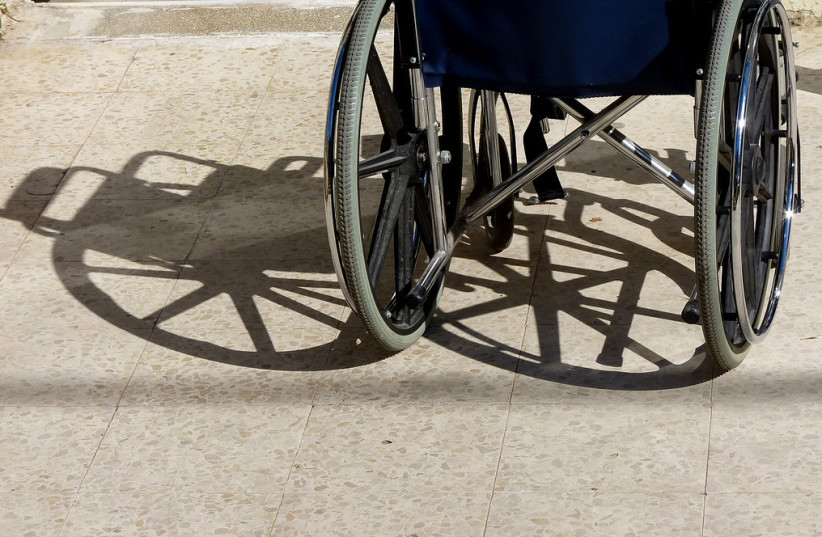
The most important idea behind this approach is also the simplest: The barrier is not the person. The barrier is the environment. If someone using a wheelchair cannot enter a building because there are stairs, the wheelchair is not the problem. The stairs are.
After October 7, that truth has become even harder to ignore. Tens of thousands of Israelis have returned from military service with injuries that will change their lives. The distinction between “the disabled community” and everybody else has always been more fragile than society likes to imagine.
Disability is part of the human condition.
Imagine an Israel where a wheelchair user boards an intercity bus without planning an elaborate alternative route. Where an injured soldier flies with his mobility equipment without fearing that independence and dignity will disappear at the airport. And where stigma falls by the wayside.
That is the transformation Israel deserves.
Thirty-six years after the ADA was signed in the United States, Israel has an opportunity to learn from what worked, improve on what did not, and build a new and beautiful model for disability.
When accessibility becomes infrastructure rather than an afterthought, when independence replaces dependency wherever possible, and when disability becomes so normalized that it is no longer treated as something unusual or apart, we will have done more than remove physical barriers.
We will have expanded the meaning of belonging. We will have awakened Israel’s soul.
The writer is the founder of the Israelis with Disabilities Act and is a person with a physical disability. He made aliyah from the United States and is the founder and CEO of Propel AI, a media intelligence company.