
The Supreme Court hearing concerning the leasehold lands in Jerusalem has once again been postponed, marking the second postponement and, in all likelihood, not the last. This was supposed to be only the first hearing in a petition filed more than a year ago, and even that hearing had been designated as preliminary. In light of the significant caseload at the Supreme Court, no new date has yet been scheduled, and one is expected to be set only several months from now.
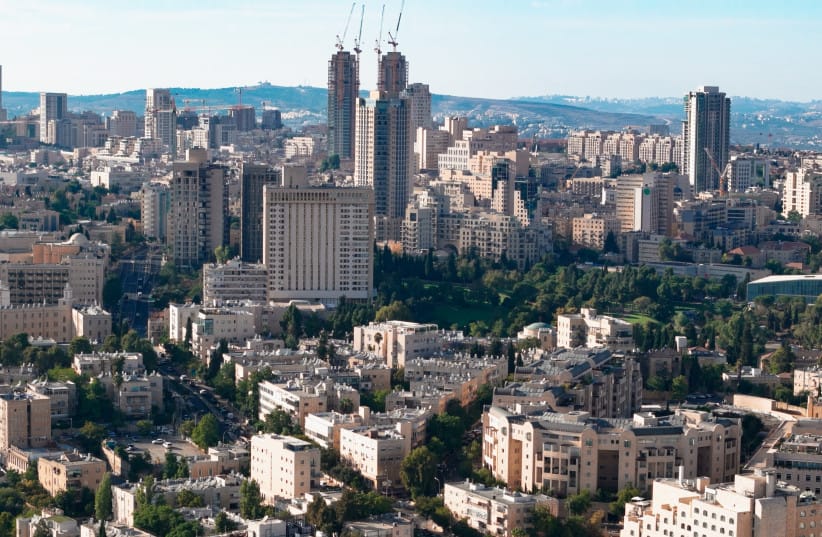
The latest postponement is yet another exhausting milestone in a prolonged legal battle that is leaving hundreds of families facing ever-increasing uncertainty. In the heart of Jerusalem, across the upscale neighborhoods of Talbiyeh, Rehavia, and Nayot, lie hundreds of dunams of former church lands now owned by Extell. These lands are subject to lease agreements with KKL-JNF, but the remaining lease terms are steadily shortening, and by around 2050 the leases are expected to expire entirely.
At the center of the dispute is a complex legal question concerning the extension provisions contained in the existing lease agreements. The issue is deeply contested and is expected to result in years of protracted litigation. The current petition seeks to compel KKL-JNF to exercise the extension option. Experts note, however, that such a step would merely mark the beginning of another lengthy process concerning both the duration of the extension and the price to be paid, a dispute that would most likely ultimately return to the courts.
The heavy cost of uncertainty
Those bearing the greatest cost of this ongoing confrontation are the residents who live on these lands every day. The continued legal dispute prolongs the uncertainty, makes it difficult for residents to make long-term decisions, and prevents them from having a clear understanding of the future of their homes and their property rights.
The consequences are already clearly visible on the ground. Apartment values in Talbiyeh, Rehavia and Nayot have fallen by approximately 50%. Meanwhile, residents remain unable to advance essential projects such as the addition of protected rooms, elevators or parking facilities, and continue to live under prolonged legal and economic uncertainty.
Ahead of the most recent scheduled hearing, all of the parties once again appeared firmly entrenched in their respective positions. The legal drama intensified further when counsel for the Greek Orthodox Patriarchate reversed his position. One point, however, is clear: The Jerusalem Municipality and the approximately one thousand families living on these lands do not need another legal "victory" by one side at the expense of another. They need a real solution.
Is there another way?
Experts and market participants point out that continued litigation could, at best, result only in a temporary extension of the historic leases, after which no further extension would be possible. Such an outcome would merely return the parties to the same starting point many years from now, leaving the fundamental question of property rights unresolved and imposing enormous costs on the public, estimated in the billions of shekels.
Others are proposing an entirely different path. Extell, the owner of the lands, is advancing a framework that has already received support from numerous stakeholders: Granting residents full ownership of their properties in exchange for participation in urban renewal and redevelopment projects.
Supporters of the proposal argue that, if all relevant parties are willing to participate, it would be possible to reach a practical, efficient and long-term resolution. Under such a framework, residents would receive certainty and a clear path forward, KKL-JNF could bring a historic dispute to an agreed conclusion, and Jerusalem would receive a significant boost to urban renewal and its future development.
The latest postponement at the Supreme Court does not have to become yet another milestone on the road toward years of continued legal suffering. Ultimately, the central question is not who will prevail in court, but whether there is a genuine willingness to reach an agreement that serves the public interest and secures Jerusalem’s future for the benefit of all.
This article was written in cooperation with Ran Levi – Senior Real Estate Consultant