
On Israeli election night, two conversations unfold at once. In Israel, voters and party leaders study the results to see which coalition might govern.
In the United States, many people watch the same numbers as though they are following a presidential race: one candidate is ahead, so that candidate must have won.
It’s an understandable mistake. American voters are used to a system dominated by two parties, where an election is often described as a contest between two people. Israeli voters choose party lists for the Knesset.
A party can finish first and still be unable to form a government. Another leader can appear to be behind on election night and later assemble a governing majority. Exit polls offer a first glimpse, not a final answer; coalition talks can matter as much as the count itself.
That difference is worth explaining, especially to Americans who care deeply about Israel. An early declaration that “our candidate won” can say more about what someone hopes will happen than about what Israeli voters have decided.
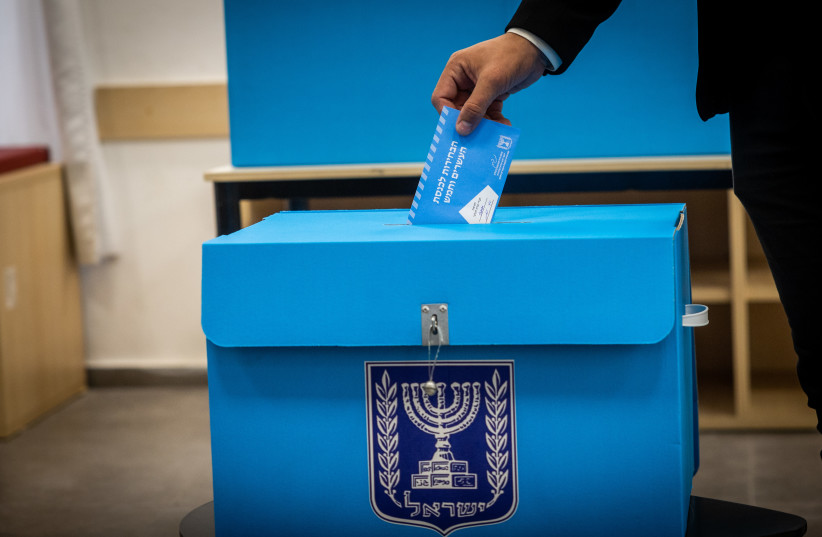
The government will be shaped not just by the largest party, but by the agreements its leaders can make and the compromises other parties will accept.
For American Jews, though, the election is rarely just a puzzle about parliamentary arithmetic. Many follow it with real anxiety. They may have family in Israel, children studying there, or friends who will live with the next government’s decisions.
They may care passionately about security, religious life, the courts, or Israel’s relationship with Jews abroad. They are entitled to their views, and Israelis should not mistake distance for indifference.
Still, distance matters. There is a difference between having a stake in Israel’s future and having a vote in its elections. Israelis cast ballots while living with the daily consequences of the government those ballots produce.
People watching from abroad can switch off the broadcast and return to a different set of civic obligations. That does not make their concern insincere. It should make them a little more careful about claiming to know what Israelis ought to choose.
The temptation to speak with certainty is especially strong when an Israeli election becomes a proxy for arguments inside the US. A party’s success is treated as a verdict on every fear or hope American Jews have about Israel.
An Israeli leader becomes either proof that the country is safe in the right hands or proof that it has lost its way. Those judgments leave little room for the messy choices Israeli voters actually face, or for the fact that Israelis who share a love of their country can vote very differently.
Rise of antisemitism in the US
There is another conversation American Jews need to keep in view, even while they follow Israeli politics closely: the rise of antisemitism in their own communities. It can come from the far Right or the far Left, in different languages and under different pretexts.
Sometimes it is blatant. Sometimes it is excused as something else until Jewish neighbors are expected to accept what would be recognized as prejudice against anyone else.
That is not an argument for American Jews to stop caring about Israeli elections. Their support matters. They can strengthen ties with Israel, challenge false claims about it, and help others understand a country too often reduced to a slogan.
Nor should concern about antisemitism be used to shut down honest debate about Israeli policy. A strong relationship between Israel and Jews abroad has to leave room for disagreement.
But attention is finite. When every shift in an Israeli exit poll draws immediate commentary, while threats closer to home are minimized or dismissed, something is out of balance. American Jews have a voice in their own schools, workplaces, congregations, and public institutions.
They can use it to insist that antisemitism be taken seriously, regardless of who is responsible. That work may be less dramatic than an election-night argument. It is also harder to leave to someone else.
Israelis, meanwhile, do not need Americans to tell them who has won before the votes are counted. They need the space to make their own choices and, afterward, to hold their leaders accountable. American Jews can follow the results, argue about what they mean, and remain committed to Israel without confusing concern with a ballot.
Perhaps the most useful question on election night is not “Did my side win?” It is “What happens next?” In Israel, that means waiting to see who can form a government and what it will do. In America, it means asking what responsibilities Jewish communities will take up when the broadcast ends.
Dr. Michael J. Salamon is a psychologist specializing in trauma, abuse, and the psychology of terror, and is director of ADC Psychological Services in Netanya and Hewlett, NY.
Louis Libin is an expert in military strategies, wireless innovation, emergency communications, and cybersecurity, and is an adjunct professor at the US War College.