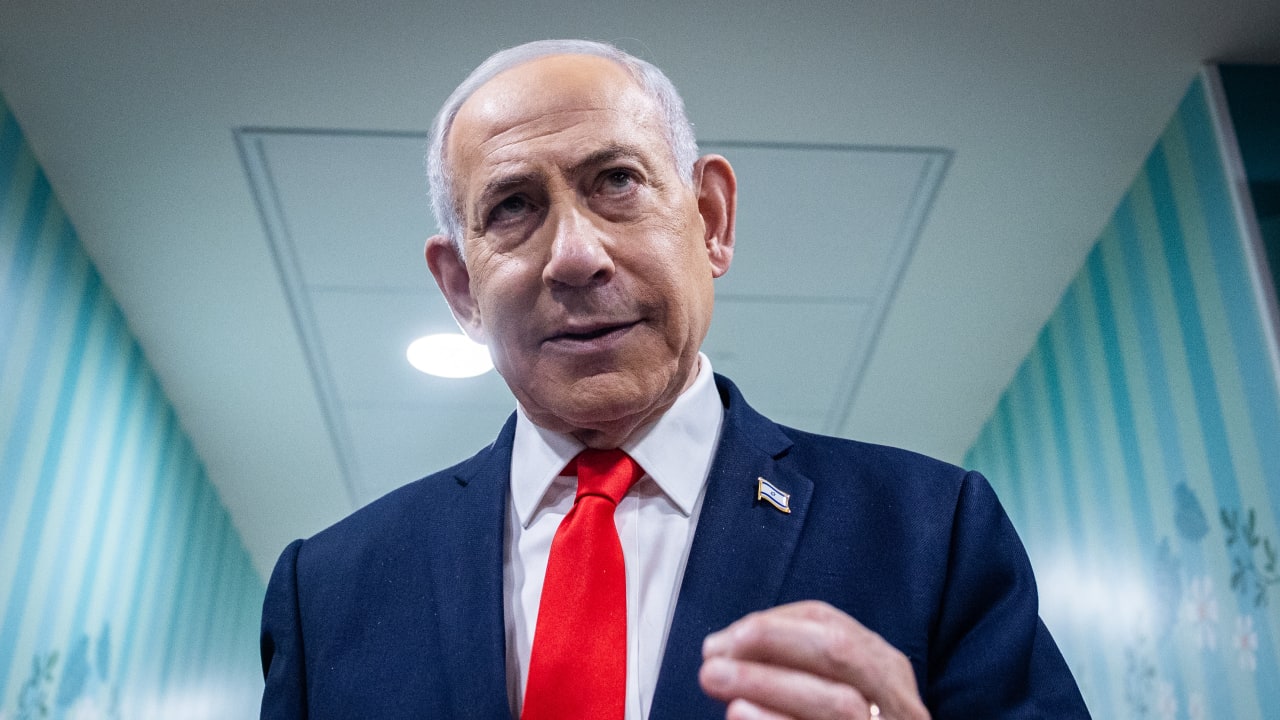
Talk about a split vote. Ask the average Israeli how they voted this week, and the answer is likely to be 50:50 – half in favor of a particular politician, and half against someone else. And the negativity continues long after the ballots are counted and a coalition somehow formed.
The question became less a matter of “Whom am I voting for?” and more “Whom am I voting against?” Above it hovered the political joker: “Whom am I likely to end up with?”
Voter turnout at 77.7% was high, particularly in the Arab sector. In my Jerusalem neighborhood, Election Day had a buzz to it. The streets felt festive, and a local “social cafe” held election-themed activities for families with young kids.
There were fewer political banners hanging from windows and balconies. Some (mis)interpreted it as a sign of apathy; others saw it as a reflection of the way the battle for voters had moved from the streets to social media. Perhaps it’s also because so many parties kept merging and changing their names.
It is not yet clear who will ultimately lead the next government; it ain’t over until it’s over. The Israeli system is built on blocs. The prime minister is not automatically the leader of the party that gains the largest number of votes, but the person who can present to the president the likelihood of the most stable coalition – usually a collection of parties amounting to at least 61 seats out of the 120-member Knesset.
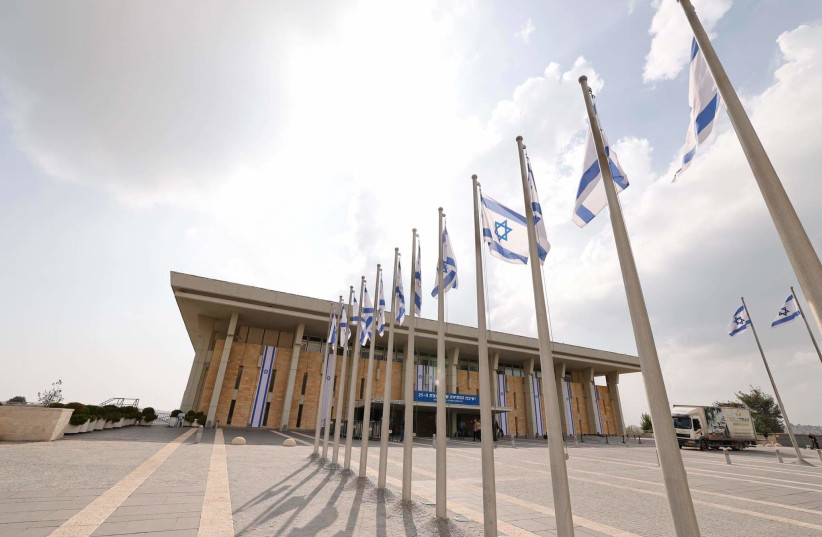
Hence, the myriad small parties are a sign of a vigorous democracy but also detract from it, placing an inordinate amount of power in their hands. Remember how Naftali Bennett became prime minister in 2021 for a short-lived term with just seven mandates? Here is where the Arab parties’ gains can have an impact.
Netanyahu’s outgoing government lasted its full four-year term is why he’s earned the title “The Magician.” To have survived the chaos of the backlash to the proposed judicial reform and then the horrors of the October 7, 2023 Hamas invasion and mega-atrocity and resulting war on seven fronts is remarkable.
Ultimately, however, this election also came down to the same question that has shadowed Israeli politics for three decades: To vote “Only Bibi” or “Anyone but Bibi.”
While both Left and Right agree on the need to topple the Iranian regime, too many politicians are more concerned with bringing down a perceived enemy closer to home – a rival party leader.
There will always be political wheeling and dealing in coalition bargaining – either before or after the elections, or both. The question is whether politicians are held accountable for promises made, paid for, and broken.
Expect “a fighting opposition”: infighting among the various parties that compose it. Even worse, there could be paralysis in a coalition because of the disparate nature of its numerous components.
Among the challenges are the splits within different parties and the so-called “change bloc” itself. Tellingly, ahead of the election this week, the parties led by Bennett (B’Yachad), Gadi Eisenkot (Yashar), and Avigdor Liberman (Yisrael Beytenu), among others, could not even agree on who would head the bloc – who potentially would be prime minister or official leader of the opposition.
Road map to forming a government
Election campaigns included promises about which lists each party would not sit with, but it is hard to see how a government can be formed without either the ultra-Orthodox (haredi) or the Arab parties.
The coalition will be its own opposition. Neither the haredim nor the Arab parties are likely to support a law on mass conscription, despite this being a hot topic in the wake of the massive burden on reservists (and their families) during the three years of war.
The public needs to consider the price of these constant changes. When ministers believe they might not have long in office, they do not plan ahead. They want to cut as many red ribbons as possible even if it means cutting corners.
The judicial reform launched by the outgoing government as soon as members had sat in the leather seats around the Cabinet table is a product of this phenomenon: the ministers and MKs involved had not hidden their desire for a judicial overhaul – the need for a reform was acknowledged across the political spectrum – but the speed and intensity took some by surprise. But following five elections in four years, the new government did not want to risk losing time.
The protests against the judicial reform were accompanied by calls to stop serving in the military, to emigrate and create a brain drain, and to transfer businesses and finances abroad. In effect, to boycott Israel under the Netanyahu government.
Even some of those demanding a commission of inquiry into the events of October 7 acknowledge that the rifts – verging at some points on a call for a military coup by veterans – weakened the country and contributed to the timing and scope of the Hamas-led attack.
Headlines social media posts warned of post-election clashes that would mimic the storming of the Capitol in January 2021 after Donald Trump’s loss to Joe Biden. The warnings could be considered part of some campaigns.
Israel’s ballot system makes mass voter fraud difficult (but not impossible), but the greater threat lies in delegitimization – that one side won’t accept the other’s victory. This can happen from either side, Left or Right.
News stories leading up to the election noted the Shin Bet security given to Yashar’s Eisenkot, Democrats leader Yair Golan, and Amcha Yisrael head Ofer Winter (who didn’t pass the threshold) – who were all assumed to be under threat from the Right.
There is a missing story: what happened to anti-government activist Tamar Gershuni who was arrested in July 2025 for plotting to assassinate Netanyahu and released to house arrest? The assassination threat seems to have fallen off the mainstream media’s radar. Or, more likely, it was deliberately dropped.
The left and center-left parties boycotted Netanyahu’s government after the November 2022 elections, citing his criminal trials. Four years later, the trials are ongoing, although the central case involving bribery charges appears to have collapsed, with even the judges twice telling the prosecution they should be dropped. Former attorney-general Avichai Mandelblit on the witness stand admitted serious irregularities concerning the investigation and prosecution.
Among the scenarios that cannot be discounted is that the new Knesset, which is sworn in before the government is formed, could appoint a Speaker from the current opposition, who could then help promote legislation regardless of whomever ultimately is appointed prime minister.
Liberman last week began promoting the “Defendant Law,” under which an indicted politician would be prevented from forming a government. The theory sounds noble. The intent, less so.
It is obviously an attempt at blocking Netanyahu from becoming prime minister. If passed, it is likely to lead to a flurry of charges against politicians of different political persuasions – and to hell with the right to be presumed innocent.
Ultimately, it will place even more power in the hands of the judiciary – to decide whom to prosecute and when – at the expense of the democratic voice of voters and parliament’s right to rule.
No matter who wins, the world will be watching. If Netanyahu forms a government, Israel can expect more of the same or even a worsening of sanctions; but don’t expect a lovefest if someone else takes the reins.
The global wave of antisemitic sentiment and actions are about the existence of the State of Israel itself, not who its citizens have elected, or ended up with, as their leader. On Election Day itself, the Netherlands, for example, announced it would boycott the Eurovision Song Contest again this year over Israel’s participation.
Few imagined that Israel’s first peace treaty would have been signed by Menachem Begin’s Likud government with Egypt. And the Abraham Accords, drawn up under US President Donald Trump and Netanyahu, have proven their worth during the years of war, particularly due to the shared threats from Iran.
Not only will the results of the Israeli elections have an impact, but also next week’s US midterms.
Meanwhile, I’ll let Winston Churchill have the last word. As he said in November 1947, “No one pretends that democracy is perfect or all-wise. Indeed, it has been said that democracy is the worst form of government, except for all those other forms that have been tried from time to time…”