This Shabbat, tens of thousands of Israelis will stream into Hebron to celebrate Parshat Chayei Sarah, which recounts the death of Sarah and Abraham’s purchase of Ma’arat HaMachpela, the Tomb of the Patriarchs, in order to bury her.
At the same time, Palestinian residents will hide in their homes, knowing from experience that this weekend is likely to be rife with violence against them and restrictions placed by the IDF on their movement around the city.
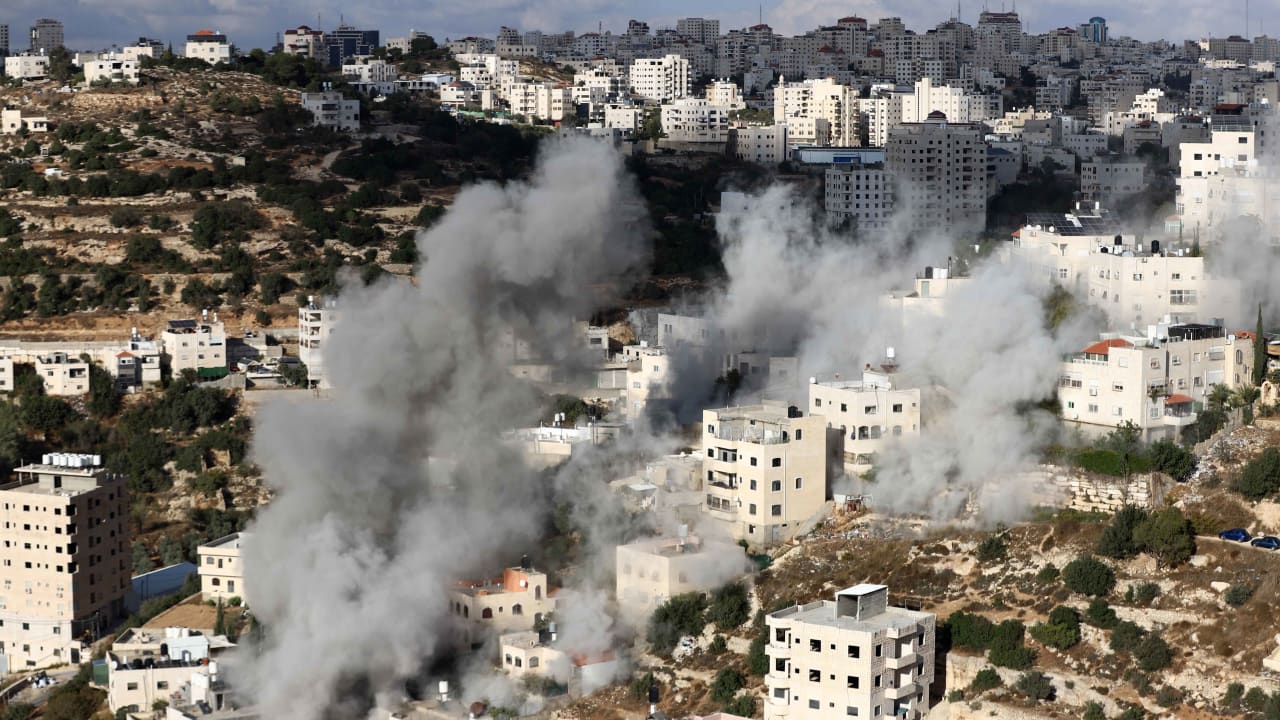
Meanwhile, over the past week and a half, the IDF displaced more than 3,000 residents of Hebron – more than 1,800 of them children – and demolished or damaged homes and businesses in retaliation for the killing of two Israeli soldiers two weeks ago. This operation, which shattered the lives of hundreds of families, resulted in the confiscation of only four weapons.
Abraham discovered Ma’arat HaMachpela, one midrash says, when he followed a runaway calf into the cave, where he found Adam and Eve snuggled in each other’s arms, surrounded by light and by a sweet smell reminiscent of that of the sacrifices (Pirkei d’Rabbi Eliezer 36:16).
This is where Abraham wishes to bury his beloved and to spend his own eternity: in a place inhabited by the ancestors of all of humankind, and that recalls the divine presence.

Abraham’s negotiations with the local residents over the purchase of the cave are conducted with humility and deep respect for the other party, as are so many of Abraham’s dealings with the chiefs and kings of other tribes throughout his life story.
In his memory, both the Hebrew and Arabic names of Hebron/al-Khalil come from the word “friend” in their respective languages – both in reference to Abraham’s “friendship” with God, and perhaps as a reminder that this city once exemplified friendship between nations.
In the aftermath of last week’s elections, Israel sits at a crossroads: the country can decide either to take the path of the Hebron settlers and their Shabbat guests, which is the path of Jewish supremacy in which Israel drops any pretense of democracy and doubles down on a politics based on discrimination, permanent occupation, and forever war.
Or, the country can instead choose the path of Abraham – the path of respect for everyone living in the land, of universal humanity, and of working to make Israel a place that reflects the divine presence.
The opposition parties won a historic victory last week. They now control 67 seats in the Knesset – more than Prime Minister Benjamin Netanyahu’s coalition won in 2022, when he claimed a mandate to launch a coup against Israel’s judicial infrastructure. This victory was made possible by Palestinian citizens of Israel, who turned out in record numbers and whose parties claimed 19 seats.
With their votes, and in the Joint List and Ra’am’s declarations that they are ready to support a coalition led by Gadi Eisenkot, Palestinian citizens have asserted their right to be counted, just like every other citizen of Israel. Eisenkot should take this opportunity to form a government that truly represents the citizenry of Israel, including both Jewish and Palestinian citizens.
Unfortunately, Eisenkot and many of his likely coalition partners have so far shown little willingness to embrace that possibility. Netanyahu ran yet another campaign built on fear and hostility toward Palestinian citizens of Israel.
Rather than push back on that rhetoric, Eisenkot has accepted much of its underlying premise. He has imposed conditions on potential coalition partners that could make it impossible to form a government with either Palestinian parties or the haredi (ultra-Orthodox) parties, even though the election results show that some of these parties will be essential to forming a governing majority.
Within his bloc, only the Democrats, led by Yair Golan, have called explicitly for Jewish-Arab partnership.
Objection to including Arab parties
The objections to including Arab parties reflect a deeper unwillingness to accept Palestinian citizens as equal participants in Israeli democracy. The leaders of these parties are constantly told that they cannot participate because they don’t identify as Zionists, or because their commitment to Israel’s security is somehow suspect.
Eisenkot has demanded that potential Arab coalition partners recognize Hamas as a terrorist organization, despite these parties’ explicit condemnations of the October 7 attacks.
Meanwhile, Netanyahu has governed alongside far-right figures whose records of incitement and support for violence have not prevented them from holding some of the most powerful positions in Israel’s government.
Eisenkot now faces a choice that extends far beyond the precise configuration of his coalition. He can accept Netanyahu’s vision of a country in which political legitimacy depends on Jewish identity and Palestinian citizens remain permanently excluded from power.
Or he can recognize that the election offers an opportunity to begin building a different kind of Israel where every citizen has a meaningful voice in shaping the country’s future.
This week’s Torah portion offers a guide for the path forward. Abraham did not arrive in Hebron claiming that his relationship with God entitled him to take whatever he wanted. He approached the people already living there with humility, recognized their dignity, and sought to establish a relationship grounded in mutual respect.
Thousands of years later, Hebron remains a place where Jews and Palestinians each understand themselves to have deep historical and religious roots. Its future, like that of Israel and Palestine as a whole, cannot be secured by denying the humanity or rights of one people in the name of another.
As elected officials confront the results of this election, they would do well to remember the example of the patriarch whose name their city bears. Abraham understood that even a divine promise did not absolve him of his obligations to his neighbors. Israel’s next government should learn this lesson too.
The writer is the CEO of T’ruah: The Rabbinic Call for Human Rights, an organization that trains and mobilizes more than 2,300 rabbis and cantors and their communities to bring a moral voice to protecting and advancing human rights in North America, Israel, and the occupied Palestinian territories.