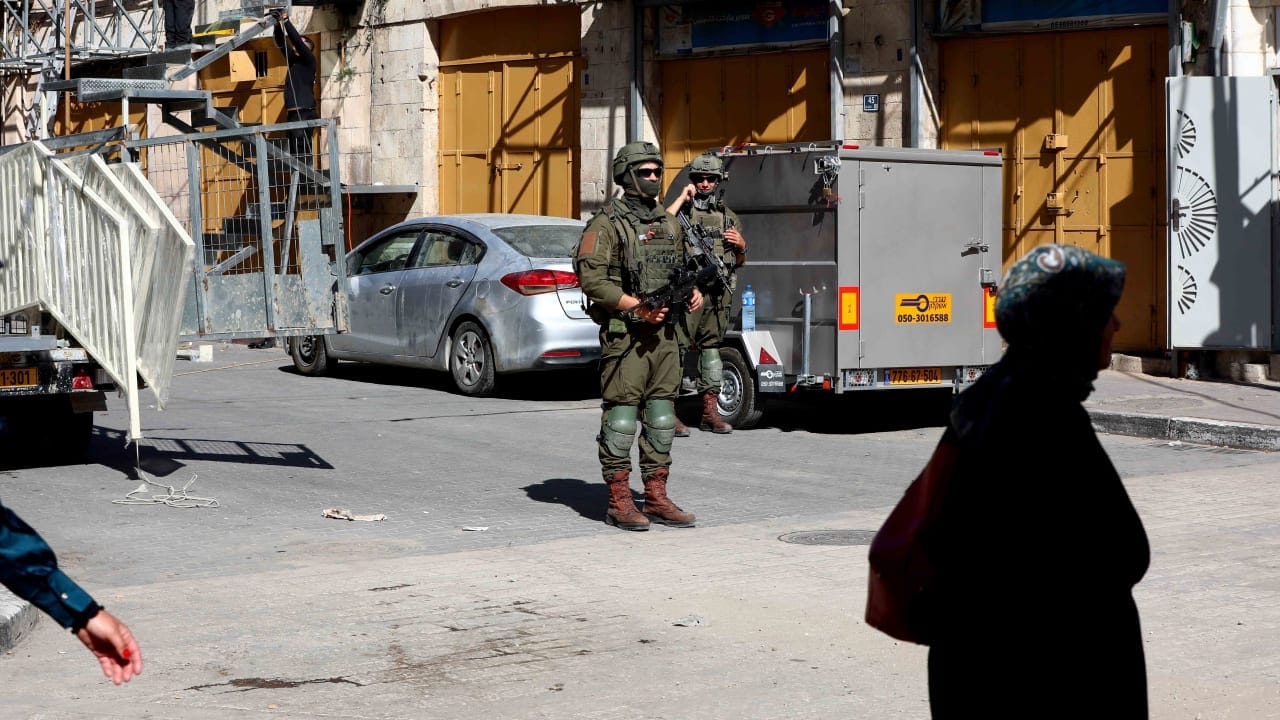
At one of the entrances to Hebron, I saw three Israeli soldiers, all young women who looked about 20. They were stopping cars and searching luggage, even when children were traveling with their parents. That same Saturday, about 50 Israelis entered Hebron, toured the city, and sat down to lunch with its residents. We at Masar Jadid welcomed them without arranging any special security. Between the checkpoint and the lunch table, I found myself thinking about one question. How can Palestinians and Israelis live safely in the same city?
In the two weeks leading up to the visit, Hebron returned to the headlines. Palestinians know the city for its factories, its markets, and the trade that connects it to the rest of the country. This time, it made the news because two Israeli soldiers were killed in a shooting at the Farsh al-Hawa entrance on October 23.
A large-scale military operation followed, affecting the neighborhoods of Farsh al-Hawa, al-Jalada, and Ein Deir Baha, where homes and commercial buildings were demolished. In my view, the response took on the character of collective punishment when it extended to entire neighborhoods and restricted the movement of their residents.
Israelis and Palestinians in Hebron
I visited Hebron almost every day in the week leading up to Saturday, November 7. As the Jewish religious observance of Shabbat Chayei Sarah approached, Israeli media were reporting that more than 50,000 visitors were expected in Hebron and Kiryat Arba. In those days, I saw for myself how much harder it became to enter and leave the city, and how the restrictions extended to the Old City and to the entrances of nearby towns and villages.
Thursday and Friday evenings have a rhythm of their own in Hebron. It is a busy time for weddings, and families travel between the city and surrounding villages. When entrances are closed and checkpoints multiply, a family setting out to visit relatives or attend a wedding can have little idea when it will arrive.
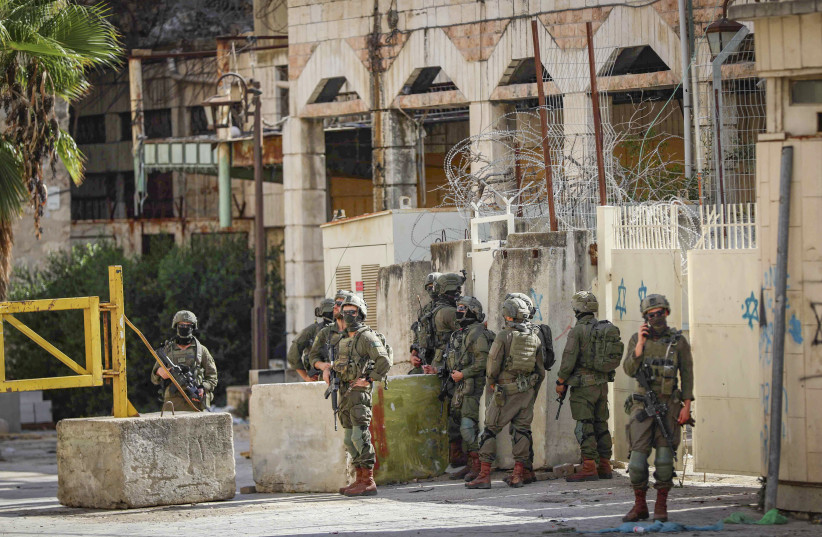
The soldiers enforcing the restrictions looked exhausted, too. As I watched, I wondered what a Palestinian child learns about an Israeli neighbor when one of their first encounters takes place at a checkpoint, where the child sees their parents waiting for permission to pass. And I wondered how much a young Israeli soldier can learn about the family in front of her in the few minutes it takes to search their car.
That Saturday, we at Masar Jadid welcomed about 50 Israelis who had come to express solidarity with the people of Hebron and hear from them about what the city had been through. We took them on a tour, then had lunch together at a local restaurant. We called the visit “From Confrontation to Dialogue.” Around the table, Hebron residents spoke about how recent events had affected their lives, and our guests could ask questions and hear directly from them. What stayed with me was how willing people were to keep talking when they disagreed, and the respect they showed as they listened to one another.
The visit also had political meaning for me. I know many of our guests and saw how hard they worked for the change camp in the recent Israeli elections. The visit gave them a chance to see what change could mean in the daily lives of Palestinians. Can a shopkeeper get to work? Can Old City residents reach their homes and welcome relatives freely? When settlers attack a Palestinian family, is there anyone the family can count on to protect them?
The history of Hebron's communities
During one of my visits, a friend from Hebron told me about the ties between the city’s Jewish and Muslim neighbors. He mentioned the name Shitrit among the stories Hebron residents pass down about old family names. I listened as he recalled a part of the city’s history that rarely makes the news.
A Jewish community lived in Hebron for centuries. The city saw periods of neighborly life, as well as deadly violence in 1929 and a break in the Jewish community’s presence in 1936.
Hebron can honor the memory of its Jewish residents while upholding the right of its Palestinian residents today to live with dignity and move freely in their own city.
Two days before the visit, Hebron Mayor Youssef al-Jaabari stood in the Old City in front of metal barriers erected by settlers in the area known as H2 and called on the international community to intervene. I appreciate his efforts throughout the crisis and his determination to make sure Old City residents are heard.
Our Israeli friends can share what they heard in Hebron with the Israeli public and their elected representatives, and press for the removal of barriers that restrict residents’ movement. We Palestinians can continue to welcome people who want to hear directly from Hebron residents and work with them on issues that affect daily life.
Two peoples live on this land, and both have a future here. I believe the way to that future is a two-state solution based on the 1967 borders, securing the Palestinian people’s right to self-determination and an independent state of their own, while allowing Israel to live in security and preserve its Jewish and democratic character.
Achieving that solution requires a shared camp for change on both sides of the wall, with Palestinians and Israelis working together, each within their own society, to turn that commitment into political decisions. In Hebron, that work can begin with a clear demand. Old City residents should be able to reach their homes and shops freely again, and people in Israel should speak up publicly for that right.
I look forward to a Saturday when Jews come to Hebron to observe Shabbat Chayei Sarah and a Palestinian family from Farsh al-Hawa can go to a wedding in the Old City without having to budget time for checkpoints. I look forward to the day when 50 Israelis sitting down to lunch with the people of Hebron is an ordinary occurrence. Then Hebron will be able to tell its history in full and take pride in the future its residents and neighbors have built together.