
An NBC News national exit poll put the Democratic share of the Jewish vote for the US House at 68%. A week earlier, Benjamin Netanyahu’s Likud emerged from Israel’s election as the largest party, with 27 of the Knesset’s 120 seats.
American Jews were voting on American concerns. Israelis brought their own fears and priorities to the ballot box. For years, I have told American Jewish leaders that they have neglected the Israeli Right. I have spent just as long trying to persuade Israelis to understand the communities abroad whose loyalty we so readily expect.
Democrats have won both houses of Congress. President Isaac Herzog has chosen Gadi Eisenkot to try to form Israel’s next government. We need relationships that can survive changes of government, disagreements over Israel, and the discovery that our fellow Jews voted for someone we dislike.
A movement making responsibility for Diaspora a sustained force in Israeli politics
Ahead of the Jewish Federations’ General Assembly in Washington, I want to propose a three-year experiment: an Israeli citizens’ movement that makes responsibility for the Jewish world a sustained force in Israeli politics.
Call it a reverse AIPAC.
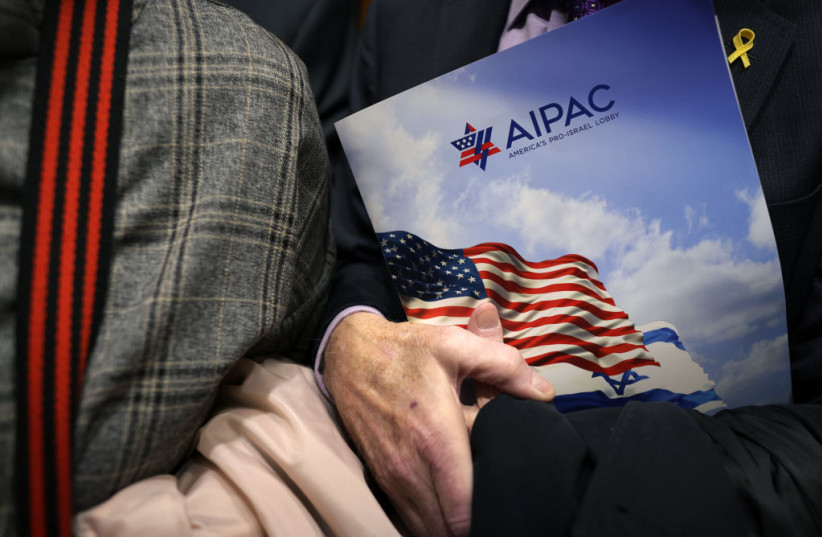
AIPAC organizes American support for Israel. This movement would organize Israelis to advocate to their own politicians about the concerns of Jews abroad. Israelis would join, pay dues, elect the leadership, and choose campaigns. A Jewish community facing the consequences of an Israeli decision would have people here prepared to take up its concerns.
Recently, I met an Israeli researcher who organized a US delegation for prominent right-wing journalists, broadcasters and influencers, including outspoken Netanyahu supporters. I knew some of the names. Several had been harsh toward American Jewry.
The delegation was private; the names will remain private. The organizer is firmly on the Right. She explained that many participants would have refused an invitation from an organization they regarded as progressive. They trusted her.
She told me they returned with a more complicated understanding of American Jewish life. She is raising money for another cohort, and I offered to volunteer. I have been asking organizations to arrange encounters like these for years.
Consider whom those invitations reach. A room full of people already committed to this relationship can produce an encouraging photograph and leave the harder work untouched.
I know how marginal that work can feel. When I covered the Diaspora in Hebrew, I warned leaders that I would eventually have to move on because I saw no professional future on the beat. One major outlet offered an apparently brighter prospect: “Start with the Diaspora; eventually you’ll be a political reporter.” Covering Jews abroad was something an ambitious journalist could hope to recover from.
Our ignorance has consequences. A minister’s reckless statement can leave a rabbi, a student, or a pastor abroad answering for it. Evangelicals, Republicans, and pro-Israel Democrats deserve a partner who considers the difficulties he creates for them. Better advocacy requires reliable information and responsible Israeli conduct.
On Friday, CUFI Action Fund, the political arm of Christians United for Israel, challenged Vice President JD Vance’s claim that the Iran war and the US-Israel relationship helped cause Republican losses. Our evangelical allies are defending this partnership inside their own political camp.
Jewish communities also deserve our interest in their own lives, including when they disagree with us. Israeli sovereignty gives us power whose consequences extend beyond our electorate. Listening to those affected belongs among the responsibilities of exercising it.
Gary Torgow, now JFNA’s chairman, urged Israel in 2021 to “invest time, effort and money to reengage the Diaspora community.” JFNA President and CEO Eric Fingerhut had put it more personally in 2020: “We love Israel, we love all the people of Israel - love us back.” This movement would give Israelis a way to answer them.
Run the pilot from 2027 through 2029. Aim for 10,000 Israeli members by the end of its third year. At full dues of NIS 30 a month, that membership would generate NIS 3.6 million annually for professional advocacy. Reduced dues should keep membership accessible. Start with a volunteer organizing committee; hire lobbyists as recurring Israeli dues cover the salaries.
Lobby 99 offers experience in recurring member funding and member-chosen priorities. Its socioeconomic remit excludes the political and religious disputes this movement would confront. Dan Lahav, a former deputy director-general of Israel’s Prime Minister’s Office who oversaw Diaspora affairs, has already argued for an effective Diaspora lobby in Israel.
Give every Israeli member one vote. Publish the accounts, cap individual contributions and limit leadership terms. Philanthropists could separately finance encounters, education, independent journalism and evaluation. Contributions should buy no additional votes or leadership seats.
A rotating Diaspora council, spanning countries, religious streams, generations and people outside established organizations, should have the right to propose campaigns, receive answers and publish their disagreement. Israeli members would elect the movement’s leadership. Participation would confer no vote in Israel’s elections.
Begin with specific work: consultation before changing rules affecting Jewish visitors and communities; dependable access to prayer at the Western Wall; and hearings about the consequences abroad of Israeli decisions. Local Jewish communities should be heard before ministers embrace foreign political movements whose histories those communities know. Members could meet their own parties’ representatives, organize Knesset hearings and publish an annual record of commitments kept and broken. A politician should encounter this concern at a local party meeting and on a visit to New York.
Encounters and journalism would help members understand Jewish communities abroad. Expand trusted encounters like the researcher’s delegation. Give Israeli journalists fellowships to cover Jewish life regularly, with editors committing to publication. Test the monthly bilingual review I have proposed: the same reporting and arguments, in the same order and framing, in Hebrew and English, with readers responding to one another.
Birthright, Masa Israel Journey, the Z3 Project, the Jewish Agency’s Partnership2Gether, Gesher, the Ruderman Family Foundation and President Isaac Herzog’s Voice of the People already offer experience and relationships. The pilot should work with them and explain what it adds.
Research should begin when the pilot launches. Independent researchers should establish a baseline, follow participants and comparable nonparticipants, and repeat surveys annually. Measure knowledge of Jewish communities, sustained personal contact, and willingness to engage across disagreement. Publish membership renewals, the range of people joining, official responses, and completed policy changes alongside those findings.
An independent review of movement's effectiveness after three years
Agree on the measures before launch and publish disappointing results too. After three years, an independent review should recommend expansion, revision or closure. Funders should know when an experiment fails.
The movement could easily become another gathering of Israelis who already agree. Its founders would have to recruit across political and religious divisions and keep members involved when campaigns challenged their own loyalties. Israelis exhausted by war and reserve duty would need room to explain their lives as fully as the Jews they were meeting.
I want the people leaving the GA to have something concrete to help establish, and Israelis to assume responsibility for keeping it alive.
When a politician next speaks recklessly about Jews abroad, I want an Israeli who voted for him to object.