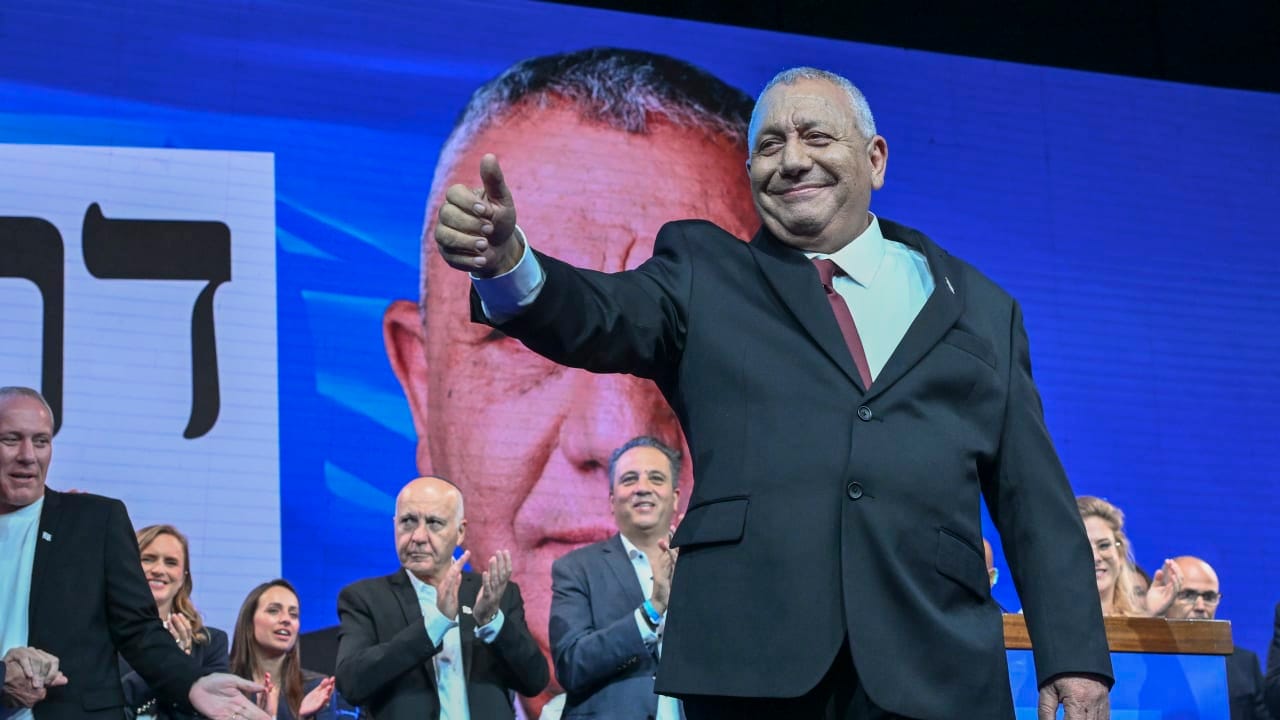
Gadi Eisenkot is now facing the greatest political challenge of his life, and perhaps one of the most consequential decisions for the future of the State of Israel: forming the next government. To succeed where many capable figures have failed, he will have to be creative and assertive, but above all, think beyond the coalition game of musical chairs.
The path to forming a government lies not only in negotiations between parties but also in the ability to present the Israeli public with a broader vision – one that addresses not merely who will sit around the cabinet table but where we want to lead the State of Israel in the years ahead. Now is the time to propose an initiative that connects domestic political change with an unprecedented diplomatic, economic, and regional opportunity: Abbas for MBS.
Partnering with the Arab parties as part of a broader vision
Instead of presenting the inclusion of Mansour Abbas and the Arab parties more broadly as a necessary political compromise or a technical constraint designed to secure a majority in the Knesset, Eisenkot should lead a broad strategic initiative that offers domestic political partnership in exchange for a diplomatic, economic, and regional breakthrough with Saudi Arabia and Crown Prince Mohammed bin Salman (MBS).
Such an initiative could change the public discourse. Eisenkot should not apologize for partnering with the Arab parties or try to sell that partnership as a reality forced upon him. He should present it as part of a broader vision of a new Israel, one that conducts foreign policy and works to build partnerships both at home and abroad.
In doing so, he would also begin to establish himself, in Israel and internationally, as a courageous and pragmatic leader determined to advance diplomatic and strategic initiatives, rather than merely conduct technical political negotiations aimed solely at finding a magic political formula for forming a government.

This initiative matters not only because of the long-awaited normalization with the Saudis, but no less because of Israel’s complicated position vis-à-vis the American leadership. The US midterm elections served as a confirmation of our difficult standing among the American public and its leadership, which is becoming increasingly confrontational toward Israel. This is due to the policies of the current government, which they perceive as hawkish, and above all as a government that does not pursue diplomatic processes alongside the use of military force.
Normalization with Saudi Arabia
A new government that presents a broad domestic political partnership, in which all parts of the nation are invited to sit around the leadership table, alongside a diplomatic initiative with Saudi Arabia, could signal a genuine change of direction to Americans and the world.
Moreover, normalization with Saudi Arabia would provide us with a kind of insurance policy vis-à-vis future American administrations. Saudi Arabia is steadily strengthening its position as a key US ally, and our partnership with the Saudis is expected to ensure our closeness to future American administrations and preserve this important relationship.
But this is not only about security and diplomacy. Israel also has much to learn and gain from Saudi Arabia on the economic and technological fronts. The kingdom is investing enormous sums in artificial intelligence, computing infrastructure, energy, and technology, and aspires to become a global powerhouse in these fields.
A normalization agreement with Saudi Arabia could open up substantial investment and cooperation opportunities for Israel, which the business and technology sectors have been longing for after three years of war and cooling relations with countries with which we previously worked.
Eisenkot’s challenge is to translate this vision into language the Israeli public can understand and embrace: domestic political partnership in exchange for a historic opportunity for regional, diplomatic, and economic change.
In the coming weeks, he must demonstrate far more than the political ability to assemble a coalition. To succeed in this complex task, he must show leadership and diplomatic-strategic thinking from the very stages of forming the government. “Abbas for MBS” is not merely a good slogan. It could be the formula that creates the connection and the breakthrough – between the immediate political challenge and Israel’s opportunity for a brighter future.
The author is a communications and strategy consultant who advises companies, organizations, and government ministries.