Do religious people tend to cope better with stress, trauma, and the temptations of the digital age than non-believers?
Does being observant serve as a protective shield that can cultivate a stronger sense of purpose, spending less time on social media, and reduced exposure to harmful online content?
In a new study by the Hebrew University of Jerusalem (HUJI), researchers suggest the answer may lie in psychological resources, mindsets, and habits that can come from religiosity.
They were found to be the strongest predictors of lower risk for addiction, anxiety, depression, and post-traumatic stress disorder (PTSD).
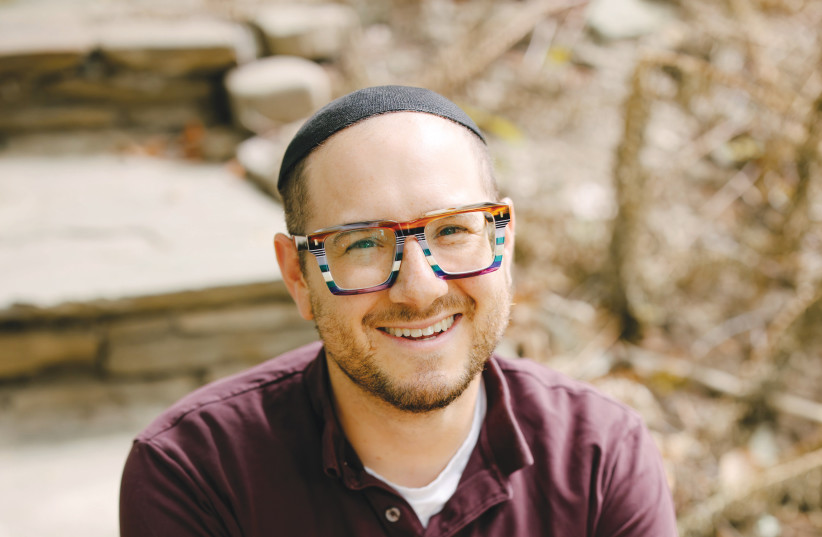
Published in the International Journal of Mental Health and Addiction, the study was led by Dr. Aaron Cherniak, Dr. Dvora Shmulewitz, and Prof. Mario Mikulincer from HUJI’s psychology department and the Israel Center for Addiction and Mental Health (ICAMH).
It examined responses of 3,000 Israeli Jewish adults collected in February, 2025 to explore how religiosity, meaning in life, social media use, and exposure to disturbing online content relate to addiction and mental health.
Participants represented a broad cross-section of Jewish Israeli society, including secular, traditional, religious, and haredi (ultra-Orthodox) communities.
Do religious people have lower rates of addiction, depression, anxiety, and PTSD?
Religious participants reported lower rates of substance abuse, symptoms of depression, anxiety, post-traumatic stress, and behavioral addictions compared to the secular respondents.
The researchers said that while Israel was experiencing ongoing war, the study offers rare insight into how psychological resilience is shaped during periods of prolonged collective trauma and constant exposure to disturbing online content.
“The findings may have implications far beyond Israel, offering new clues about how people can better protect their mental health during times of crisis.”
“Our findings suggest that being religious is not the whole story,” said Cherniak, a clinical psychologist who also received rabbinical ordination from Yeshiva University in New York.
“Much of its protective effect appears to come from the extent it can help people cultivate meaning in life and reduce potentially harmful digital exposure,” he continued. “The encouraging implication is that these are factors anyone can strengthen, regardless of whether they are religious.”
The researchers identified three factors that consistently emerged in the study as the strongest predictors of better mental health: a stronger sense that life has meaning and purpose; less time spent on social media; and less exposure to harmful online content, including graphic war-related material and hate speech.
One of the study’s most dramatic findings is that once researchers accounted for meaning in life and digital habits, religiosity no longer independently predicted better mental health outcomes.
Its protective effect remained significant only for problematic substance use, indicating that other aspects of religiosity, such as shared norms and social support within religious communities, may provide additional safeguards against alcohol and drug misuse, they said.
CHERNIAK TOLD The Jerusalem Post in a long interview that the team rated the respondents according to secular, traditional, Modern Orthodox, and haredi.
“In future research, we intend to delve deeper into the components of religiosity to better understand which specific aspects drive risk and resilience,” he said.
Asked if some participants, especially the ultra-Orthodox, may have hidden their involvement in the Internet and social media, substance abuse, and behavioral addictions, Cherniak explained that “since the groups were uneven, modern Orthodox and haredi respondents were combined, so we cannot speak to differences between these two groups.
“Haredi participants are often underrepresented in surveys, and even when they do participate, they may not be reflective of most in that population. There’s a need for partnerships within distinct population subgroups to increase participation in research, decrease stigma, and disseminate vital psychoeducational resources.”
While Israeli society is becoming more observant, he went on, that doesn’t necessarily mean that they will be less involved in addictions of all kinds.
“Ultimately, the modern world presents challenges and temptations that can entrap people of all backgrounds, and people stand a better chance the more psychosocial resources they have, including meaning in life and healthy digital habits – whether those are rooted in religious worldviews or other systems of meaning.”
When I suggested that since the religious could be less preoccupied with addictions because they have more children, have to prepare more food, and the men have to go to pray three times a day in the synagogue (or both genders at home), Cherniak conceded that “time and structure reduce opportunity, but not the underlying vulnerability driving the addiction.”
“And since when has having responsibilities prevented people from the dangers of addiction?” he asked. “It may be less about the responsibilities and religious practices themselves and more about how strongly felt and present the sense of meaning is while doing them.”
Religious communities “often provide dense, regular in-person social contact – synagogue, communal meals, life-cycle events – which could reduce the pull toward social media for connection and belonging, not just the available time for it,” Cherniak asserted.
“Having a large family, prayer commitments, and communal responsibilities doesn’t just happen to religious people and minimize their free time,” he continued.
“Less discretionary time and more meaning in life may be two faces of the same underlying thing rather than competing explanations. Untangling these threads is exactly the kind of nuance a single cross-sectional study can’t resolve on its own, and a good direction for future work.”
WHEN ASKED whether participants reported actively seeking out disturbing material or mainly encountering it unintentionally through their feeds, Cherniak said that “such a distinction matters a lot psychologically.”
“Unintentional exposure versus active seeking-out probably reflect very different underlying processes and carry different risks, but it’s not something our study was built to capture,” he continued.
“It’s a good direction for future work, especially given how much war-related content spreads through both passive scrolling and deliberate sharing.”
People suffering from depression, anxiety, or addiction may withdraw from religious communities, use more social media, and experience less meaning, he said.
“They might drift away from communal and religious involvement, turn to social media as a substitute source of connection or distraction, and experience a corresponding drop in their sense of meaning – that’s a coherent story that fits our data just as well as the reverse direction we described.
“Real life probably involves both directions feeding into each other over time. Disentangling that really requires longitudinal data following the same people across time, which is the natural next step for this research.”
People don’t have to stop reading or watching the news, but those distressed by it should change how they consume it: set specific times to check the news rather than leaving it open all day, so it’s a deliberate act rather than constantly being there, Cherniak advised.
“Favor a small number of reliable sources over doom-scrolling social media feeds, since algorithmically served content tends to surface the most graphic, emotionally activating material rather than the most informative.
“Distinguish between staying informed, which requires knowing what happened, and consuming graphic imagery that rarely adds new information and mostly adds distress.
“And spend time on people and physical activity that restores rather than depletes so news consumption isn’t the dominant emotional input of your day.”
He said that “the genuinely good news is that meaning in life isn’t fixed – it’s a psychological resource that can be built; not a trait you’re stuck with.
“It can grow through structured interventions that help people reconnect with their values, relationships, and sense of significance, but just as often it develops through ordinary life experience – relationships, milestones, adversity worked through, new responsibilities taken on, communities joined.
“People could actively cultivate this, regardless of whether that meaning is rooted in religious faith, family, community, or something else entirely.”
If someone wants to strengthen his feeling that he is living a life with meaning, “a good starting point is to do something that connects you to something beyond yourself.
“Reach out to someone else, whether that’s calling a family member who needs support, volunteering for even an hour, or showing up for a communal or religious gathering you’ve been skipping.
“Meaning tends to grow less from introspection alone and more from action embedded in relationships and contribution.
“Picking up a book, returning to a creative hobby you’ve let lapse, or spending focused time on something that interests you can also build a stronger sense of purpose, especially when it pulls you away from passive scrolling and into something you’re actually invested in.
“It’s a small, doable step, but repeated over time, it’s exactly the kind of ordinary life experience that builds a durable sense of meaning.”