The Nobel Assembly at Karolinska Institutet announced Monday that professors Karl Deisseroth, Peter Hegemann, and Georg Nagel were awarded the 2026 Nobel Prize in Medicine, with two of the three laureates having received the Technion-Israel Institute of Technology Harvey Prize.
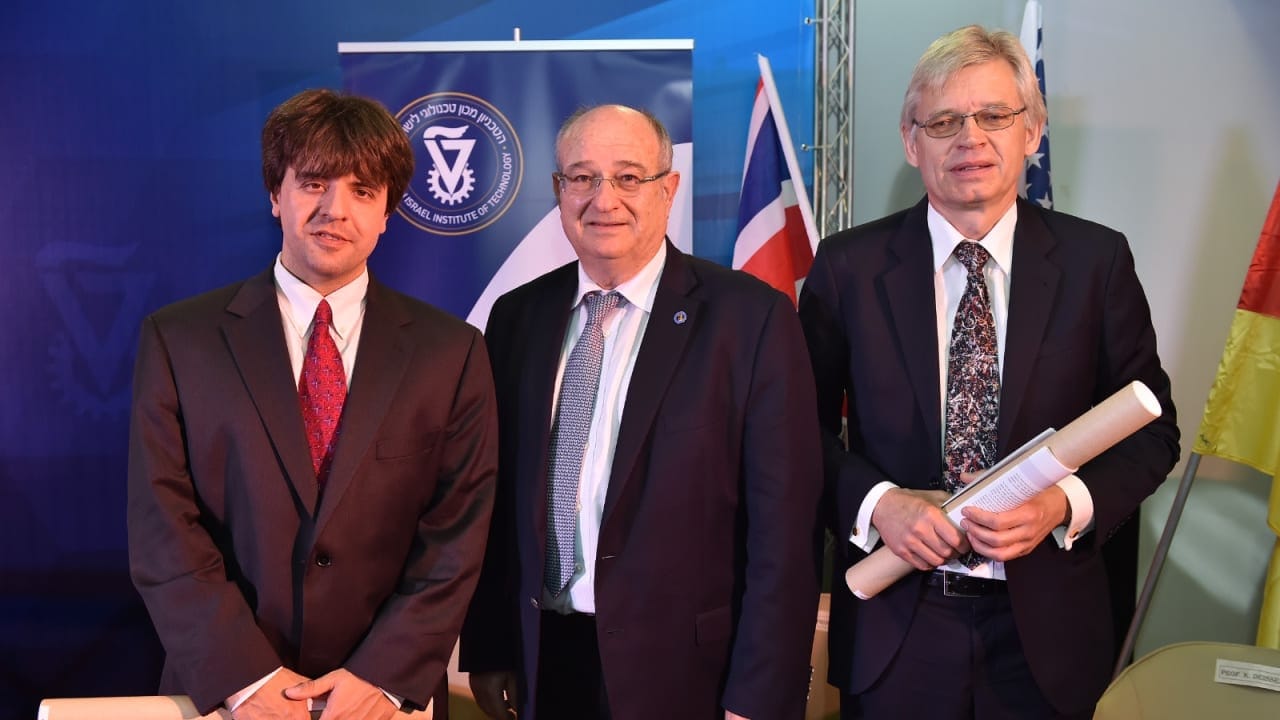
Prof. Deisseroth of the Howard Hughes Medical Institute and Stanford University, USA, and Prof. Hegemann of Humboldt University of Berlin, Germany, were awarded the Harvey Prize in 2016 for the same investigation that led to them the Nobel laureates.
The Nobel Assembly explained that it awarded the prize “for their discoveries concerning light-gated ion channels and optogenetics.”
It mentioned that Prof. Hegemann, along with Prof. Nagel, discovered channelrhodopsin, a protein with unique properties that, when introduced into cells, gives them light-sensitive properties.
Prof. Deisseroth experimented with the protein, advancing the field of optogenetics, which focuses on controlling nerve signals in the brains of living creatures with light.

“The development of optogenetics is indeed a tremendous achievement; however, it does not belong solely to two researchers, but to generations of scientists whose work led to the accumulation of the knowledge necessary for the breakthrough. For this reason, receiving the Harvey Prize is a great honor for me, because it recognizes basic science,” said Prof. Deisseroth after receiving the prize in 2016.
Prof. Hegemann added that the Harvey Prize was among the most important prizes he has won over the years. “One hundred and twenty years ago, Berlin was a world center of science where Einstein worked, and then the greatest disaster of all time occurred, which caused a severe blow to the Jewish people,” he said.
The Harvey Prize, a Nobel predictor?
This announcement adds to the Harvey Prize reputation of being a “Nobel Prize predictor,” with approximately 20% of the recipients moving on to become Nobel laureates later on in their careers.
The prize was first awarded in 1972 in recognition of outstanding contributions to science, technology, and medicine, as well as exceptional contributions to peace in the Middle East.
Los Angeles industrialist and inventor Leo M. Harvey established it that year; the most recent recipients are Prof. David R. Liu of Harvard University and Prof. Chad A. Mirkin of Northwestern University, for their groundbreaking advances in nanotechnology and medicine.