Ancient history
A short history of games of chance in the Middle East
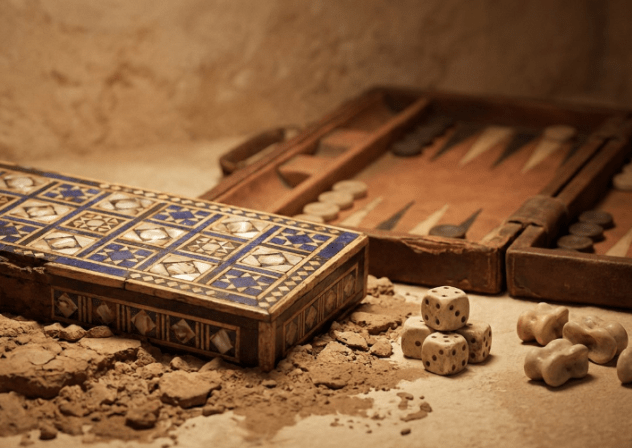
From ancient dice and royal game boards to modern digital platforms, the Middle East's long relationship with games of chance reveals a timeless fascination with luck, fate and uncertainty.

Frescos from famed Etruscan tomb go on display in Rome after multi-million euro purchase by Italy

A historical overview of gambling in the Middle East

Turkey places site of Alexander the Great’s first battle with Persians under historic protection
Ancient shipwreck appears on Hoi An beach, dated by experts to 14th–16th century
Researchers say the 17m hybrid craft, found 400m from former Cẩm An ward office, is among Vietnam’s best-preserved underwater relics and will undergo urgent excavation.

5,000-year-old building found in Kani Shaie, Iraq, reshapes view of Uruk-era networks
Researchers say verifying the structure's monumentality could transform understanding of early Mesopotamian exchange, revealing how sites like Shaie linked distant regions.

Ancient 5,000-year-old wine press and Canaanite ritual vessels found near Tel Megiddo
Israel Antiquities Authority archaeologists found first clear proof of early winemaking and folk worship outside the city, with offerings buried beside a rock altar along a 1.2 km excavation.

Ancient 4,000-year-old limestone mural vanishes from 'cursed' Khentika tomb in Egyptian necropolis
A British mission working in the tomb discovered that a mural was missing in May, and officials only publicised the disappearance on Sunday.

Crimean Neanderthal ochre crayon reveals earliest symbolic artistry
The shaped and reused crayons, engraved patterns, and tool marks suggest that some ochre materials were intentionally used for symbolic activities.

Celtic teenager buried face down in Dorset pit may reveal Iron Age human sacrifice
"This has the sense of a body thrown into a pit, with hands potentially tied," archaeologist Miles Russell said.

Fossil of 99 million-year-old mosquito larva found in Myanmar amber
The fossil, called Cretosabethes primaevus, shared traits with modern mosquitoes. Scientists think it lived in small water pools in tree hollows or leaf axils during the Cretaceous period.

Bone tools and beads from 13,000 years ago unearthed in Direkli Cave, Turkey
Prof. Erek: "The differentiation of this tool industry and use of varied materials point to the period's industrial development."

Foundation Rock Decoded: INAH Reveals Sixth-Century Maya Powerhouse Queen Ish Chak Ch'iena
During her reign, Ch'ak Ch'een oversaw construction of the Group D ballcourt, finished on December 8, 573, newly deciphered glyphs indicate.

Oldest coin in Saxony: 2,200-year-old Celtic gold piece found near Leipzig
State archaeologist Smolnik presents the two-gram quarter stater, calling it the smallest find ever displayed and proof of the value of citizen-scientist cooperation.
