Archaeological Site
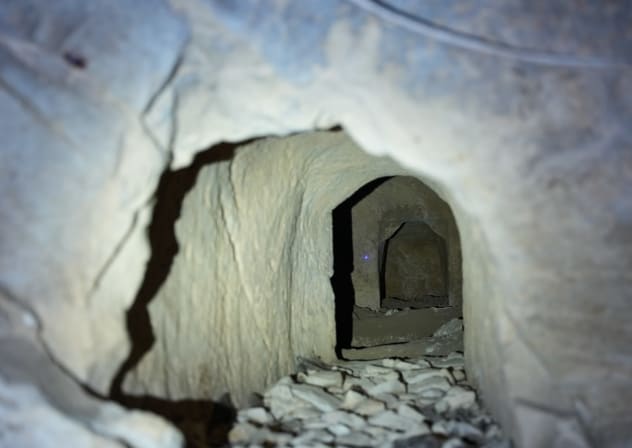
Border Police discover Second Temple-period burial cave during operations in eastern Jerusalem
The discovery came as part of police’s ongoing investigations into the violent clash between two feuding families in Silwan that occurred over the weekend and led to the deaths of three people.

Snake snacks? Hunter-gatherer diets in northern Israel included reptiles, new study suggests

Partially restored ancient fresco depicting marriage of Dionysus, Ariadne displayed in Pompeii

Roman 'cold plunge' pool, floor mosaic discovered in ancient Turkish gymnasium complex
Guatemala to recognize Jerusalem’s City of David as part of its national heritage
A plaque signed by Guatemalan President Bernardo Arévalo will be unveiled in a ceremony attended by senior Israeli, US and Guatemalan officials.

‘Weaponization of cultural heritage’: Israel accuses PA of exploiting UNESCO in bid for Sebastia
The 450-acre site, which has awaited joining the world heritage list since 2012, has a history dating back at least 3,000 years.

Days before Tisha B'Av: Charred wooden beams from First Temple’s destruction unearthed in Jerusalem
The First Temple, built by the biblical King Solomon, was destroyed in 586 BCE at the hands of Nebuchadnezzar II, the second king of the Neo-Babylonian Empire.

Ancient humans precisely navigated northern Israel to find right stones for tools, study suggests
Basalt seemingly held special importance at GBY, particularly for producing large cutting tools like handaxes and cleavers.

Archaeologists discover rare 2,600-year-old stele of Assyrian king in Iraq's Nineveh
The stele has since been moved to the Inspectorate’s headquarters to undergo initial restoration work so that it can be studied in depth.

Inside the tragic, decades-long mystery of Qumran's lost Second Temple incense
The vast majority of material was lost after a 2025 murder. All that remains is a small amount of dust collected from the floor and a few samples preserved by the Jones family.

Hidden for millennia: Mystery ancient stone circle discovered beneath Scotland's Machrie Moor
Located on Arran’s west coast, Machrie Moor is a peat moorland where a large collection of Neolithic and Bronze Age archaeological finds, dating back to between 3,500 BCE to 1,500 BCE.

One of the Dead Sea Scrolls' greatest mysteries may have finally been solved by Israeli researcher
For decades, scholars have wondered if Qumran’s 364-day year calender had ever been used in practice or if it served only as a theoretical framework.

Coming full circle: Luxury watch belonging to Chabad rebbes found by hasidic children in Lyubavichi
The moving discovery came alongside a visit by Russia’s chief rabbi, Rabbi Berel Lazar, to the main summer camp outside Moscow.

Ancient structure near Stonehenge may have inspired its solstice alignment, archaeologists say
The site, believed to have likely served as a focus for religious gatherings, bears extensive evidence of feasting and large-scale gatherings.
