Prehistory
Israeli researchers use ancient stone tools to trace hunter-gatherer migrations
The study focused specifically on the late Middle Paleolithic period, when ancient hunter-gatherers attempted to navigate intense environmental shifts in the South Caucasus region.
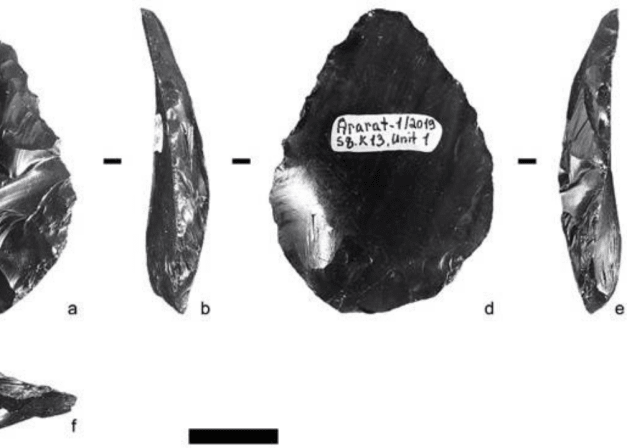

Prehistoric hunter-gatherers stayed connected across 200 kilometers, Israeli study finds

Secrets of a drowned realm: DNA traces show the North Sea once held sprawling woodlands

'Ghost lineage': Ancient DNA upends the single‑migration myth of the Americas
Prehistoric children’s remains show syphilis-like disease spread through ancient Vietnam - study
Researchers have for decades believed that of these diseases, only syphilis could be transmitted congenitally, lending to the assumption that syphilis began with Christopher Columbus’ journeys.

The supervolcano that once destroyed Japan's civilization is refilling, scientists say
Scientists believe the Akahoya eruption devastated the Jōmon people, who inhabited the area now known as Japan between 14,000 and 300 BCE.

Researchers rethink how humans populated the Americas after new find
Archaeologists say the new finding at Monte Verde points to an earlier human presence than prevailing models allow.

A newly discovered species complicates the human origin story
Scientists studying fossils from Ethiopia’s Afar Rift have uncovered evidence of another early human species which lived around the same time as Lucy, roughly 3.4 million years ago.

Oldest-known fire-making found in Britain, pushing Neanderthal mastery back 415,000 years
"We think humans brought pyrite to the site with the intention of making fire. And this has huge implications, pushing back the earliest fire-making," said archaeologist Nick Ashton.

If not stopped, Israel's destruction will come from internal division - opinion
Israel's growing internal divide raises fears that baseless hatred could once again be the cause of Israel's downfall.

Archeologists find evidence of a 5,000-year-old earthquake in Turkey
Assoc. Prof. Savaş Sarıalioğlu said no burned debris, charcoal, or domestic waste was found under the collapsed slab, and the pottery matched the structure’s construction phase.

Ancient life sized camel engravings on Saudi desert cliffs rewrite Arabian prehistory
Researchers say the monumental rock art marked scarce water sources and migration routes, serving as statements of presence and cultural identity roughly 12,000 years ago.

Checua mystery: 6,000-year-old genomes of extinct humans upend the peopling of South America
A previously unknown genetic group at preceramic Checua shows no ties to other prehistoric communities, suggesting isolated hunter-gatherers diverging from early South American settlers.

This 5,000-year-old cow tooth offers new clues to Stonehenge's origins
Isotopic data points to a journey from the Preseli Hills, possibly supporting stone transport theories.
