
The Western Galilee is trying to return to routine, and this summer it offers travelers not only green landscapes, streams, and beaches, but also a series of local experiences that connect people, food, creation, and nature.
As part of the July Art month, which is taking place for the seventh year, artists' homes are opening across the region, collaborations are taking place between artists and restaurants, wineries, and breweries, and the relationship between travelers and local businesses is being rebuilt.
The idea for the initiative came from Amnon Gofer, a veteran tour guide from the area and a member of the Western Galilee Time association, which is managed by Michal Shiloah and does wonders in recruiting resources and economic and moral help for tourism operators. Gofer saw a cell of artists gathering together in Tel Aviv, and "from there the idea was born to create a month in the Western Galilee dedicated to local creation and a connection between artists, businesses, and travelers," he says.
According to him, the event opened with a concert-tour in Gush Halav, and from there continues to a month where artists' homes are open to the public, collaborations take place between restaurants and artists, and experiences are created with the aim of bringing more travelers to the Galilee precisely in the summer, when many spend their vacation abroad.
This year, according to the people of the region, the importance is even greater. "People are still afraid to come to the Galilee," Gofer adds, referring to the uncertainty that sometimes hovers over the ceasefire (yes or no) with Lebanon, the renewal of fighting by the US with Iran, and in general, people prefer to fly abroad also in terms of costs. So we are here to show that the Galilee is actually quiet, eager for travelers, and offers innovations as well as really reasonable prices – if you only try.
Lechem Tenne: Handmade pastries and a croissant that everyone is talking about
We will start at one of the culinary stops in the area – Lechem Tenne in Kibbutz Gesher Haziv – where the pastries are baked in the local pastry shop. The place offers various breads – with seeds, country bread, spelt bread, and more. On Tuesdays they sell Emmer bread (a local and ancient wheat variety), and on Fridays you can find jachnun, an egg salad sandwich, fresh baguettes, and breads baked especially for the weekend – including cheese bread, sour cream challah, and pareve challah.
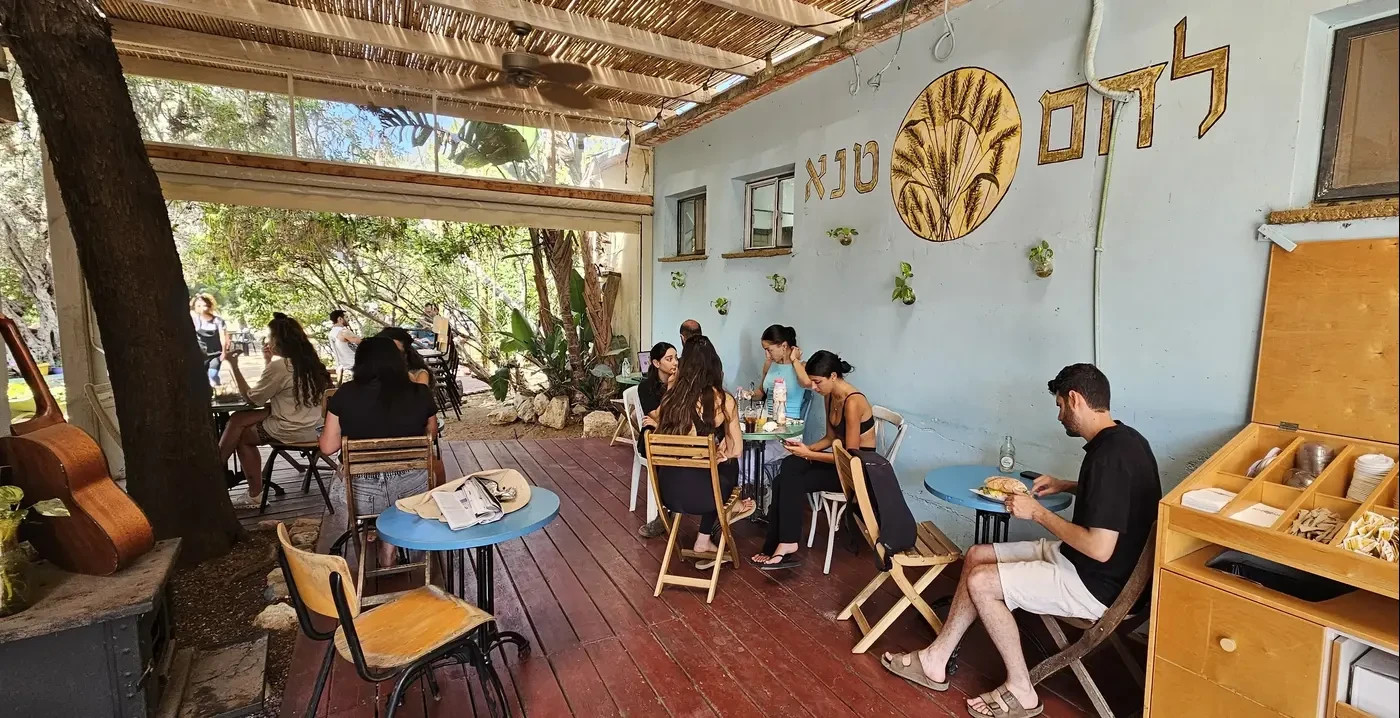
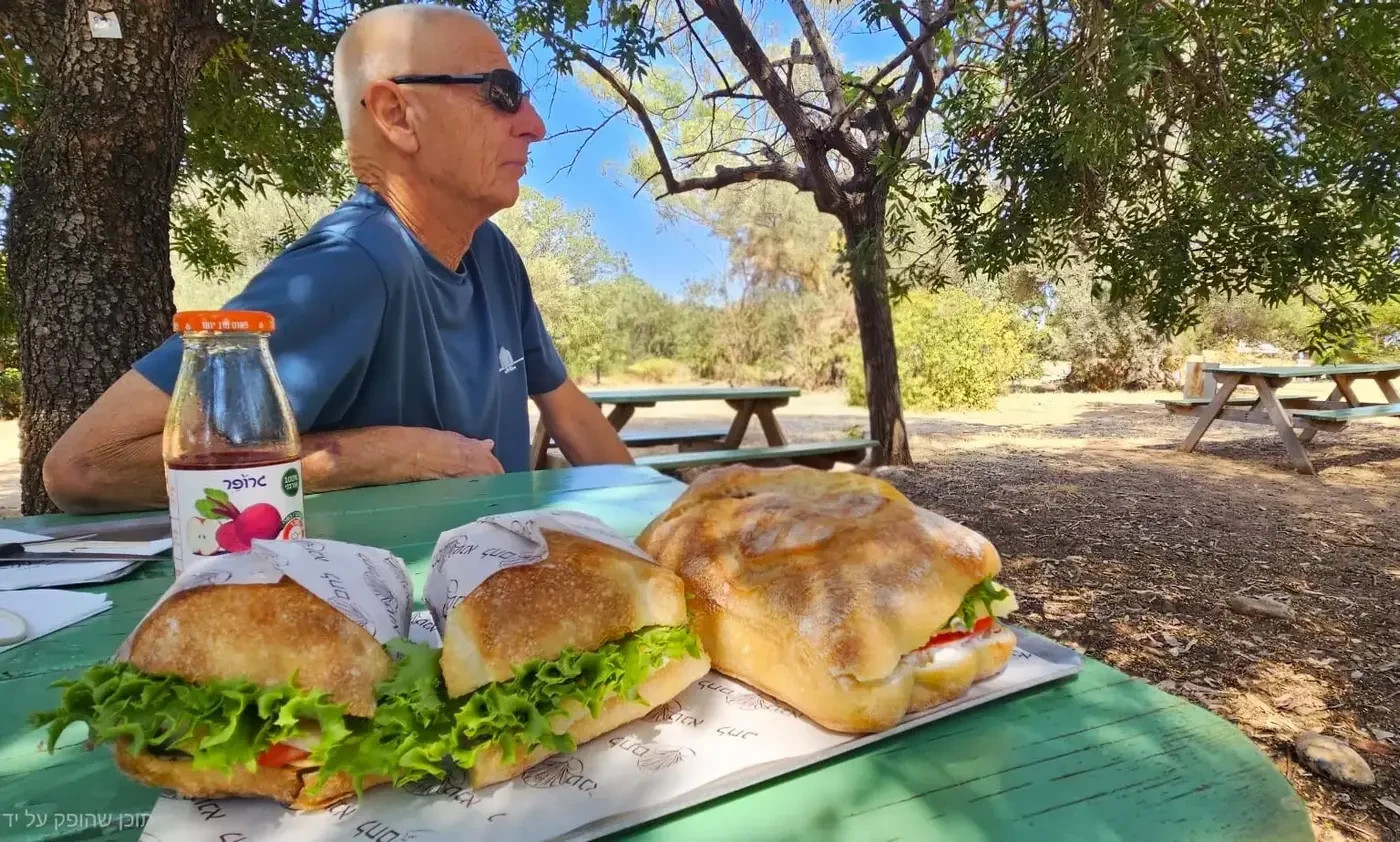
On the menu you can also find a Manchego sandwich (which was excellent), salmon, and an omelet (which we liked less). The pastries are made from butter dough with thin layers, and everything is done by hand. The local butter croissant is considered by many to be one of the best in the country, and alongside it stands out the popular sticky bun – with butter, eggs, molasses (brown sugar, butter, and honey).
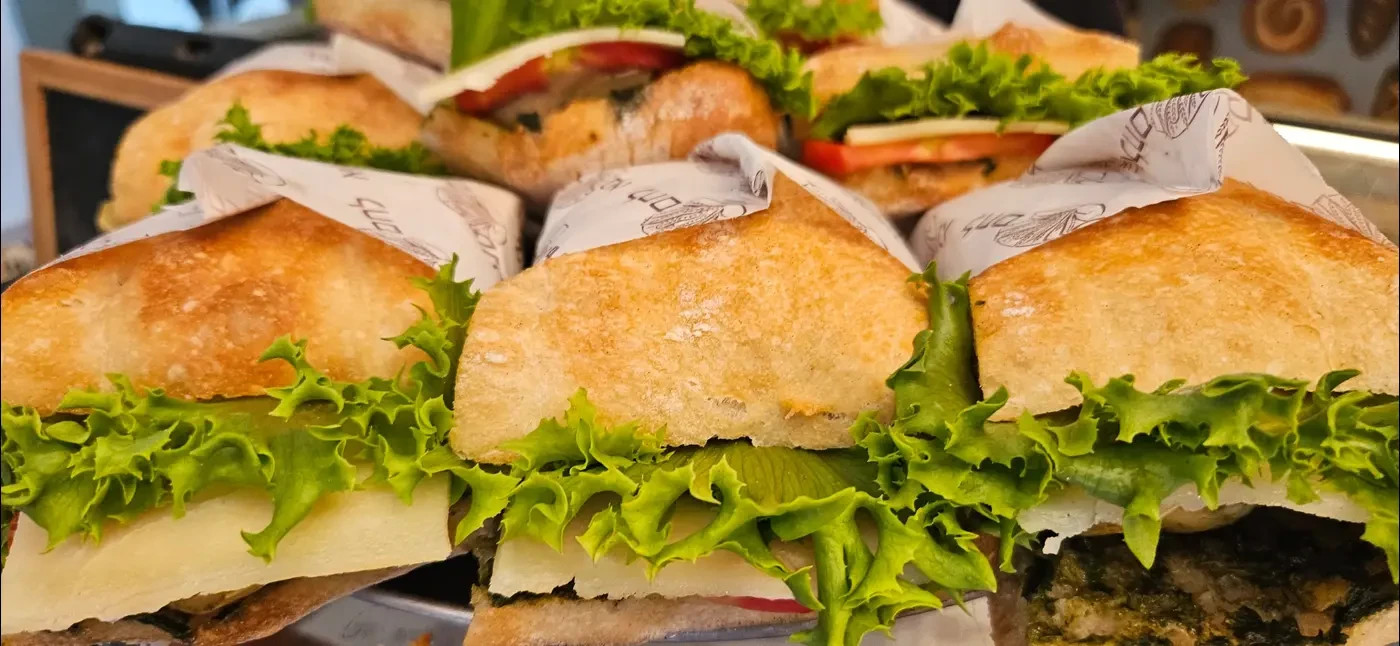
Lechem Tenne is open until 17:00 and on Fridays until 15:00, and also offers iced tea in flavors like "cheeky cherry" or chai, natural juices from Grooper, local beers, and even alcoholic drinks like Tapuzaza with gin, and lemonade with vodka.
Laga'at Basade: The farm that brings travelers into the soil
The drive on Route 8925 from the Hurfeish area to Abirim is always interesting. On the one hand, an area sparsely populated in Elkosh, Fassuta, and Abirim, but on the other hand, it winds through Galilean nature that has barely been disturbed. Right before Abirim, on a curve of the road, sits the Laga'at Basade farm, which Dor Pintel established about six years ago.
Pintel lived for 11 years in Abirim after wandering the world. When he returned to Israel after his post-army trip, he took a tour guide course and guided fancy tourists until the coronavirus period, when the work stopped. He looked for a job and started marketing lettuce from the Golan to the Galilee, and slowly this developed into an independent business. "I realized I needed to move forward," he says as we stand in his 2-acre field that had nothing in it, and a week before October 7 he planted seeds in it. During the war, most of the families from Abirim were evacuated, but Pintel stayed and worked to provide food to residents in the area. A portable bomb shelter was even placed on site, donated after a missile fell at the entrance to the farm and destroyed its gate.
Today, the Laga'at Basade farm supplies about 400 vegetable baskets to the north as far as Haifa, with home deliveries. On the website you can choose what to buy according to the season. Beyond agriculture, the farm also offers a tourist experience. "Groups arrive for a tour where they literally touch the field, understand how things are grown, and what stands behind agriculture," Pintel explains. "Summer is our good season," he says, thanks to the greens that grow on site at an altitude of 570 meters, in areas where it is usually harder to grow in the summer. During the visit, you pick as you go, and you can also purchase a vegetable basket at a price of NIS 50–80.
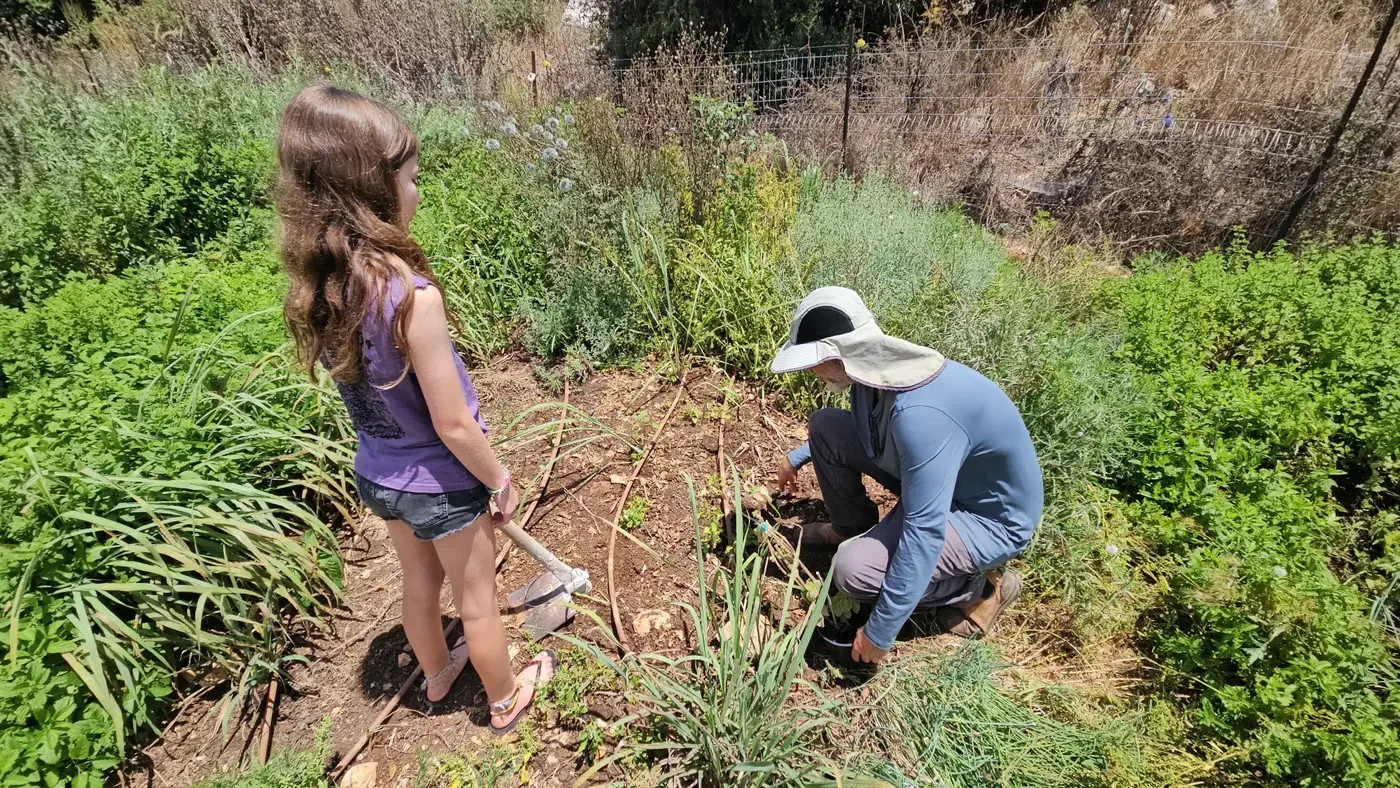
The tour lasts about two hours and includes several stations: Sowing, planting, harvesting, summer versus winter crops, and an introduction to working on an organic farm. You can also make pita bread on the saj with sorrel or various lettuces.
Laga'at Basade is open Sunday through Friday and by prior arrangement.
The oven of joy of Fassuta
Oh Fassuta, how much I love you, and not just at Christmas when everyone swarms you. Come to Fassuta on regular days too because in this small village you will find probably the nicest, most welcoming, hospitality-loving, peace-seeking people and what not.
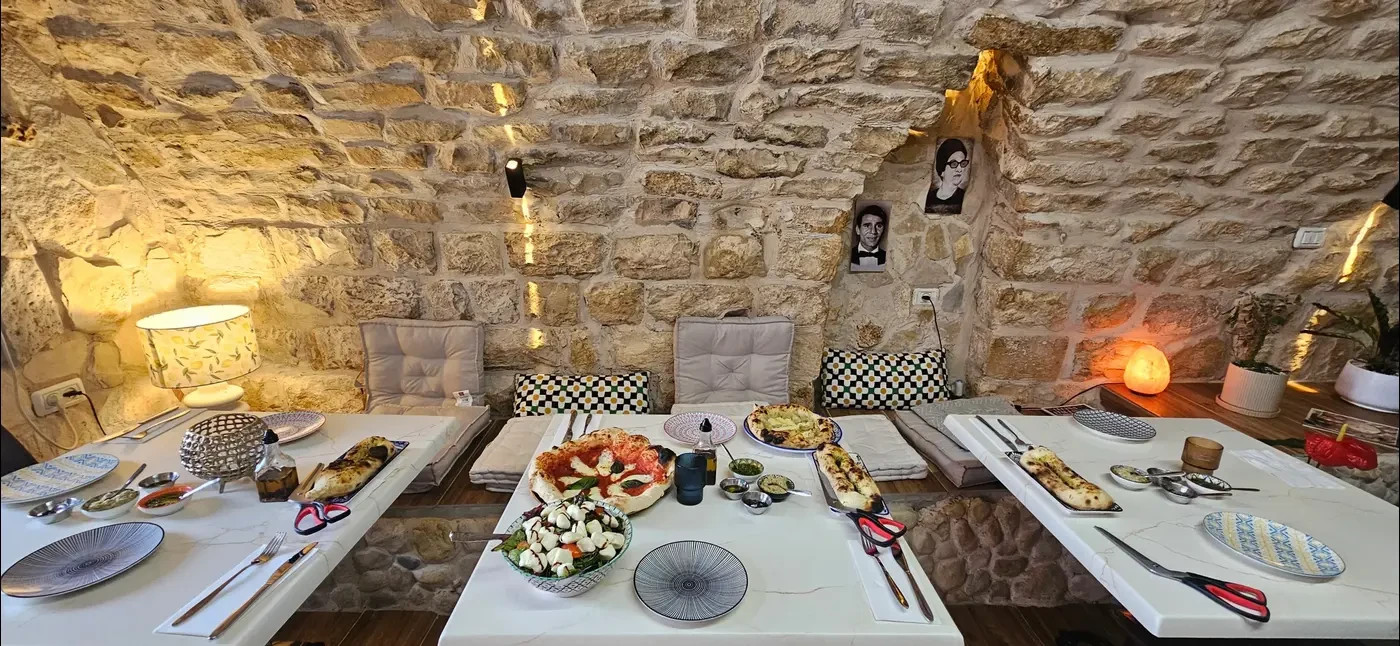
But beyond the churches, the wonderful Rima House, and near the iron blacksmith, Aviva the cook and other good things in the village, a place recently opened in Fassuta that produces something everyone loves without exception: Pizza.
Meet Forno La Gioia – "The Oven of Joy" in Italian, and indeed the oven in the home of Boulos Khoury is very joyful with the excellent pizzas it puts out. Boulos and Alaa Khoury, his nephew, opened the place four months ago inside an ancient and arched 140-year-old building that previously served as a warehouse. Boulos lived for 15 years in Padua, Italy, and learned dough preparation from friends. "At home I would make pizzas and pastas," he says, "and the idea to open such a place was born about a decade ago, but the coronavirus and the war stopped the plans." This past October the renovations began, and now they are reaping the fruits of the investment.
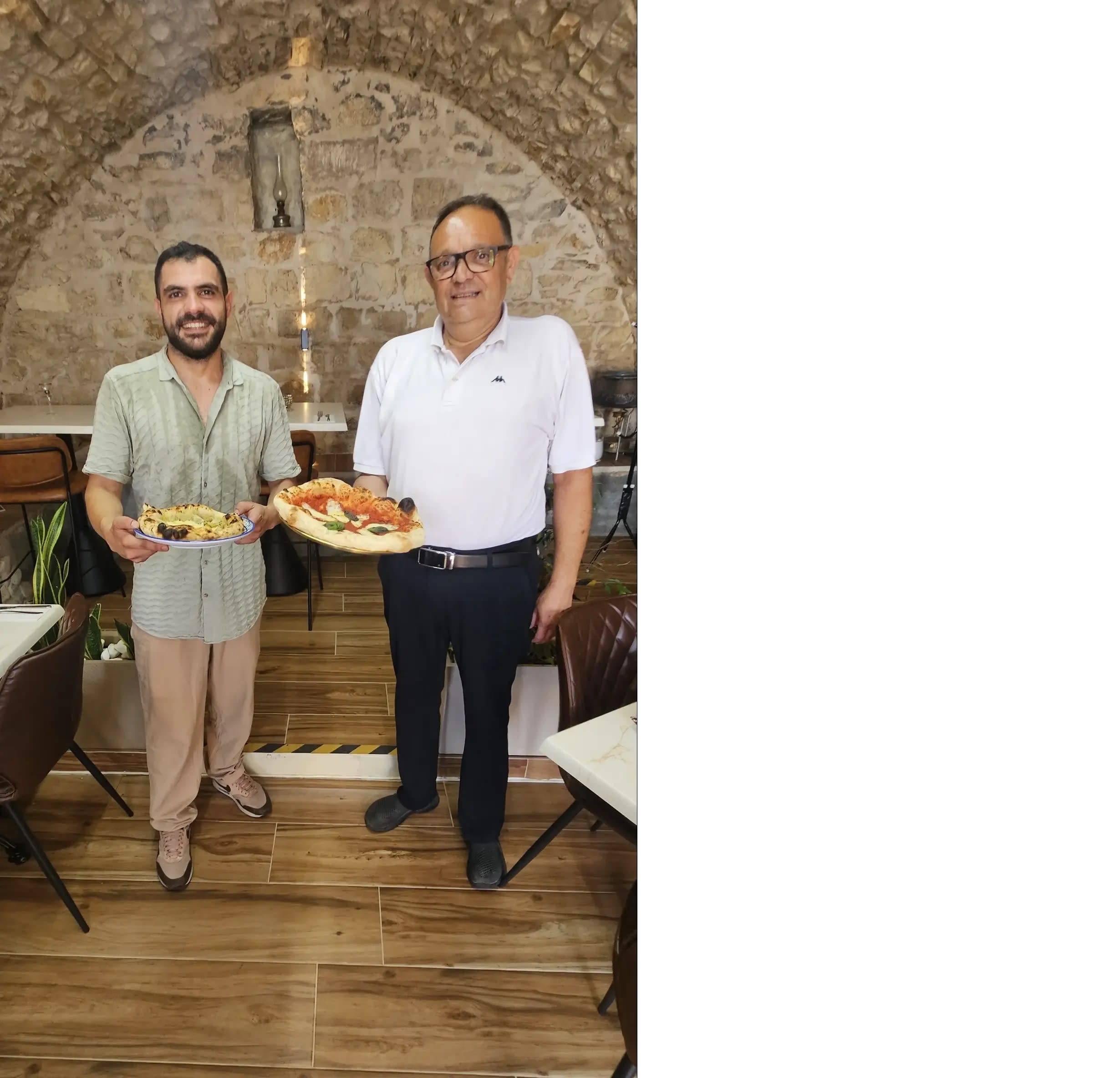
On the menu you can find special pizzas beyond the Margherita or the pesto pizza which is the most popular, according to Alaa, for example pizza with raw bacon, mushrooms, ham, prosciutto, pepperoni, and salami. There is also a pistachio pizza, where instead of tomato sauce they use pistachio paste, and there is also a pizza with truffles. All raw ingredients come from Italy.
The hospitality space (the former warehouse) is simply charming, clean, and pleasant, as is the pleasant price for a tray: NIS 55 for a Margherita (which is enough for a couple) and up to NIS 85 for special pizzas with pesto. There is also a personal pizza for NIS 40 and takeaway.
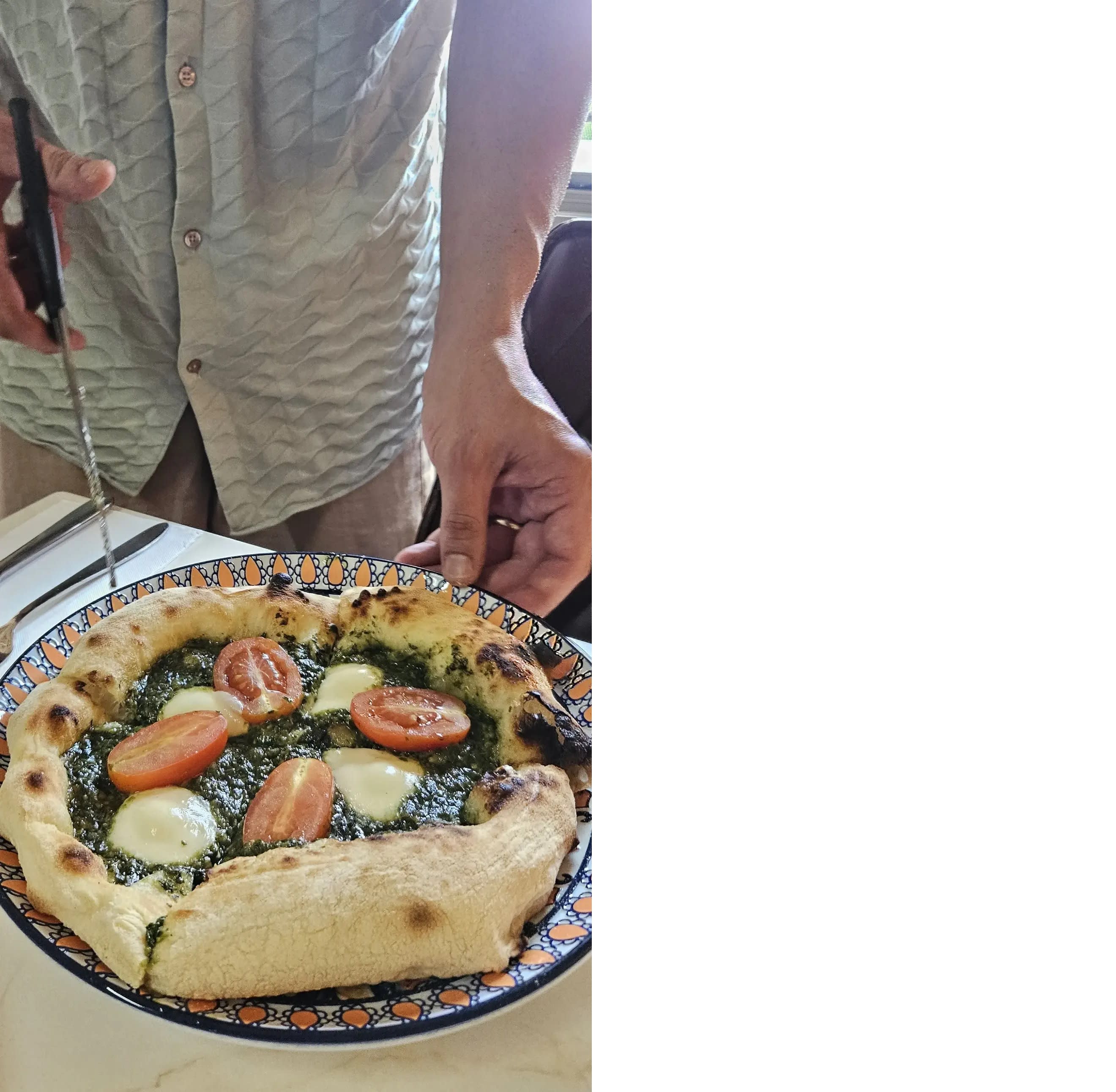
Forno La Gioia is open Thursday through Saturday, between 12:00 and 22:00, "or until the dough runs out," Alaa says jokingly. Alongside the pizzas, alcohol like Campari, Limoncello, wine, and beers are served. Simply excellent pizza!
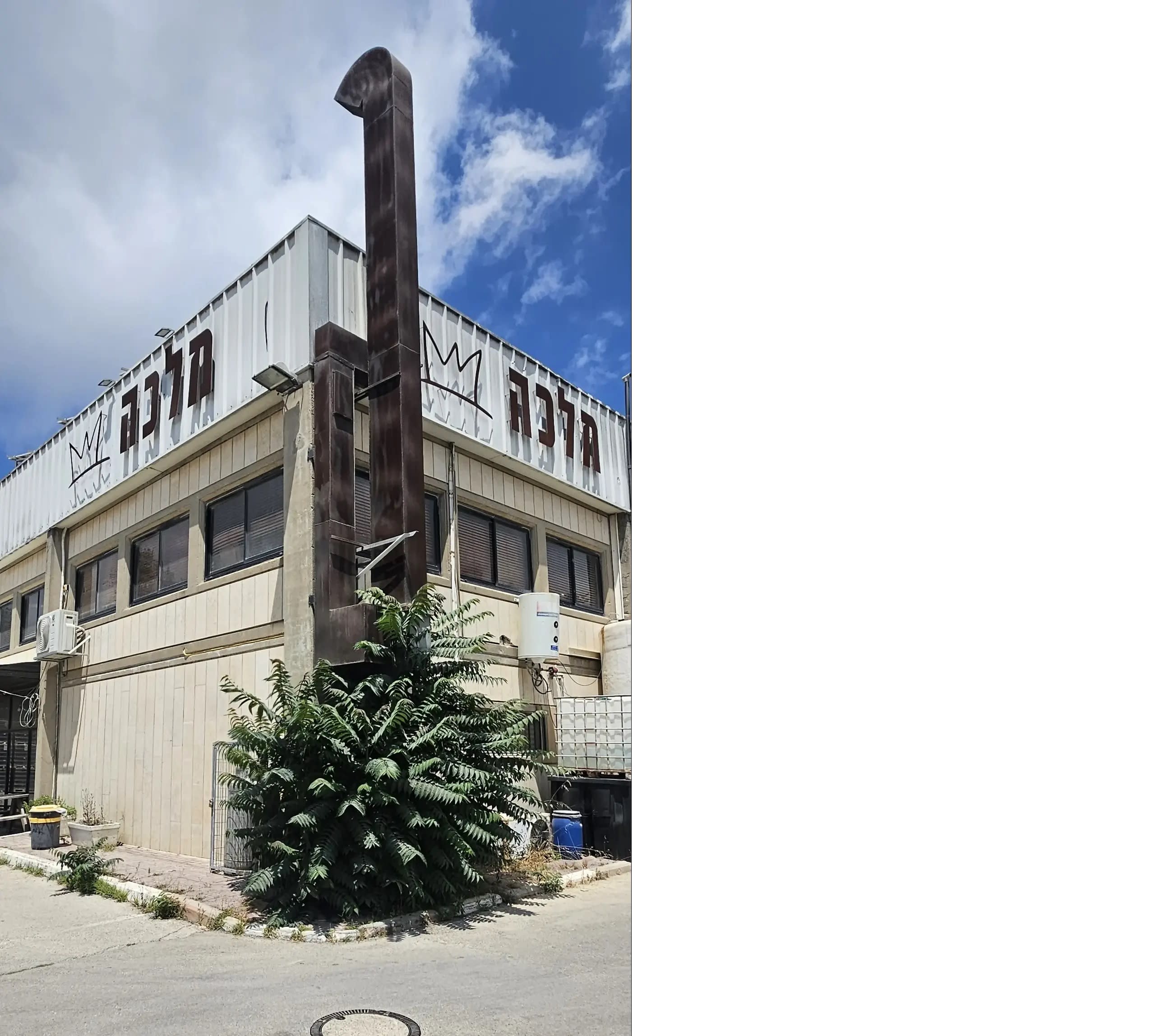
Malka Brewery: Between beer and glassblowing
There is not too much need to introduce Malka Beer. The Galilean beer has already made a name and taste for itself across the country, but I miss the days when it was relatively small and unfamiliar in Yehiam, alongside a musical jam session and the local youth who came to drink a half-liter on Friday afternoons.
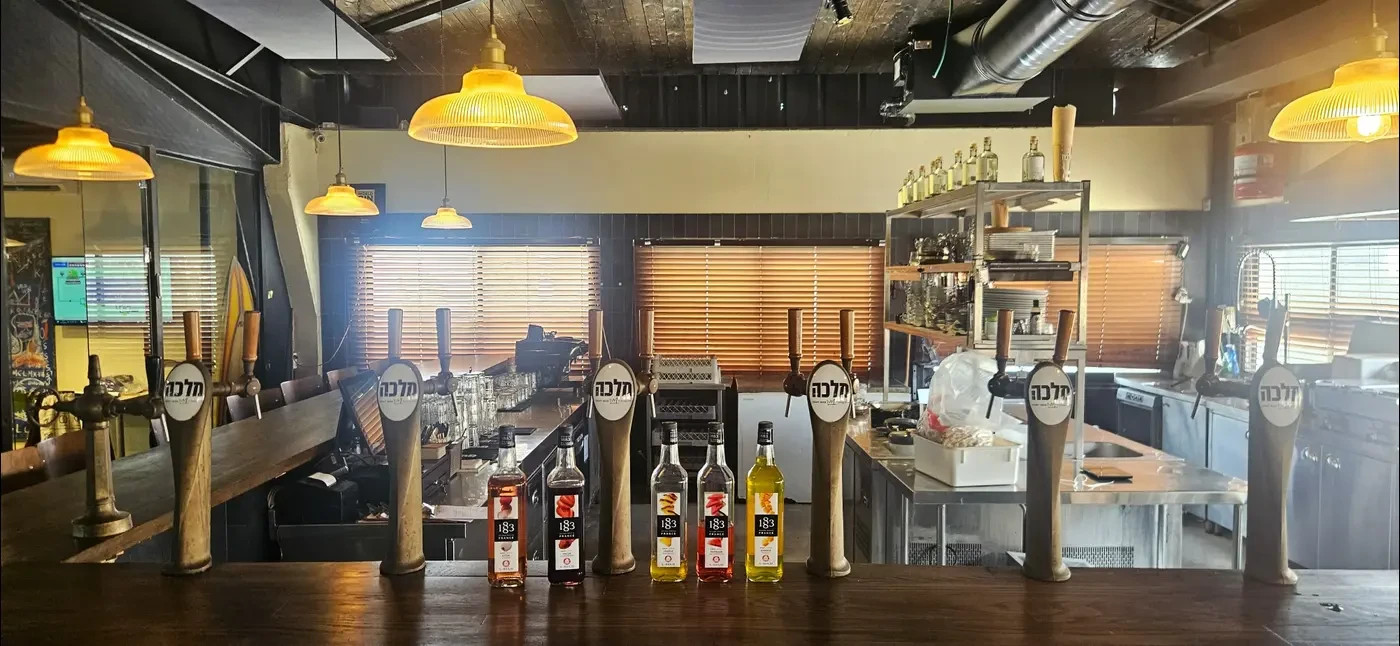
Today the brewery of Asaf Lavi, a former Tel Avivian who moved to Klil, is located in the Tefen Industrial Zone (which is a local council in its own right), and a cool new collaboration happening this month will connect beer and glass under the guidance of glass artist Ariel Aravov. The matchmaking between them began in a WhatsApp workshop of the Western Galilee Time association, where they met, and it did not take much to merge or pour between the beer and the glass in which it is kept. "Glass is an ancient craft whose core in our region was between Haifa and Acre, where the highest quality sand for this industry used to be," Ariel explains as we sit over a glass of Malka light Belgian Blonde Ale type in Malka's beautiful visitors center.
As part of the activity that will take place during July-Art on Friday, July 17, 2026 at 10:00, a glass workshop will be held with Ariel, who learned everything about glass in Long Island and is currently the only one in the north engaged in glassblowing. The workshop includes a tour, tastings of five beers, an hour of instruction on them, and a workshop of about two hours. At its conclusion, you will receive a glassware item that will be ready the next day and sent to the participants, after the glass undergoes a cooling process.
RZR tours: Seeing the Galilee from another angle
Let's pour some adrenaline into your experience in the Galilee, and that is exactly what Wassim Shanan has been doing with his RZR tours in the village of Julis for four and a half years. Shanan, who knows the area from childhood through ATVs and jeeps in which he drove around the Galilee, currently operates 10 Kawasaki TRX RZR vehicles. Some of the vehicles are suitable for four passengers and some for six.
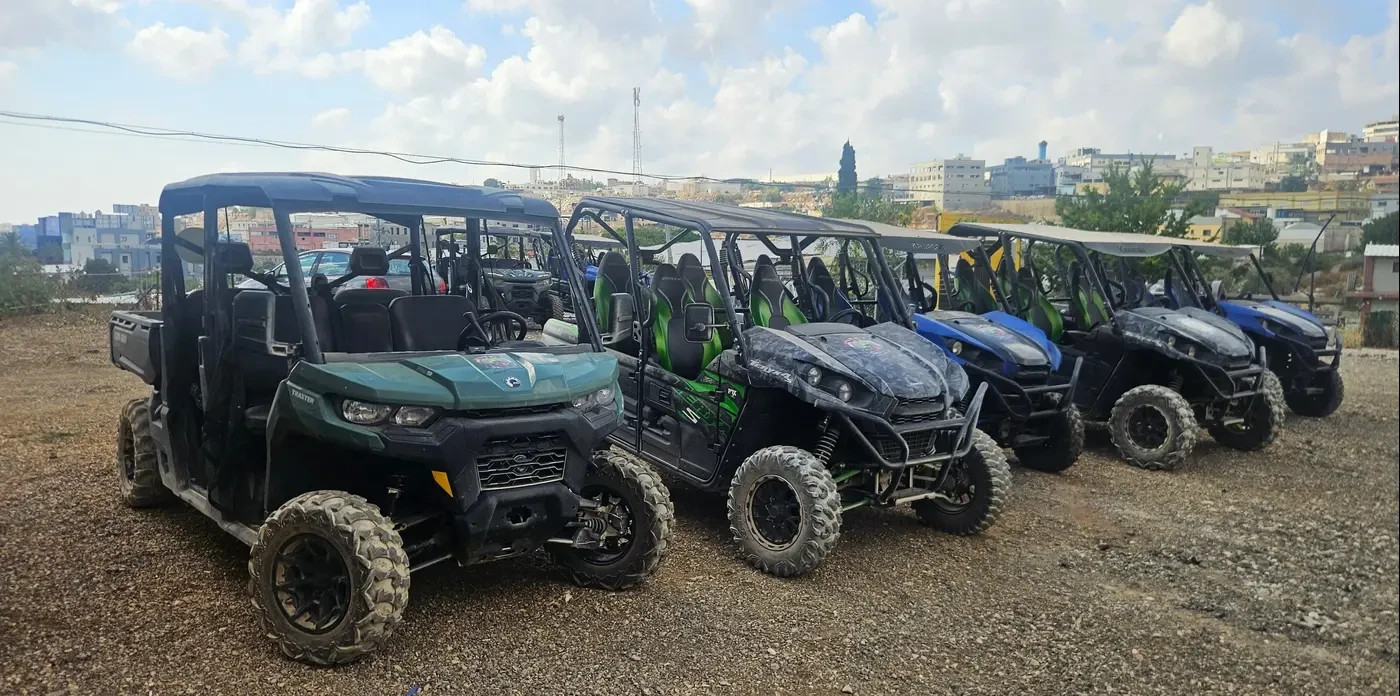
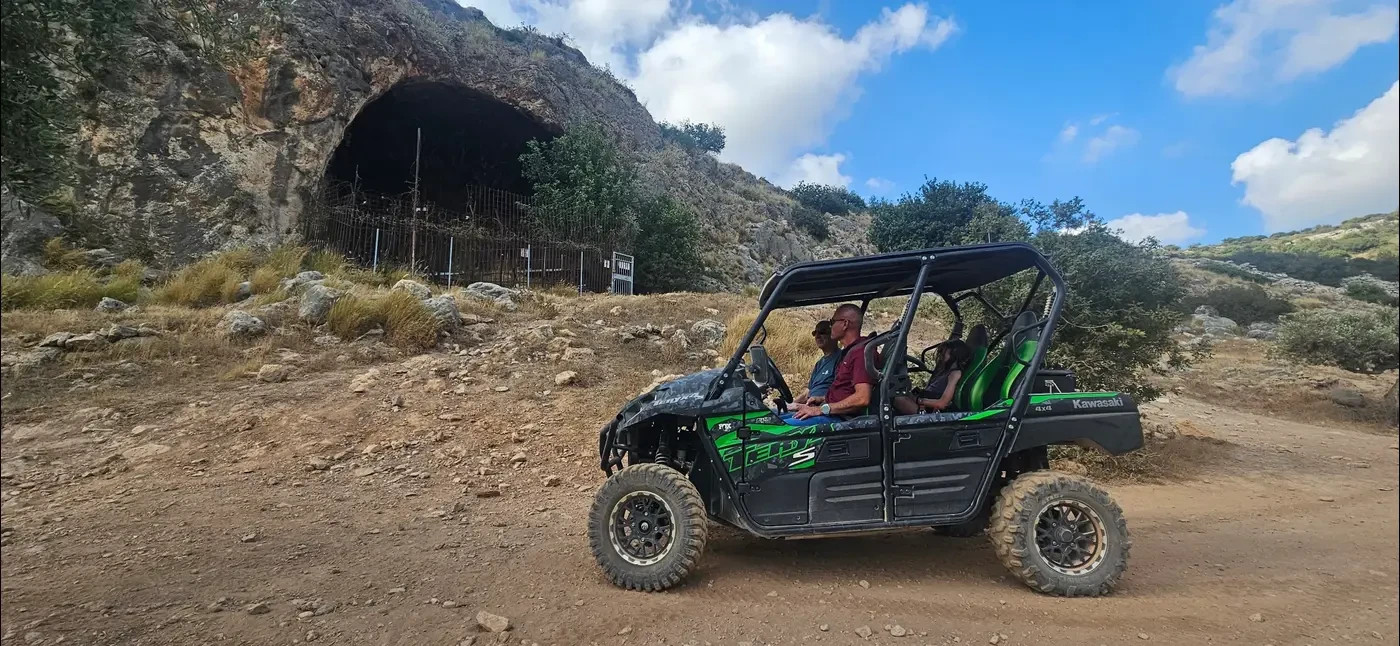
On his tour menu are three routes ranging in length between one and two hours, all starting and ending in Julis. But the recommended route is an hour and a half, during which you reach the Pigeon Cave on Mount Gamal, pass through the Ahihud Forest, and reach a viewpoint over the sea and the Haifa Bay. The RZR tour is accompanied by a guide.
The prices: An hour for a couple – NIS 550, up to four people – NIS 700, and a vehicle for six people – NIS 850. An hour and a half route costs NIS 700 for a couple, NIS 850 for up to four people, and up to NIS 1,000 for six. Two hours will cost between NIS 850 and NIS 1,200. But an hour and a half will be enough for you, no more than that in my opinion.
Returning to the Galilee
After a period in which the Western Galilee was forced to deal with a difficult reality, it seems that the best way to return it to the travel map is simply to arrive. Not just to talk about the North – but to get into the car, and also a train, drive north, order a coffee, buy bread, taste pizza, and give this region the thing it needs most right now: Visitors.