
The European summer is at its peak, and beaches across the continent are filling up with millions of vacationers. But alongside the sun, the sea, and the holiday, many local authorities have decided to tighten enforcement and impose a series of new restrictions on visitors.
The primary driver is the growing influx of tourists and the push to protect the coastal environment, resulting in laws that many travelers are completely unaware of – and these are precisely the ones that could cost them dearly. Here they are before you – remember them if you are vacationing in Europe this summer.
1. You cannot open an umbrella everywhere
If you are traveling to Sardinia, do not assume you can just plant an umbrella in the sand. At Punta Molentis beach in the Villasimius area, the use of umbrellas, tents, and sunshades has been restricted. Following a public outcry, it was decided to allow only one umbrella per family or group, and even that is only in a location designated by the lifeguards.
At La Pelosa beach, also in Sardinia, towels are only permitted if a special mat is placed underneath to prevent sand from sticking to them. Anyone caught without the mat could face a €100 fine.
Greece is also joining the trend. There are currently 251 beaches where it is forbidden to erect any structure – including rental umbrellas, sunbeds, and temporary wooden structures.

2. Cigarette on the beach? Think again
More than 600 beaches in Spain already ban smoking and vaping, including those in Barcelona, San Sebastian, and many of the beaches in the Canary and Balearic Islands.
In France, a nationwide ban on smoking on beaches adjacent to swimming areas has taken effect, with fines standing at €135.
In Italy, smoking is also prohibited on numerous beaches, particularly in the regions of Veneto, Emilia–Romagna, Sardinia, and Puglia.
3. The swimsuit stays on the beach
While it may be tempting to head straight from the sea to a restaurant or to grab an ice cream, doing so in several European resort towns could prove highly expensive. In Sorrento, southern Italy, visitors can face a fine of up to €500 for walking around town in a bikini or swimsuit.
In Albufeira, Portugal, the fine ranges from €300 to €1,500 for anyone wearing a swimsuit outside the beach, pool, or hotel areas.
Similarly, in Barcelona and parts of Mallorca, entering shops and restaurants in beachwear is prohibited, with fines reaching up to €300.
In Croatia's coastal cities of Split, Dubrovnik, and Hvar, walking the streets shirtless or in a swimsuit can result in a fine of up to €150.
Even Italy's Lake Como has adopted the rule; in the town of Varenna, walking around in a swimsuit can fetch a fine of up to €200.
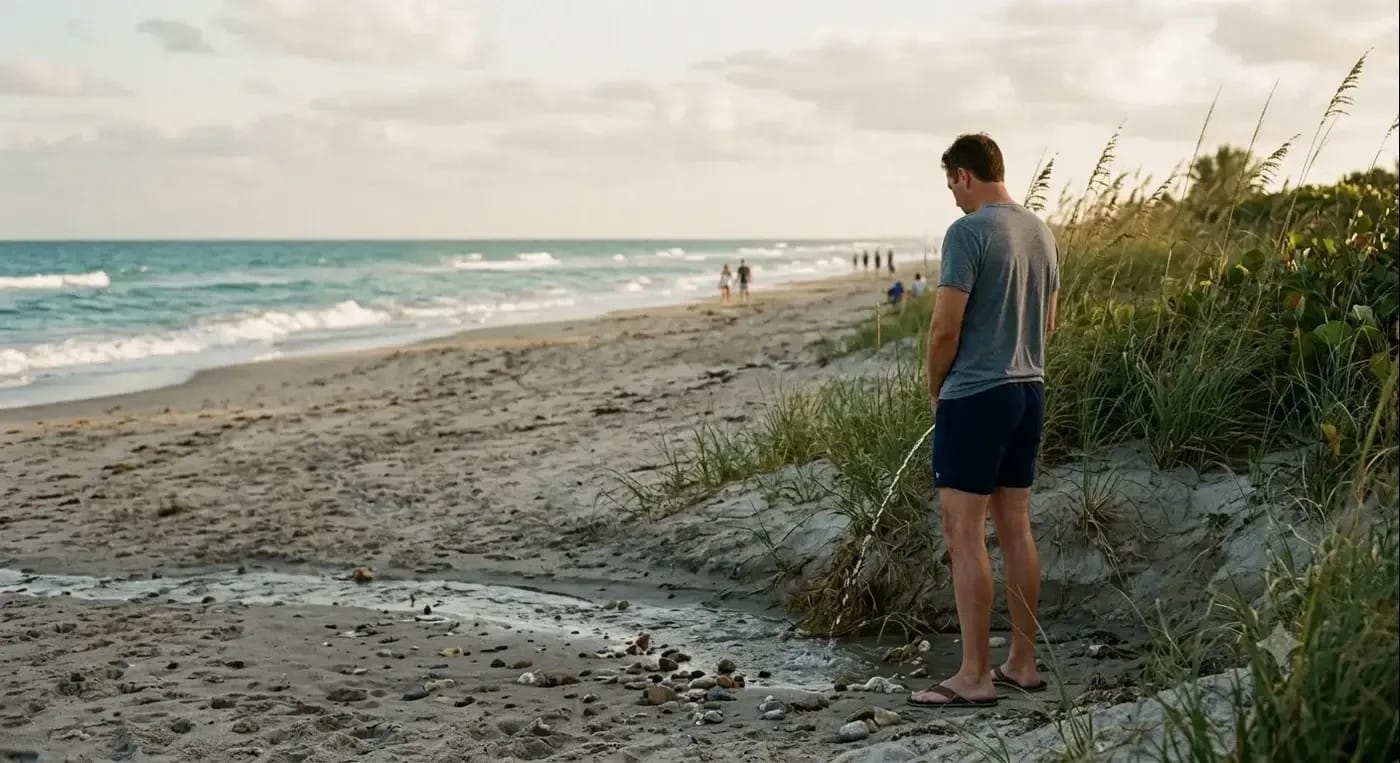
4. Even peeing in the sea now costs money
Spain is taking the matter seriously. In Vigo, located in the Galicia region, a €750 fine has been in place since 2022 for anyone caught peeing in the sea or on the beach.
Marbella has also outlawed urinating in the water across 25 of the city's beaches.
5. Leave the speaker in the bag
If you like to blast music on the beach, you might want to think twice in Portugal. Playing loud music via portable speakers is prohibited, with fines ranging from €200 to €4,000 for individuals, and €2,000 to €36,000 for groups. In some cases, authorities are even authorized to confiscate the speaker.
6. Not all animals are welcome
Dogs are banned from many beaches in Italy, Spain, France, and Croatia during the summer season, particularly on those designated as "Blue Flag" beaches. In some areas, they are only allowed during the early morning or evening. Horses are also banned from many beaches during the summer months.
And if you were wondering – yes, this actually happened: Since 2009, elephants have been banned from Granville beach in Normandy, after a traveling circus allowed its elephants to bathe in the sea and leave behind... a highly unpleasant souvenir.