
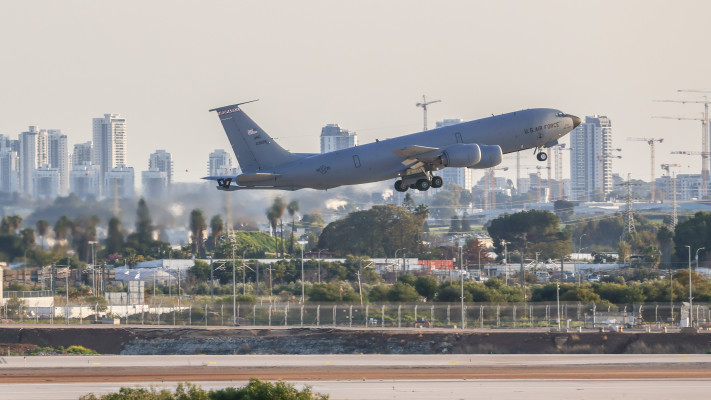
One day after the Israel Airports Authority warned that congestion caused by US refueling aircraft at Ben Gurion Airport could disrupt civilian aviation and potentially lead to the cancellation of around 50,000 flight tickets, the Transportation Ministry has announced that a solution had been reached.
According to the ministry’s statement, following a Cabinet decision advanced by Transportation Minister Miri Regev, the number of US refueling aircraft at Ben Gurion Airport will be reduced to 20 by July 21 - the number agreed upon by the relevant parties. The remaining aircraft will be transferred to IDF bases designated by the Defense Ministry.
Agreement reached to balance security needs and civilian aviation
The Transportation Ministry said the move would allow necessary military operations to continue while preserving aviation continuity and minimizing disruptions and cancellations, particularly during the busy summer travel season, when tens of thousands of Israelis are expected to fly abroad.
The decision came after the US military suspended plans to remove the refueling aircraft from Ben Gurion Airport amid renewed security tensions with Iran. The minister’s office stressed that despite recent developments and the arrival of additional aircraft, the agreement remains unchanged and that the large number of aircraft currently parked at the airport is a temporary situation
Officials in the minister’s office said that keeping the aircraft at Ben Gurion Airport is more convenient for the Americans, while the Israeli Air Force also likely prefers the refueling aircraft to operate from the airport rather than occupy valuable space at military bases. However, political officials decided that civilian aviation needs must take priority.
"The overriding interest is that of the millions of Israelis who have already purchased tickets and are expecting to travel," officials said.
Airport congestion raised concerns over summer travel disruptions
The issue came to light after heightened security tensions led to unusual congestion at Ben Gurion Airport. Air traffic controllers were instructed not to approve additional landings of US refueling aircraft after four more planes arrived overnight.
Following those arrivals, the number of American aircraft parked at the airport reached 33 - exceeding the agreed-upon limit. The Israel Airports Authority warned that continued use of parking areas by military aircraft could disrupt civilian operations and result in the cancellation of thousands of flights and approximately 50,000 tickets.
During the summer months, Ben Gurion Airport operates under significant pressure, with daily passenger numbers reaching tens of thousands. The main challenge is not runway capacity but the availability of aircraft parking areas. US refueling aircraft are particularly large, with each plane occupying space required for civilian aviation operations.
Officials emphasized that the dispute relates only to the location where the aircraft are stationed and does not affect the continued presence or operations of the American military in Israel. The refueling aircraft will continue operating from Israel after the decision is implemented, but some will be relocated to IDF bases instead of remaining at Ben Gurion Airport.
The arrangement is designed to maintain security cooperation with Washington while preventing Israel’s main civilian airport from absorbing the full impact of an extended military deployment.
The US prefers operating the aircraft from Ben Gurion Airport because of its existing infrastructure, logistical advantages, and operational convenience. Using the civilian airport also reduces pressure on Israeli Air Force bases and limits the strain on military facilities.

Despite these advantages, political officials decided to restrict the number of aircraft remaining at Ben Gurion Airport during the peak travel period and transfer the rest to military bases. The move will allow military operations to continue while protecting civilian flight schedules.
Transportation Minister Miri Regev thanked the prime minister and defense minister for their cooperation in reaching the agreement. According to Regev, the decision will enable necessary military operations to continue while maintaining regular activity at Ben Gurion Airport and allowing hundreds of thousands of Israelis to enjoy their summer vacations.