
Heading down to Eilat? What fun! You have cleared out the back seat of the car for all the bags and cardboard boxes that will join you on the way back, the swimsuit and sunscreen are already at the ready, and you already know what the next few days will look like: Shopping on the promenade, continuous lounging on the beach below, too much food, and too little afternoon naps.
So you should know that Eilat has another package to offer you: A spectacular, unique, and unexpected attraction: An immersive and accessible underwater journey that moves between colorful coral reefs, a sandy floor full of surprises, and green grass beds (yes, an actual meadow, right inside the sea). The selection of special marine creatures waiting for you underwater, from the Jordanian border to the Egyptian border, is truly huge.
So put a diving mask on your face, fins on your feet, and let us begin.
Station 1: Sun Bay Beach and the Religious Beach: The seagrass beds
Did you think Eilat was just a desert? Not many know that Eilat also has green grass beds, carpets of seagrass growing on the sandy seabed, located opposite the hotel complex and opposite the Religious Beach on the North Shore. Just like daisies, seagrass also has flowers and seeds, creating an extensive and spectacular meadow.
So walk to the beach, swim a few meters into the sea, and take a look inside, or go deeper if you can. Just like in the savanna, many animals hide among the blades of grass. Frequently, a hermit crab peeks out from them, a seahorse curls its tail on one of the leaves, or a squid searches for a snack. On a free dive or scuba dive, there is a chance you will get to see them in action.
If you snorkel in relative quiet and maintain calm movement, you have a good chance of seeing large and impressive stingrays. This is also where the sea's nursery for young fish and other creatures takes place, where they feel protected before moving on to the big world.
How to get there? If you are in the promenade hotel area, walk toward the Jordanian border until you see signage for Sun Bay Beach and the Religious Beach. Arriving by car? Simply enter Sun Bay Beach or Religious Beach Eilat into Waze.
How much does it cost? Free.
Pay attention:
• If you are snorkeling far from the shore, you should equip yourself with a marker buoy (a buoy in a prominent color attached to you) so that boat owners, jet skis, and others will notice you. Although motorized sailing is prohibited within 300 meters of the shore, a jet ski or rogue motorboat sometimes approaches the beach at the North Shore.
• Fishermen often stand on the pier at the entrance to the lagoon, casting fishing rods into the water. Make sure you are far enough away from them.

Station 2: EAPC Beach: A coral reef on a pillar
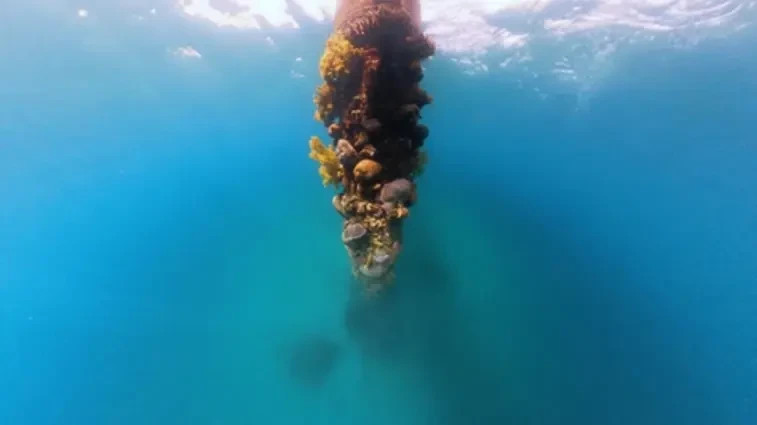
Before entering the "dense traffic jams" of coral reef fish, let us start in the suburbs. Not many know that EAPC Beach, resting at the foot of the Eilat-Ashkelon Pipeline Company pier, conceals unexpected surprises. On the giant pillars anchoring the pier, corals chose to set up their home, attracting various special fish and creatures. Swimming between the pillars is a special experience of hovering among schools of small silver fish, and if you are lucky and arrive mainly in the early morning hours, perhaps one of the dolphins from the nearby Dolphin Reef will hop over for a visit. Yes, she comes here a lot.
Leave the pillars and swim south. There, you will be surprised to discover several large coral knolls with a fine variety of species. Swim around and you can meet our local Nemo fish, the Red Sea clownfish, hiding among the anemone's tentacles, and observe curious octopuses that frequently visit the area. Even the mantas that arrived a few months ago were documented here. If you are already hungry, you are welcome to sit and eat under the shade structures on the beach, and of course, leave nothing behind.
How to get there? Waze: EAPC Beach.
How much does it cost? Free.
Pay attention: At EAPC Beach, there are no lifeguard services. Enter the water only if sea conditions permit, and preferably not alone.
Station 3: The sandy floor and the Eel Garden: The burrowers and the dancers
Between one reef knoll and another, and across large parts of the seabed, lies the sandy system, and it is certainly not as sleepy as it might look. If you have a mask on your face and plenty of patience, you can catch wonderful occurrences. Many of the sand creatures are burrowed most of the time or well camouflaged, requiring patience and sharp eyes.
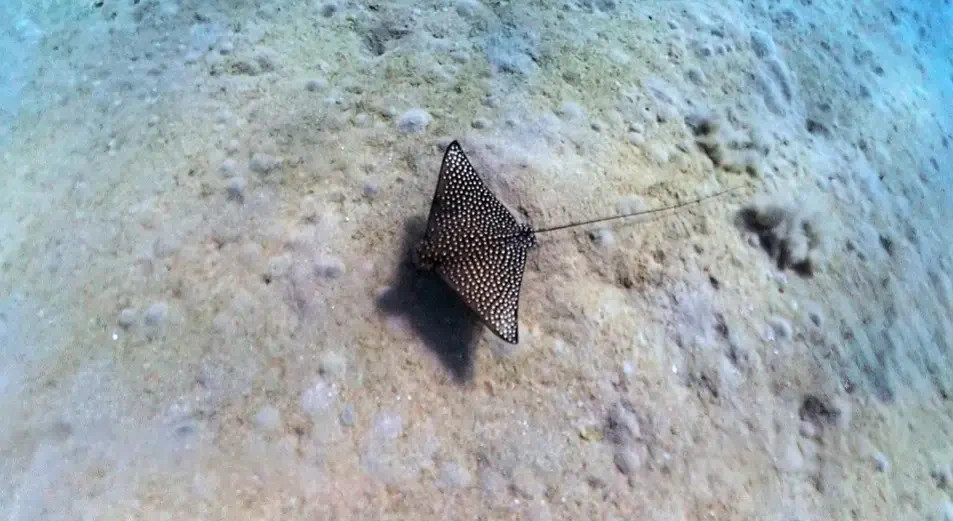
With a little luck, you might observe a spotted eagle ray passing in noble motion. Behind its serene appearance hides a sixth sense of electricity with which it locates fish or crabs hiding deep in the sand.
There is another heart-expanding surprise for experienced snorkels, divers, and free divers: An eel garden. Opposite the Aqua Sport diving club, on the sandy slope where it begins to deepen into the blue abyss, you can watch a fascinating show: Slender garden eels stand up from the seabed and begin a dance. Each is anchored at its lower part to the sand, while its upper part moves with the current, catching plankton, and if you get too close, it disappears all at once inside. The eels are quite timid, do not like divers' bubbles, and the best chance to see them up close is during calm snorkeling.
How to get there? The sandy seabed "cushions" large parts of the sea, no matter where you arrive. For the eel garden, navigate to Aqua Sport Beach or the Coral Beach Nature Reserve, and swim to the shallow sandy area located opposite Aqua Sport, Bar Beach, and Indigo.
How much does it cost? Free.
Pay attention: Let the underwater world function in peace. Keep your distance from wild animals, do not touch, and do not feed, even for photography purposes.
Station 4: The southern beaches and for dessert: The northern Princess Beach
The southern beaches of Eilat, including the Coral Beach Nature Reserve, Lighthouse Beach, and the rest of the beaches spread out to the Taba crossing, are a wonderful opportunity to observe live the bustling coral reef revealed there in all its glory.
You do not need a diving star or to be a star swimmer to see all this colorful wonder. Eilat's reefs are, first and foremost, accessible: You take snorkeling equipment with you and enter the water in the area marked with yellow buoys. Start working with your legs, and you will reach the coral knolls. If you move just a few meters away from the shore, you will already be floating above large coral villas and get to know this wild and dynamic beauty.
The end of the day is approaching, time flies when you are having fun, the mountains are starting to be painted in red hues, and there is no place more suitable than the quiet and peaceful Princess Beach to top off the day. Just before the Taba terminal lies the beach named after the deserted Princess Hotel. It is a less regulated and less touched beach, without lifeguard services. We recommend the strip of beach located in its northern part, between the abandoned and unmaintained "bridges" and Caves Beach located slightly to the north. The location is perfectly suited for sunset snorkeling before returning to the tourist area somewhere in the north of the city.
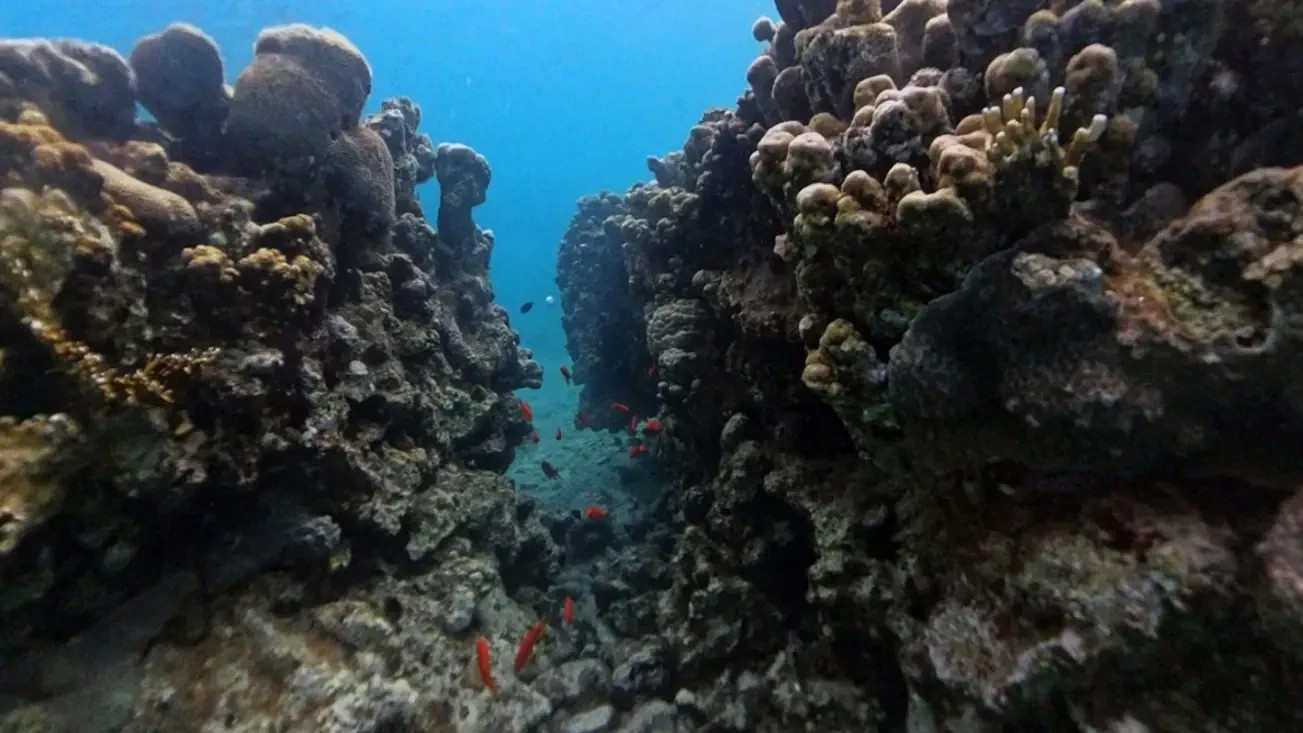
You enter the water and pass through impressive coral corridors, pass by coral knolls crowded with anthias dancing in tight schools, and notice a slope descending deep with beautiful coral knolls along it. Above it, you can snorkel and see the beautiful transition between sandy expanses and coral structures, or dive deeper to see developed corals, sandy areas with eel gardens, and even small patches of seagrass. The water is clear and blue, and who knows, maybe you will decide to forego the pampering hotel room and stay here in the camping area to feel nature up close.
How to get there? Drive along Route 90 (Eilat-Taba), from which there are entrances to a dirt road passing along the beach. Caves Beach (Snuba) and Princess Beach are the last beaches before the border with Egypt.
How much does it cost? Entry to Lighthouse Beach, Princess Beach, and the rest of the beaches is free. Entry to the Coral Beach Nature Reserve (which can, of course, be skipped if you want to save the cost) is for a fee (adult: NIS 40, child: NIS 25).
Pay attention: Make sure to enter the water in places marked with buoys; we want to keep our underwater city beautiful and healthy.
Want to get to know seagrass better? Meet more than a thousand marine creatures? Follow them even after returning home from Eilat? Discover what is hiding in the coral reef? https://www.coralreefs.org.il/he
The writer is the content manager of The Blue Half at the Society for the Protection of Nature in Israel.